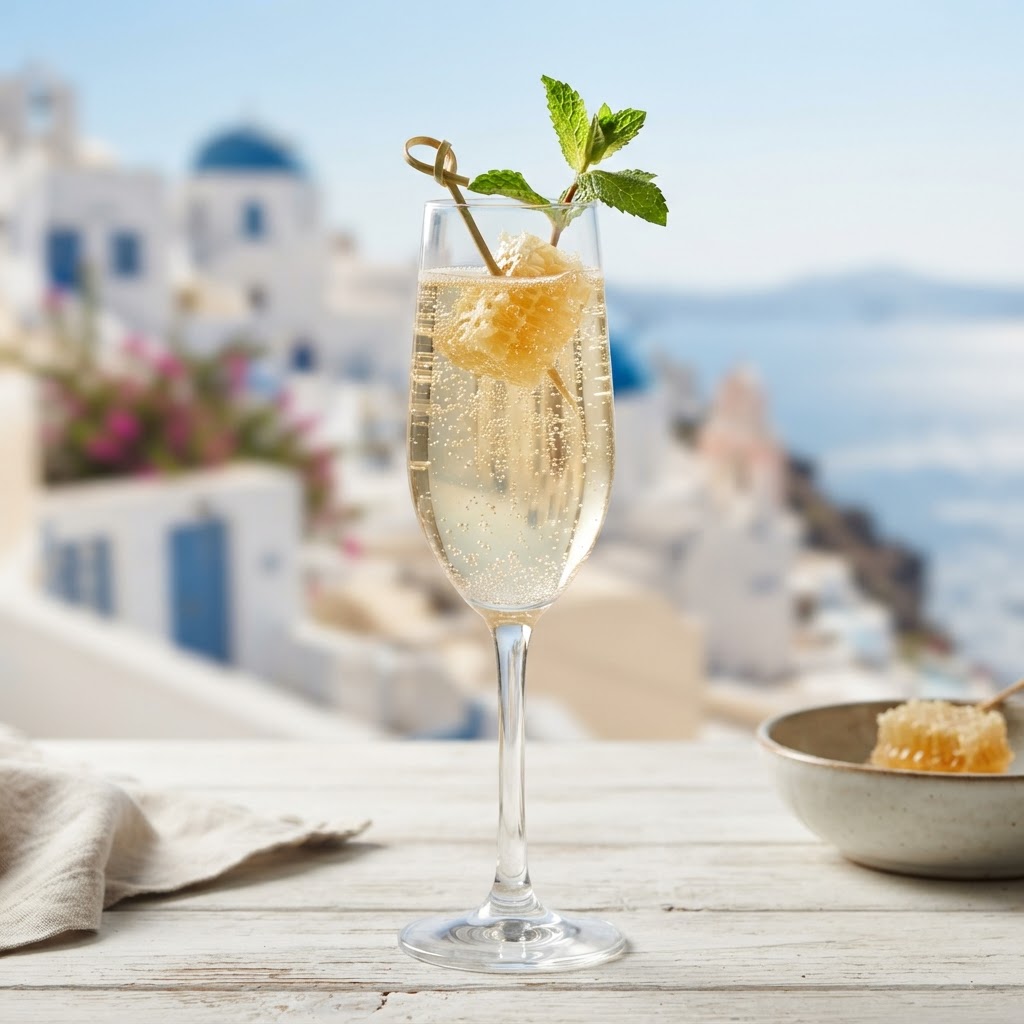
The Greek Mastiha & Honey Mimosa
May 23, 2026
Mastiha — the mastic liqueur made from the resin of the mastic tree — is one of the most singular spirits in the Mediterranean, and it comes from a single place on earth. The mastic tree (Pistacia lentiscus var. chia) produces its teardrop resin only when cultivated on the southern Greek island of Chios, in the Aegean Sea, where a unique combination of soil, climate, and traditional cultivation methods — the trees are scored by hand and the resin that bleeds from the wounds is collected as it hardens — produces a resin that grows nowhere else. Mastiha has been harvested on Chios for at least 2,500 years, and in 1997 the European Union granted it Protected Designation of Origin (PDO) status as a uniquely Chian product (Wikipedia; Discover Greece).
The flavor of mastiha is genuinely unlike any other spirit: piney, cedar-like, and faintly resinous, with a clean, almost forest-floor freshness and a subtle sweetness. It is an acquired taste that rewards the acquiring — and it pairs beautifully with Greek honey, the thyme and wildflower honeys that are among the most prized in the Mediterranean. Combined with dry sparkling wine, mastiha and honey produce a mimosa that is pale, crystal-clear, and quietly extraordinary: a drink that tastes of the Greek islands, of sun and pine and wild thyme.
Ingredients (serves 6): - 3 oz Greek mastiha liqueur (such as Skinos or Mastiha of Chios) - 2 oz Greek honey (thyme honey preferred), dissolved in 1 oz warm water to make a honey syrup - 1 tablespoon fresh lemon juice - 1 bottle (3 ⅛ cups) chilled Cava Brut or Brut Champagne - Honeycomb pieces and fresh mint or thyme sprigs for garnish
Honey Syrup: Warm 2 oz Greek honey with 1 oz water in a small saucepan over low heat, stirring until fully dissolved and combined. Cool completely. Keeps refrigerated for 2 weeks.
Instructions: Chill champagne flutes for 5 minutes. Stir together the mastiha liqueur, honey syrup, and lemon juice in a small pitcher. Pour 1 oz of the blend into each flute. Top slowly with chilled Cava, pouring down the side of the glass — the drink will be a pale, clear gold with exceptionally fine bubbles. Garnish with a small piece of honeycomb on a pick and a sprig of fresh thyme or mint.
For a Mimosa Bar (serves 12): - 6 oz mastiha liqueur - 4 oz honey syrup - 2 tablespoons lemon juice - 2 bottles chilled Cava Brut
Variations: - Mastiha & Yogurt: Add 1 oz strained Greek yogurt thinned with a little honey syrup to the blend for a creamy, dessert-like interpretation. - Mastiha Walnut: Float a single walnut and a drop of walnut liqueur for an autumnal version. - Mastiha Royale: Use Champagne and add ½ oz of a floral Greek moschofilero wine for a doubly aromatic version.
Pairing: This mimosa pairs beautifully with Greek brunch flavors — yogurt with honey and walnuts, spanakopita, and Greek pastries like bougatsa. The mastiha's piney freshness also complements savory dishes with herbs, feta, and olive oil.
Reference Links: - Mastika (Chios Mastiha liqueur, PDO, Pistacia lentiscus): Wikipedia - Mastiha — Greek spirits guide (Chios, mastic tree): Discover Greece - Honey (Greek thyme honey tradition): Wikipedia
Pro Tips: Mastiha liqueur is best served ice-cold — in Greece it is traditionally stored in the freezer and served straight as a shot (the "Mastiha freeze"). Keep the bottle in the freezer between uses; it will not freeze due to its alcohol content and develops a beautifully syrupy texture when cold. The resinous flavor is distinctive and not universally loved on the first sip — start with a measured amount and let guests discover it. Greek thyme honey is worth seeking out for its intense, aromatic character, but any good-quality wildflower honey will work. Warm the honey slightly to dissolve it into syrup; cold honey will not mix evenly into the drink.
Rate this recipe
Be the first to rate this recipe
to submit your rating.
Recent Posts

Couscous Royale: North Africa's Grand Platter of Lamb, Chicken, and Merguez
October 14, 2026

Seattle Cream Cheese Dog Bites: Hadley Long's 1989 Pioneer Square Invention
October 14, 2026

Khao Soi: Chiang Mai's Northern Thai Coconut Curry Noodles
October 13, 2026

Korean Bibimbap: Jeonju's Joseon Dynasty Mixed Rice
October 11, 2026

Spaghetti alla Carbonara: Rome's World War II Pasta of Eggs, Guanciale, and Pecorino
October 9, 2026