French Ratatouille Tartlets: The 18th-Century Provençal Stew in an Elegant Puff Pastry Shell
August 1, 2026
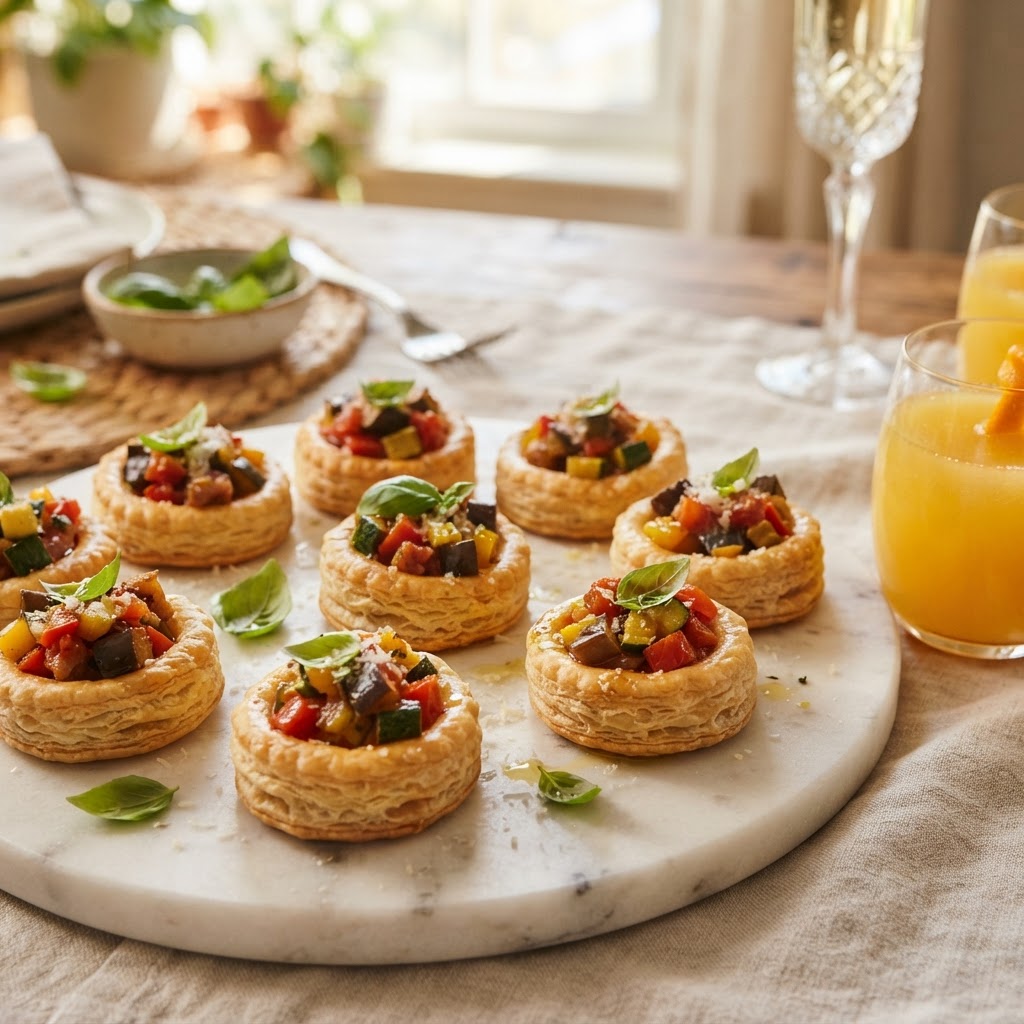
Ratatouille tartlets are the Provençal summer stew reimagined as an elegant party bite — mini golden puff pastry shells filled with glossy, herb-steeped vegetables: diced eggplant, zucchini, bell peppers, and tomatoes in a sauce of olive oil, garlic, thyme, and basil. They are the taste of a Provence summer market — the vegetables of the season, concentrated into a single, elegant bite.
The History of Ratatouille
Ratatouille is a traditional French vegetable dish originating in the Provence region of southern France, particularly associated with Nice and its surrounding area. According to Wikipedia, the name comes from the French verb *touiller*, meaning "to stir up." Gambero Rosso International traces the recipe to the 18th-century Provence countryside, where it was created by farmers who needed a way to cook the abundance of late-summer vegetables — eggplant, zucchini, peppers, tomatoes — that ripened simultaneously in the Mediterranean garden.
Ratatouille is fundamentally a dish of necessity and season: the vegetables that grew together in the Provençal garden were cooked together in a single pot. The traditional method cooks each vegetable separately to preserve its individual character, then combines them at the end. The tartlet version — the stew spooned into a crisp puff pastry shell — is the dinner-party iteration: the same rustic flavors, elevated for the table.
About the Ingredients
Eggplant — small, firm, glossy; peeled or unpeeled, diced small. The eggplant should be cooked until silky, not spongy.
Zucchini — small, firm; diced small. The zucchini should hold its shape, not collapse to mush.
Bell peppers — red and yellow, for color; roasted or sautéed until soft and sweet.
Tomatoes — ripe, juicy; the tomatoes become the sauce that binds the vegetables together.
Herbs — fresh thyme, basil, and a bay leaf; the herbs are what make it Provençal, not just a vegetable medley.
Olive oil — good quality, generous; ratatouille is a dish cooked in olive oil, not despite it.
Puff pastry — pre-made mini tartlet shells, the kind sold frozen; they're the crisp, buttery vessel.
Ingredients (makes 16 tartlets): - 16 mini puff pastry tartlet shells - 1 small eggplant, diced small - 1 small zucchini, diced small - 1 red bell pepper, diced small - 1 yellow bell pepper, diced small - 4 ripe tomatoes, diced (or 1 cup crushed tomatoes) - 1/2 onion, finely diced - 3 cloves garlic, minced - 1/4 cup extra-virgin olive oil - 1 tsp fresh thyme leaves - 1 bay leaf - 1/4 cup fresh basil, torn - Salt, black pepper to taste
Instructions: Preheat the oven to 350°F. In a large skillet, heat 2 tablespoons of olive oil over medium-high heat. Sauté the eggplant until golden and silky, about 5 minutes, then remove. Add another tablespoon of oil and sauté the zucchini until just tender, 3–4 minutes, then remove. Add the remaining oil and sauté the onion, bell peppers, and garlic until soft and sweet, 5–6 minutes. Add the tomatoes, thyme, bay leaf, salt, and pepper, and simmer 10 minutes until the tomatoes break down into a sauce. Return the eggplant and zucchini to the pan, stir gently, and cook 5 more minutes. Remove from heat, discard the bay leaf, and stir in the fresh basil. Spoon the ratatouille into the tartlet shells. Bake 5–7 minutes, until the pastry is crisp and the filling is warm. Garnish with fresh basil. Sixteen tartlets, each one a bite of the Provence summer garden.
The Mimosa Pairing Logic: Herb-steeped Mediterranean vegetables and bright sparkling wine is a Provençal brunch. A lavender elderflower mimosa is the Provençal pick — the lavender echoes the thyme and the elderflower is the South of France in a glass. A classic champagne mimosa is the bistro alternative — the orange juice's citrus plays against the tomato and the olive oil. Either way, eat the tartlet while the pastry is crisp and the vegetables are warm, and raise the glass to Nice.
Reference Links: - Ratatouille (Provence origin, *touiller* etymology): Wikipedia - Ratatouille: history and origins of the French dish (18th-century Provence): Gambero Rosso International
Make-Ahead: The ratatouille can be made a day or two ahead and kept refrigerated — it's actually better the next day, once the flavors have melded. The tartlet shells can be baked ahead and kept at room temperature. But fill and warm just before serving — a filled tartlet that sits has a soggy base. Spoon the ratatouille into the shells, warm briefly, garnish, and pass.
Pro Tips: Cook each vegetable separately — this is the traditional method, and it preserves each one's character; dump them all in together and you get mush. Salt the eggplant first and let it drain 20 minutes — this removes the bitterness and prevents it from soaking up all the oil. Use good olive oil generously — ratatouille is not a low-fat dish, and the oil carries the flavor. And don't overcook the vegetables in the final assembly — they should hold their shape, not collapse. The tartlet is ready when the pastry is crisp, the vegetables are warm and glossy, and the basil is bright.
Rate this recipe
Be the first to rate this recipe
to submit your rating.
Recent Posts

Couscous Royale: North Africa's Grand Platter of Lamb, Chicken, and Merguez
October 14, 2026

Seattle Cream Cheese Dog Bites: Hadley Long's 1989 Pioneer Square Invention
October 14, 2026

Khao Soi: Chiang Mai's Northern Thai Coconut Curry Noodles
October 13, 2026

Korean Bibimbap: Jeonju's Joseon Dynasty Mixed Rice
October 11, 2026

Spaghetti alla Carbonara: Rome's World War II Pasta of Eggs, Guanciale, and Pecorino
October 9, 2026