French Cherry Clafoutis al Moscato
July 5, 2026
Clafoutis — a rustic baked custard studded with cherries, puffed and golden at the edges, soft and custardy in the center — is one of the most popular and simplest desserts of the French countryside. Its origins lie in the Limousin region of central France, and its history is a story of summer cherries and a particular kind of peasant ingenuity.
As Edible Communities recounts, clafoutis (pronounced kla-FOO-tee) was born in the 19th century in the center of France, where it was first made with tiny, unpitted sweet cherries. From the Limousin region, the recipe spread to the rest of the country, where clafoutis is now made with large, dark cherries. The batter is a simple mixture of flour, sugar, milk, and eggs, poured over cherries, then baked until golden and puffy — think of it as a thick Dutch baby. Connexion France explains that the name comes from the Occitan *clafir*, meaning "to fill" — the cherries fill the batter.
The traditional Limousin clafoutis was made with the cherries left unpitted. There is a practical reason and a flavorful one: the pits help the batter hold its structure, and they also lend a subtle almond flavor to the dish as it bakes. Many French home bakers still forgo the pitting for the sake of tradition, though modern versions — especially those made for children — usually pit the cherries for safety. The dessert is the kind of cake French people whip up on a Sunday afternoon to serve for the *goûter* — the four o'clock snack — and it is the unofficial dessert of the French summer, made when backyard cherry trees and market stalls burst with fruit.
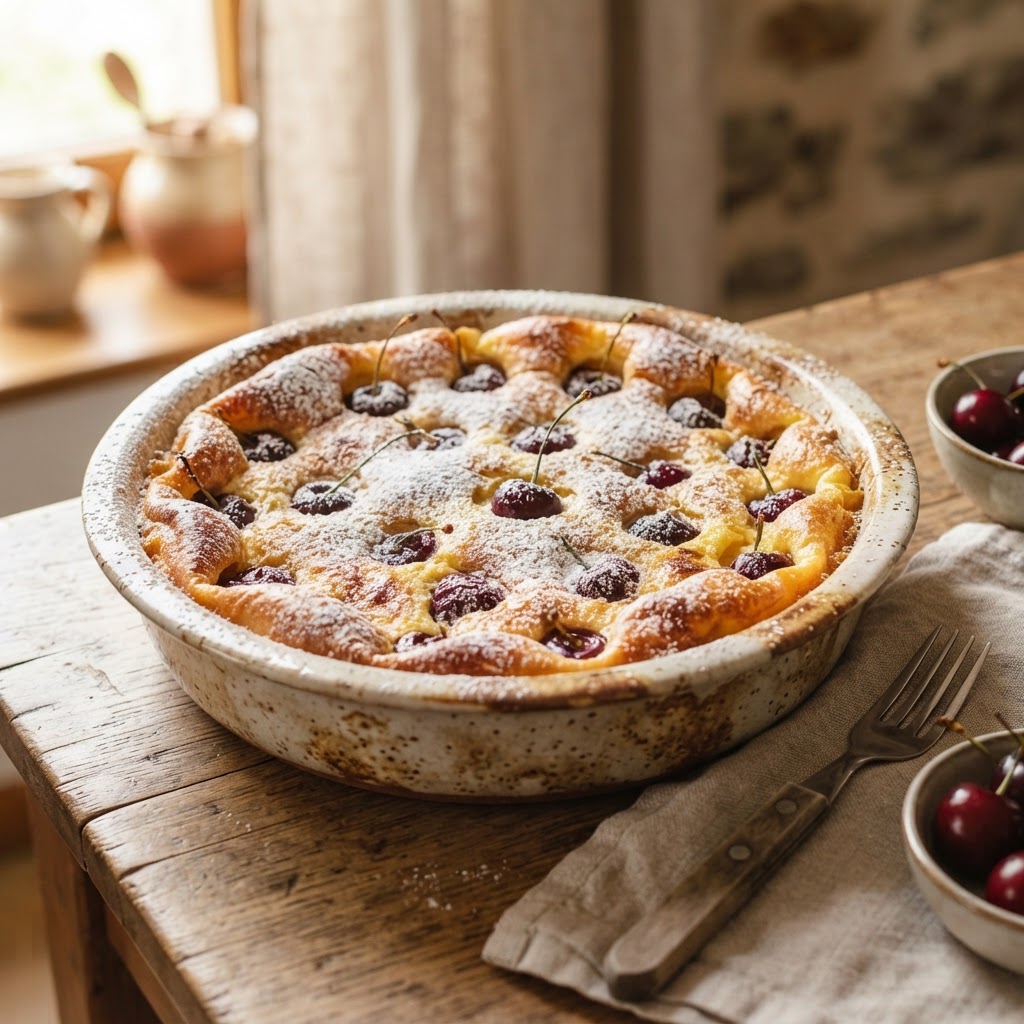
A proper clafoutis is simultaneously a custard and a cake. The batter is thin, like a crêpe batter, and it puffs dramatically around the edges as it bakes, then falls as it cools. The center remains soft and custardy, almost like a flan, while the cherries sink slightly and release their juices into the batter. The contrast between the puffed, golden edges and the soft, fruit-studded center is the entire charm of the dish. Clafoutis is traditionally served warm, dusted with powdered sugar, often with a dollop of crème fraîche.
Our Mimosavated version adds a splash of Moscato d'Asti to the batter — the fragrant, lightly sparkling sweet wine with peach, orange blossom, and honeysuckle aromas adds a delicate floral note that complements the cherries and echoes the almond note from the pits.
Ingredients (serves 6):
The Cherry Clafoutis: - 1 lb 2 oz sweet dark cherries, pitted (or left unpitted for the traditional version — warn your guests) - 3 ½ oz all-purpose flour - 3 ½ oz granulated sugar (plus extra for dusting the dish) - 3 large eggs - 1 cup whole milk - ⅓ cup Moscato d'Asti - 1 teaspoon vanilla extract - ½ teaspoon almond extract - 1 tablespoon melted butter (plus extra for the dish) - A pinch of salt - Powdered sugar, for dusting
Preparing the Cherries: Preheat the oven to 356°F (350°F). Generously butter a 9 in (9-inch) round baking dish or cast-iron skillet and dust with granulated sugar. Arrange the pitted cherries in a single layer in the bottom of the dish.
Making the Batter: In a bowl, whisk together the flour, sugar, and salt. In a separate bowl, whisk the eggs, then whisk in the milk, Moscato, vanilla, almond extract, and melted butter. Gradually whisk the wet ingredients into the dry, whisking until smooth and pourable — the batter should be thin, like crêpe batter.
Pour the batter gently over the cherries. Bake for 35–40 minutes, until the edges are puffed and deep golden brown and the center is just set but still slightly soft (it should jiggle slightly when you shake the dish). The clafoutis will puff dramatically and then fall as it cools — this is normal.
Serving: Let cool for at least 15 minutes — the clafoutis will settle as it cools. Dust generously with powdered sugar and serve warm, with a dollop of crème fraîche or vanilla ice cream if desired.
The Mimosa Pairing Logic: Since the batter contains Moscato d'Asti, pair with a peach bellini mimosa — peach purée and Prosecco. The peach echoes the Moscato and complements the cherries. A cherry mimosa is even more thematic — muddled cherries and Prosecco echo the fruit in the clafoutis. Avoid heavy or dry mimosas — clafoutis is a soft, custardy, fruit-studded dessert, and you need something light and fruity to complement it.
Reference Links: - Making Summer Memories: Cherry Clafoutis (Limousin, 19th century, unpitted cherries): Edible Communities - The time is ripe for making a cherry clafoutis (Occitan clafir, Limousin): Connexion France - Moscato d'Asti wine guide: Wine Folly
Make-Ahead: Clafoutis is best served warm, the day it is made. However, the batter can be made up to 1 day ahead and refrigerated — bring to room temperature and pour over the cherries just before baking. The baked clafoutis can be kept at room temperature for up to 1 day and gently reheated in a 320°F (325°F) oven for 8–10 minutes to restore the puffed texture. Clafoutis does not freeze well — the custard texture suffers. If making ahead, assemble everything in the baking dish and bake just before serving.
Pro Tips: Use ripe, sweet dark cherries — the quality of the cherries characterizes the dessert. Bitter or underripe cherries will throw off the balance. The traditional Limousin version leaves the cherries unpitted — the pits lend a subtle almond flavor and help the batter hold its structure, but you must warn your guests. For safety (especially with children), pit the cherries. The almond extract echoes the flavor the pits would have contributed — don't skip it. The batter should be thin — like crêpe batter, not pancake batter. A thick batter will make a cakey clafoutis rather than a custardy one. Don't overbake — the center should still jiggle slightly when you remove it from the oven; it continues to cook as it cools, and overbaking makes it dry and cakey. The dramatic puff and fall is normal — don't worry when it collapses; that is the character of a proper clafoutis. Serve warm, dusted with powdered sugar — the contrast between the warm, custardy cake and the cold crème fraîche is the entire point. Eat it the day it's made — clafoutis is at its best fresh from the oven.
Rate this recipe
Be the first to rate this recipe
to submit your rating.
Perfect Mimosa Pairings
Mimosas that pair perfectly with this dish
Recent Posts

Couscous Royale: North Africa's Grand Platter of Lamb, Chicken, and Merguez
October 14, 2026

Seattle Cream Cheese Dog Bites: Hadley Long's 1989 Pioneer Square Invention
October 14, 2026

Khao Soi: Chiang Mai's Northern Thai Coconut Curry Noodles
October 13, 2026

Korean Bibimbap: Jeonju's Joseon Dynasty Mixed Rice
October 11, 2026

Spaghetti alla Carbonara: Rome's World War II Pasta of Eggs, Guanciale, and Pecorino
October 9, 2026