Filipino Lechón
May 24, 2026
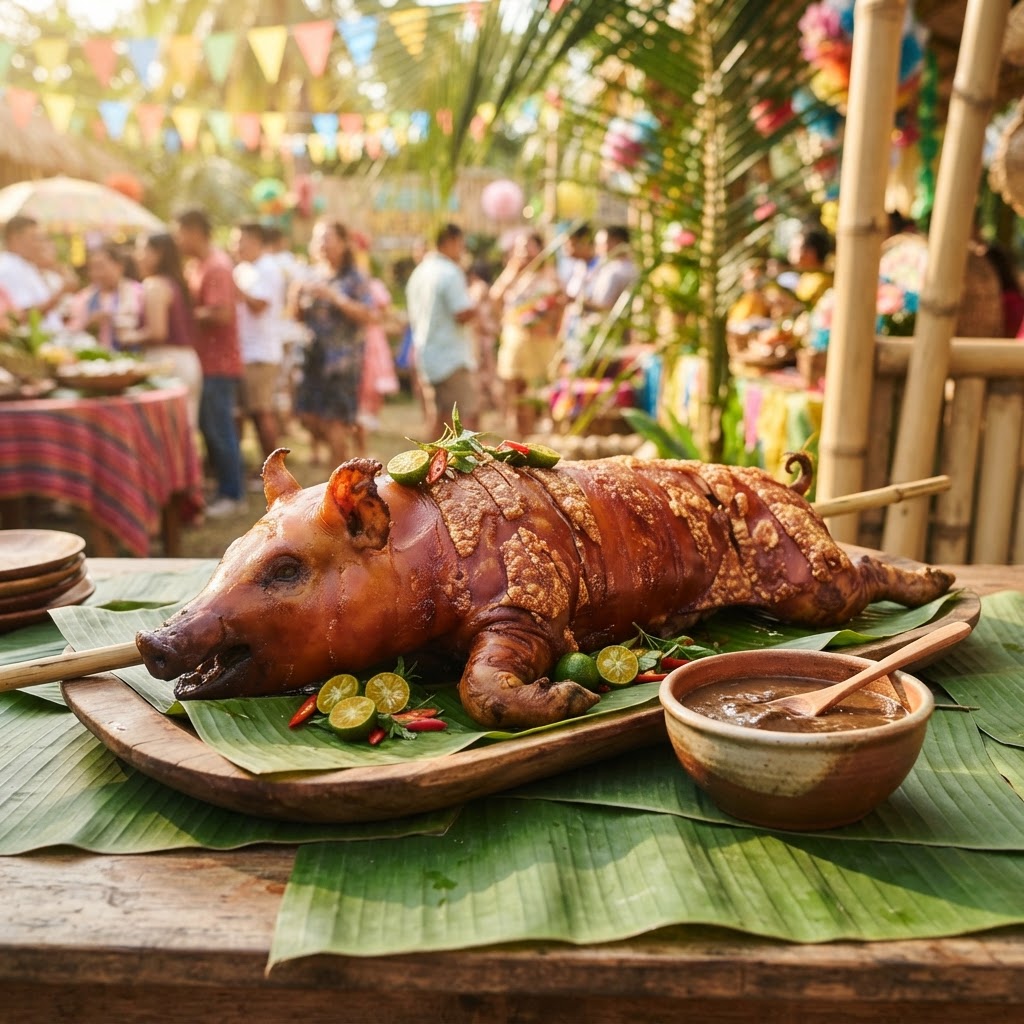
Lechón is the celebration centerpiece of the Philippines, a whole pig roasted over charcoal for hours on a bamboo spit until the skin is a deep, glossy, shatteringly crisp golden-brown crackling and the meat is meltingly tender. The name comes from Spanish, meaning suckling pig, reflecting centuries of Spanish influence, but the tradition of roasting whole pigs in the archipelago predates colonization, rooted in ancient Austronesian ritual feasting. The most renowned regional style is the Lechón of Cebu, which is stuffed with lemongrass, onions, garlic, and salt and is so renowned that the Philippines' national dish is often said to be lechón, with Cebu's version the most prized (Wikipedia; TasteAtlas).
Lechón is the definitive Filipino fiesta dish, the centerpiece of every major celebration, from Christmas to weddings to town fiestas, and the pig is paraded, carved, and shared by a crowd. It is, by definition, an event dish; one does not make a lechón for a small meal.
Ingredients (serves 6, using pork belly for a home version): - 1 whole pork belly (about 5 lb), skin on - 1 bunch lemongrass, bruised - 1 large onion, roughly chopped - 1 head garlic, halved - 2 tbsp coarse salt - 1 tbsp whole black peppercorns - 5 bay leaves - For the marinade/glaze: 1 cup milk (to soften the skin), ½ cup fish sauce, 3 tbsp soy sauce - 2 lemons, halved - Banana leaves, for serving (optional) - Lechón sauce (liver sauce) or spiced vinegar (sukang sawsawan), for serving
Instructions (home oven/bbq method): Score the pork skin in a cross-hatch pattern, being careful not to cut into the meat. Rub the inside of the pork belly with salt, peppercorns, bay leaves, lemongrass, onion, and garlic. Roll and tie the belly with kitchen twine. Rub the skin with milk and let it air-dry in the refrigerator, uncovered, overnight — this is the key to crisp skin. Preheat the oven to 375°F. Place the pork on a rack over a roasting pan and roast for 1 hour. Reduce heat to 325°F and continue roasting for 2 to 3 hours, basting the skin with the fish sauce-soy mixture every 30 minutes, until the skin is deep golden and crackling-crisp and the internal temperature reaches 190°F. For the final 15 minutes, increase the heat to 425°F to blister the skin. Rest 15 minutes, then chop into pieces. Serve with lechón sauce or spiced vinegar, on banana leaves.
For a Crowd (whole pig): - Hire a lechonero (a specialist) or use a large charcoal spit roaster; a 60–80 lb pig feeds 30–40. - Roast over charcoal for 4–6 hours, turning constantly, until the skin is uniformly crisp.
Variations: - Cebu Lechón: Stuff the pig with lemongrass, onions, garlic, salt, and (in Cebu) a little sampalok (tamarind) for the most renowned regional style. - Lechón Belly (Belly-only): The home-cook version above — easier than a whole pig and with a higher skin-to-meat ratio. - Lechón Kawali: Deep-fried pork belly that mimics the crisp skin of lechón without the whole-pig roast.
Pairing: Lechón pairs with a cold San Miguel beer (the Filipino national beer) or a crisp, acidic white wine such as a Sauvignon Blanc that cuts the richness. The traditional accompaniments are spiced vinegar (sukang sawsawan) or liver sauce (Mang Tomas), and steamed white rice.
Reference Links: - Pig roast (Lechón, Philippines, fiesta tradition): Wikipedia - Lechon Cebu authentic recipe: TasteAtlas
Pro Tips: The skin is the whole point — to achieve the shatteringly crisp crackling, the skin must be completely dry before roasting. Air-dry it uncovered in the refrigerator overnight, and rub it with milk (the lactic acid softens the skin and promotes blistering). Score the skin in a cross-hatch so the fat renders and the skin puffs. Roast low and slow, then finish with high heat to blister. Never cover the pork once roasted, or the steam will destroy the crisp skin. The Cebu style is the most prized for a reason — the lemongrass and aromatics perfume the meat from the inside. For a true lechón, a whole pig on a spit is the real thing; the belly version is the home-cook's tribute.
Rate this recipe
Be the first to rate this recipe
to submit your rating.
Recent Posts

Couscous Royale: North Africa's Grand Platter of Lamb, Chicken, and Merguez
October 14, 2026

Seattle Cream Cheese Dog Bites: Hadley Long's 1989 Pioneer Square Invention
October 14, 2026

Khao Soi: Chiang Mai's Northern Thai Coconut Curry Noodles
October 13, 2026

Korean Bibimbap: Jeonju's Joseon Dynasty Mixed Rice
October 11, 2026

Spaghetti alla Carbonara: Rome's World War II Pasta of Eggs, Guanciale, and Pecorino
October 9, 2026