Fastnachts: Pennsylvania Dutch Shrove Tuesday Doughnuts with a 100-Year Tradition
March 24, 2026
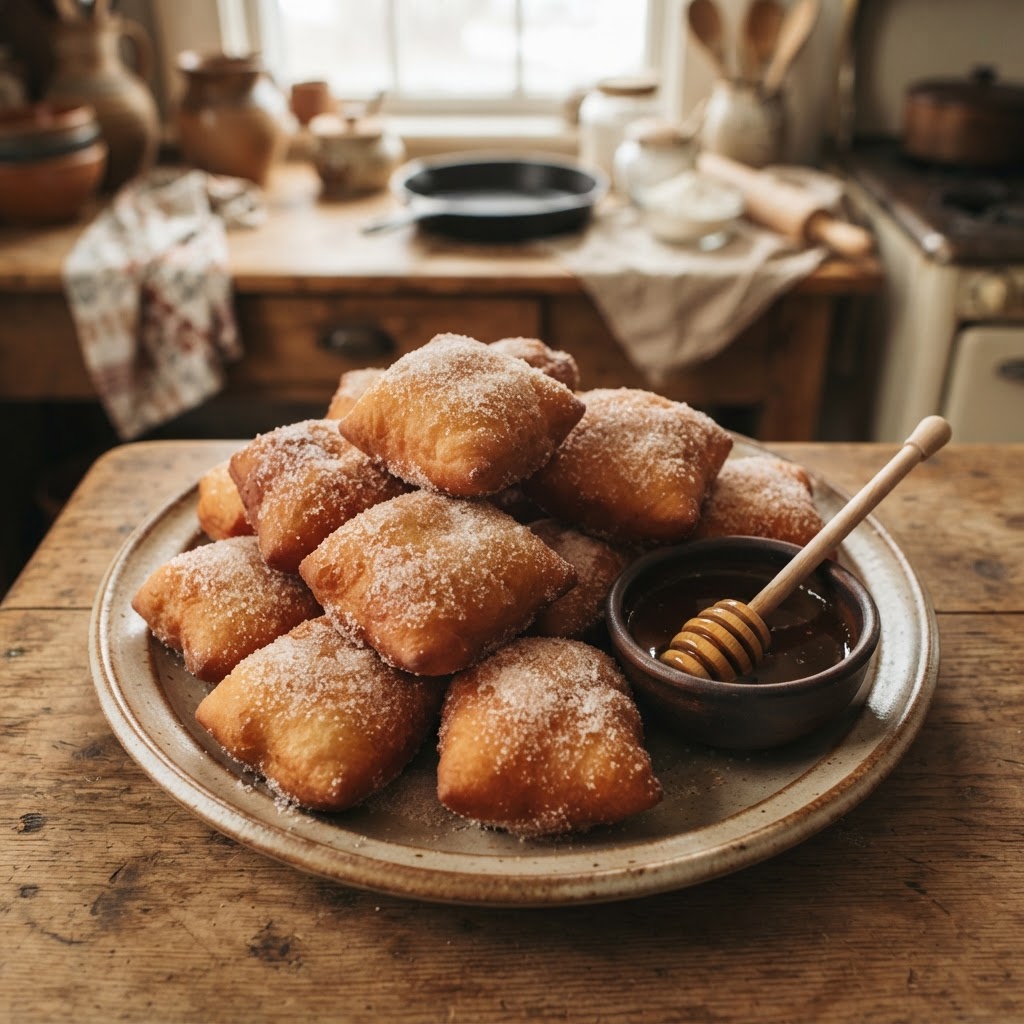
Fastnachts — also spelled fasnacht, faschnacht, fosnot, or fosnaught — are the Pennsylvania Dutch answer to Mardi Gras: deep-fried doughnuts traditionally made and eaten on Shrove Tuesday (the day before Ash Wednesday and the start of Lent). These golden, square (or sometimes round) doughnuts are a long-standing tradition in the Pennsylvania Dutch country of Lancaster, York, Lebanon, Berks, and surrounding counties, where the arrival of Fastnacht Day each year is a community celebration that has been going on for over a century.
The word "Fastnacht" comes from the German words "fast" (the shortened form of "fasten," meaning "to fast") and "Nacht" (meaning "night"), indicating the eve of the traditional Lenten fasting period observed by many Christian denominations. It is the equivalent celebration to Mardi Gras or Carnival — the last indulgence before 40 days of fasting. In southern Germany, Switzerland, Alsace, and Austria, the Carnival season is called Fasnacht, and the Pennsylvania Dutch brought this tradition with them when they emigrated to America in the 18th and 19th centuries.
Fastnachts were traditionally made as a way to empty the pantry of lard, sugar, fat, and butter — all ingredients that were traditionally fasted from during Lent. The Pennsylvania Dutch, descendants of German-speaking immigrants (primarily from the Rhineland, Palatinate, and Alsace), settled in Pennsylvania in the 17th and 18th centuries and brought their Fasnacht tradition with them. The festivity of eating Fastnachts on Shrove Tuesday (known to the Pennsylvania Dutch as Fat Tuesday) is more than 100 years old, and it remains a living tradition in Pennsylvania Dutch country.
On Fastnacht Day (Shrove Tuesday), bakeries, churches, and community groups across Pennsylvania Dutch country make thousands of fastnachts. Most chain supermarkets in eastern Pennsylvania offer them, and churches and fire companies hold fastnacht-making fundraisers. The traditional way to eat a fastnacht is plain, drizzled with honey or dusted with granulated sugar, powdered sugar, or cinnamon sugar. Some versions are filled with jelly or cream, though purists insist that the uncoated pastry be eaten drizzled with honey.
There are two main types of fastnacht dough: the traditional yeast dough and the potato dough. The traditional yeast dough version is lighter and airier, while the potato dough version (made with mashed potatoes) is denser and moister. Some Pennsylvania Dutch families use potato dough because it was a way to use leftover mashed potatoes, and the potato starch helps keep the doughnut moist. The fastnachts are typically square or rectangular (though round versions exist), and they are deep-fried in lard (traditionally) or vegetable oil until golden brown.
The key to a great fastnacht is the dough. The yeast dough should be allowed to rise properly — fastnachts are made with a rich, brioche-like dough that needs time to develop. The dough should be soft and slightly sticky, not tough. And the frying temperature should be carefully controlled — too hot and the outside burns before the inside is cooked; too cool and the doughnut absorbs too much oil and becomes greasy. The fastnachts should be golden brown on the outside, light and airy on the inside, and not greasy.
Our Mimosavated version makes classic Pennsylvania Dutch yeast-dough fastnachts, dusted with granulated sugar and served with honey for drizzling.
Ingredients (makes about 18 fastnachts):
The Dough: - 1 cup whole milk, warm (about 104°F/105°F) - 2¼ teaspoons active dry yeast (1 packet) - 3 ½ oz granulated sugar (plus 1 teaspoon for the yeast) - 3 ½ oz unsalted butter, melted and cooled slightly - 2 large eggs, at room temperature - ½ teaspoon salt - ½ teaspoon ground nutmeg (traditional) - 1 lb 5 oz all-purpose flour (plus extra for dusting) - 3 ½ oz mashed potato (optional — for the potato dough version; see note)
For Frying: - 1 qt vegetable oil or lard (traditional)
For Coating: - 3 ½ oz granulated sugar (for dusting) - 1 teaspoon ground cinnamon (optional, mixed with the sugar) - Honey (for drizzling)
Making the Dough: In a large bowl, combine the warm milk, yeast, and 1 teaspoon of sugar. Let sit for 5–10 minutes, until the yeast is foamy and active.
Add the remaining sugar, melted butter, eggs, salt, and nutmeg to the yeast mixture. Stir to combine. Gradually add the flour, one cup at a time, stirring with a wooden spoon until a soft, slightly sticky dough forms. If using mashed potato, add it with the first addition of flour. The dough should be soft and slightly tacky but not too sticky to handle.
Turn the dough out onto a lightly floured surface and knead for 5–7 minutes, until smooth and elastic. The dough should be soft and supple. Add a little more flour if the dough is too sticky, but be careful not to add too much — a soft dough makes lighter fastnachts.
Place the dough in a lightly oiled bowl, turn to coat, and cover with a clean kitchen towel. Let rise in a warm, draft-free place for 1–1½ hours, until doubled in size.
Shaping the Fastnachts: Punch down the risen dough. Turn it out onto a lightly floured surface and roll it to about ⅓ in (½ inch) thick. Using a knife or a pizza cutter, cut the dough into squares of about 7x2 ¾ in (3x3 inches). Traditional fastnachts are square, but you can also cut them into rectangles or use a doughnut cutter for round shapes with a hole.
Cover the cut fastnachts with a clean towel and let them rise for 30–45 minutes, until puffed and slightly increased in size. They should look light and airy.
Frying the Fastnachts: In a deep, heavy pot or Dutch oven, heat the oil (or lard) to 347°F (350°F). Use a thermometer to monitor the temperature — it's crucial for good results.
Carefully lower 3–4 fastnachts at a time into the hot oil — don't crowd the pot. Fry for 2–3 minutes per side, until deep golden brown and puffed. Use a slotted spoon or spider to turn them. Remove from the oil and drain on a plate lined with paper towels. Repeat with the remaining fastnachts, allowing the oil to return to temperature between batches.
Coating and Serving: While the fastnachts are still warm, toss them in the granulated sugar (or cinnamon sugar) to coat. Serve warm, drizzled with honey if desired. The traditional Pennsylvania Dutch way is to eat them warm, plain or with honey — the simplicity is the point.
*(Note on the potato dough version: If using mashed potato, substitute 3 ½ oz of the flour with 3 ½ oz of warm mashed potato (no butter or milk added). The potato dough makes denser, moister fastnachts that stay fresh longer.)*
The Mimosa Pairing Logic: Fastnachts are sweet, rich, and yeasty. The ideal mimosa pairing is a classic Prosecco mimosa — orange juice and Prosecco. The bright, acidic citrus cuts through the richness of the fried dough and the butter, while the Prosecco's effervescence provides a refreshing contrast to the sweet, yeasty fastnachts. A peach mimosa is also excellent — the peach complements the nutmeg and the honey. Avoid heavy or bitter mimosas — fastnachts are sweet and rich, and you need something bright and fruity to balance them.
Reference Links: - Fasnacht (doughnut) on Wikipedia (Pennsylvania Dutch, Shrove Tuesday, lard, sugar, butter): Wikipedia) - What are Fasnachts? The Story Behind this Pennsylvania Dutch Treat: Visit PA - A Fasnacht Tradition (100-year tradition, Pennsylvania Dutch): Berks History Mysteries
Make-Ahead: The dough can be made up to 1 day ahead and refrigerated after the first rise — let it come to room temperature before shaping. The shaped fastnachts can be refrigerated overnight on a floured baking sheet, covered, and fried the next morning — let them come to room temperature and puff up for 30 minutes before frying. Fastnachts are best served warm and fresh, immediately after frying. Leftover fastnachts can be stored at room temperature for up to 2 days — reheat in a 347°F/350°F oven for 3–4 minutes to restore some of the crispness. Do not microwave — they will become soggy. Fastnachts can be frozen for up to 1 month — reheat from frozen in a 347°F/350°F oven for 8–10 minutes, then coat in sugar again.
Pro Tips: Make sure the milk is warm, not hot — hot milk kills the yeast; the milk should feel warm to the touch but not scalding (about 104°F/105°F). Let the yeast proof — wait until it's foamy and active before adding the other ingredients; if it doesn't foam, your yeast is dead and you need to start over. Use a soft dough — a stiff, dry dough makes heavy, dense fastnachts; the dough should be soft, slightly tacky, and supple. Don't add too much flour — it's tempting to keep adding flour to reduce stickiness, but too much flour makes the fastnachts heavy and bready. Let the dough rise properly — the first rise should double the dough, and the shaped fastnachts should puff up before frying; under-risen dough makes heavy, flat doughnuts. Control the oil temperature — use a thermometer; 347°F/350°F is ideal. Too hot and the outside burns before the inside is cooked; too cool and the doughnuts absorb too much oil and become greasy. Don't crowd the pot — fry 3–4 at a time so the oil temperature doesn't drop. Drain well on paper towels — this removes excess oil and prevents greasiness. Coat in sugar while warm — the sugar sticks better to warm doughnuts; if you wait too long, the sugar won't adhere. Serve warm and fresh — fastnachts are at their absolute best freshly fried, when the outside is crisp and the inside is light, airy, and warm. The honey drizzle is traditional — try it at least once before adding other toppings.
Rate this recipe
Be the first to rate this recipe
to submit your rating.
Recent Posts

Couscous Royale: North Africa's Grand Platter of Lamb, Chicken, and Merguez
October 14, 2026

Seattle Cream Cheese Dog Bites: Hadley Long's 1989 Pioneer Square Invention
October 14, 2026

Khao Soi: Chiang Mai's Northern Thai Coconut Curry Noodles
October 13, 2026

Korean Bibimbap: Jeonju's Joseon Dynasty Mixed Rice
October 11, 2026

Spaghetti alla Carbonara: Rome's World War II Pasta of Eggs, Guanciale, and Pecorino
October 9, 2026