Detroit-Style Pizza Bites with Wisconsin Brick Cheese
March 14, 2026
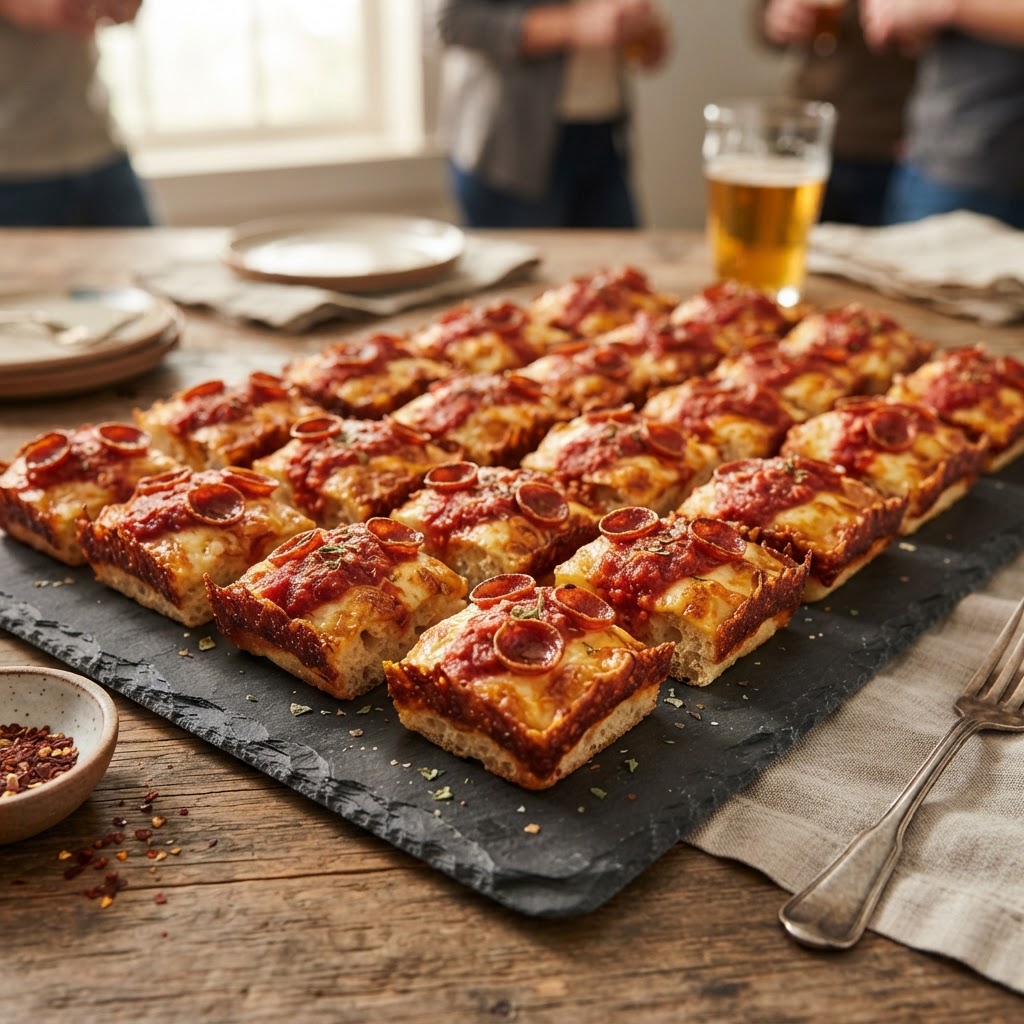
Detroit-style pizza is one of America's most distinctive regional pizza styles — a square, deep-dish pizza with a thick, airy crust, crispy caramelized cheese edges, and tomato sauce ladled over the top in racing stripes. It was invented in 1946 at Buddy's Rendezvous Pizzeria on Detroit's east side, when owner Gus Guerra used forged-steel pans borrowed from the city's automotive plants and topped the dough with Wisconsin brick cheese, which he melted all the way to the edges of the pan. The cheese caramelizes against the high-sided pan walls, creating the signature "frico" crust — a crispy, golden-brown cheese edge that is the soul of the pizza. The style was influenced by Sicilian-style pizza, but the Wisconsin brick cheese and the automotive pan origins make it uniquely Detroit.
For a party, we translate Detroit-style pizza into bite-sized squares, baked in the same blue-steel pans and cut into small pieces. The key is the cheese-to-the-edge technique — every bite should have some of that crispy, caramelized cheese corner.
Ingredients (makes 32 bites from two 9x13 pans, serves 8–12):
Dough: - 4 cups bread flour (high protein for the chewy structure) - 1¼ cups warm water - 2 tablespoons olive oil - 1 tablespoon sugar - 2 teaspoons kosher salt - 1 packet (2¼ teaspoons) active dry yeast
Toppings: - 1 pound Wisconsin brick cheese (or a blend of brick and mozzarella if brick is unavailable), shredded - 2 cups crushed tomatoes (San Marzano preferred) - 1 tablespoon olive oil - 1 teaspoon dried oregano - ½ teaspoon garlic powder - ½ teaspoon sugar - Salt and pepper to taste - 8 ounces pepperoni, sliced
Making the Dough: In the bowl of a stand mixer, combine warm water, sugar, and yeast. Let sit 5 minutes until foamy. Add flour, olive oil, and salt. Knead with the dough hook on medium speed 8–10 minutes, until the dough is smooth, elastic, and passes the windowpane test. Transfer to an oiled bowl, cover, and let rise 1–1½ hours, until doubled.
Shaping and the Double Proof: Divide dough in half. Stretch each piece to fit an oiled 9x13 blue-steel or cast-iron pan (the pans must have high sides). The dough will resist — let it rest 10 minutes and stretch again. Press the dough to the edges and up the sides. Cover and let rise (second proof) 45 minutes, until puffy and doubled again. The double proof is what creates the airy, focaccia-like structure.
The Sauce: Combine crushed tomatoes, olive oil, oregano, garlic powder, sugar, salt, and pepper. Do not cook — raw sauce is traditional and tastes brighter after baking. (Can be made 2 days ahead.)
Assembly and Baking: Preheat oven to 500°F (as hot as your oven goes). Press any large bubbles out of the dough. Lay pepperoni slices evenly over the dough. Spread the shredded cheese evenly over the pepperoni, pushing it all the way to the edges and up the sides of the pan — the cheese must touch the pan walls to create the frico crust. Bake 12–15 minutes, until the cheese is deeply golden and the edges are crispy and caramelized. Remove from oven and ladle the sauce in two or three racing stripes across the top. Return to oven 3–4 minutes until the sauce is hot and the crust edges are dark golden. Cool 5 minutes, then cut into bite-sized squares (about 2x2 inches).
Service: Serve warm, not piping hot — the cheese needs a few minutes to set so the bites hold their shape. The corner pieces, with their crispy frico edges, are the most coveted — distribute them fairly.
The Mimosa Pairing Logic: The rich, cheesy, slightly tangy character of Detroit-style pizza with its Wisconsin brick cheese and crispy frico crust calls for a mimosa with bright acid to cut through the fat and a fruit profile that complements the tomato. A classic orange mimosa is the most natural pairing — the orange's acid balances the cheese and the citrus echoes the tomato's acidity. A blood orange mimosa is exceptional — the slight bitterness and deeper fruit notes complement the caramelized cheese edges. For a more aromatic pairing, a spicy jalapeño mimosa mirrors the pepperoni's heat and creates a lively, complementary contrast. Avoid overly sweet, tropical mimosas — they fight with the tomato sauce.
Reference Links: - History of Detroit-style pizza and Buddy's: Buddy's Pizza - Detroit-style pizza: Wikipedia - Detroit-style pizza recipe and history: GFS - Wisconsin brick cheese guide: Wisconsin Cheese
Make-Ahead: Dough (overnight in the refrigerator — the cold rise improves flavor and structure). Sauce (2 days, refrigerated). The pizza is best baked close to service, but baked pizza can be held warm in a 200°F oven for up to 30 minutes. The frico crust softens over time, so serve within an hour of baking.
Pro Tips: Wisconsin brick cheese is the authentic choice — it melts smoother and has a tangier, butterier flavor than mozzarella, and it caramelizes into a superior frico. If you cannot find it, use a 50/50 blend of mozzarella and mild cheddar as a substitute. The pans must have high, straight sides — the cheese needs vertical walls to climb and caramelize against. Do not skimp on the cheese or pull it back from the edges — the cheese-to-the-edge technique is what makes Detroit-style pizza what it is. The sauce goes on top, not underneath — this is the backwards layering that characterizes the style, and it keeps the crust from getting soggy. And bake at the highest possible temperature — 500°F minimum — to achieve the deep caramelization of the frico crust.
Rate this recipe
Be the first to rate this recipe
to submit your rating.
Perfect Mimosa Pairings
Mimosas that pair perfectly with this dish
Recent Posts

Couscous Royale: North Africa's Grand Platter of Lamb, Chicken, and Merguez
October 14, 2026

Seattle Cream Cheese Dog Bites: Hadley Long's 1989 Pioneer Square Invention
October 14, 2026

Khao Soi: Chiang Mai's Northern Thai Coconut Curry Noodles
October 13, 2026

Korean Bibimbap: Jeonju's Joseon Dynasty Mixed Rice
October 11, 2026

Spaghetti alla Carbonara: Rome's World War II Pasta of Eggs, Guanciale, and Pecorino
October 9, 2026