Detroit Polish Paczki: The Hamtramck Fat Tuesday Doughnut Born of Polish Immigrant Bakeries
August 28, 2026
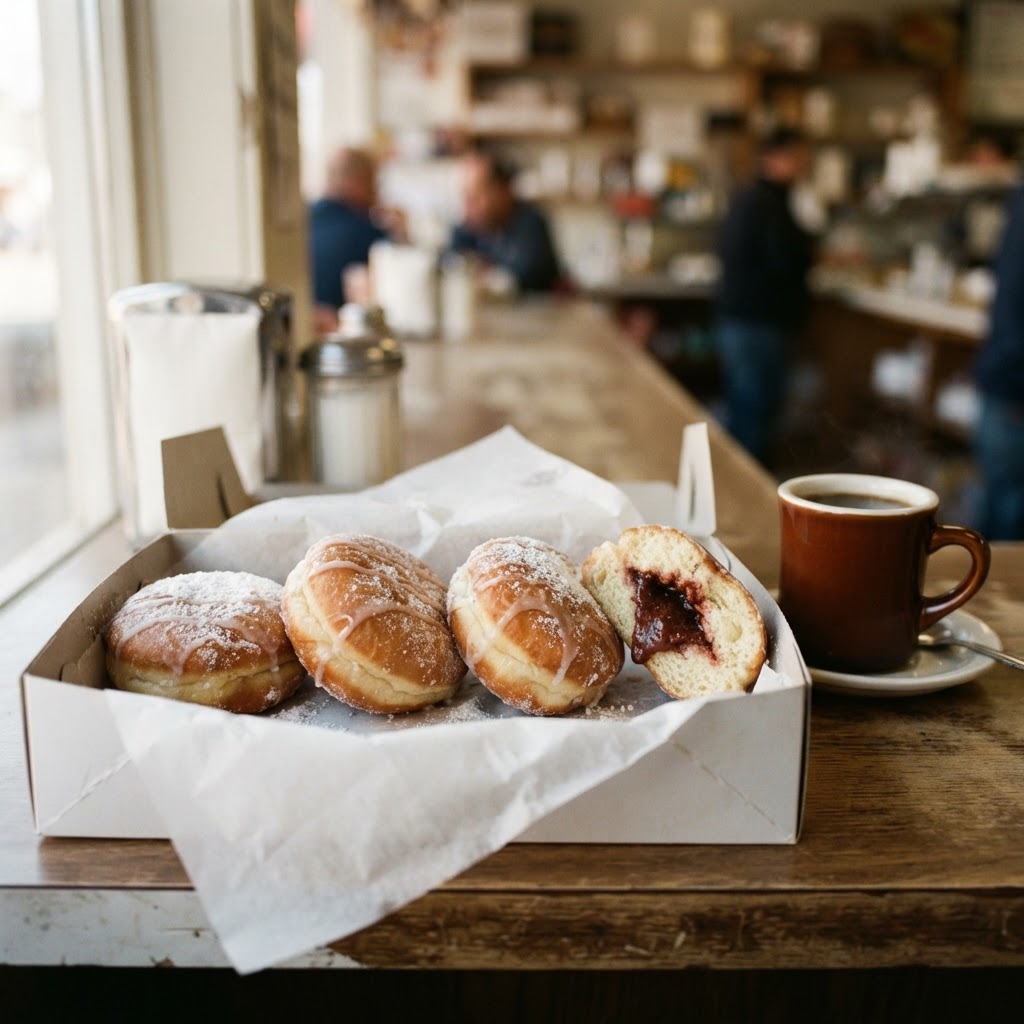
The pączek (singular) or pączki (plural) is a Polish filled doughnut, a round of rich, yeasted dough enriched with eggs, butter, and a splash of spirits, fried until golden, glazed or dusted with powdered sugar, and filled with prune, apricot, raspberry, custard, or rosehip jam. According to Pure Michigan, the history of pączki reaches back to medieval Poland, and Hamtramck, a Detroit enclave settled by Polish workers in the 1900s, became the epicenter of Michigan's pączki culture, where the tradition of making the doughnuts on Fat Tuesday to use up lard, sugar, and eggs before the fasting of Lent was preserved and amplified by Polish-American bakeries that still draw lines around the block before dawn. Detroit Eater confirms that the tradition of making paczki for Fat Tuesday has deep roots in Polish households as a means to utilize excess shortening and eggs and prevent food waste before the onset of Lent, and that bakeries across metro Detroit present the doughnuts filled with prune, apricot, lemon, blueberry, raspberry, and custard, with Hamtramck mainstays like New Palace Bakery opening at 3 a.m. on Fat Tuesday to serve the lines of fans wrapped around the building.
The genius of the pączek is the richness of the dough. Unlike a standard doughnut, the pączek dough is enriched with egg yolks, butter, and a spoonful of spirits or rum, which keeps the interior moist and tender and prevents the oil from soaking too deeply during frying. The filling, traditionally prune or rosehip, is piped in after frying, and the doughnut is glazed or rolled in sugar while still warm. In Detroit, Paczki Day is a civic holiday, a morning when the entire region, Polish or not, lines up at bakeries before sunrise to buy boxes of the doughnuts, a tradition so strong that it has made Hamtramck the pączki capital of America.
About the Ingredients
Flour — all-purpose or bread flour, for a dough that is strong enough to hold the filling but tender when fried.
Yeast — active dry yeast or fresh yeast, for the slow, enriched rise.
Egg yolks — several egg yolks in the dough, for richness, color, and tenderness. This is what makes a pączek richer than a standard doughnut.
Butter and milk — melted butter and warm whole milk, for the enriched dough.
Spirits — a tablespoon of rum, vodka, or спирит, a traditional addition that keeps the dough tender and prevents excess oil absorption during frying.
Filling — prune butter (powidła), apricot, raspberry, custard, or rosehip jam, piped into the fried doughnut with a piping bag.
Sugar — powdered sugar for dusting, or a thin sugar glaze. Some traditional pączki are rolled in granulated sugar while still warm.
Oil — vegetable oil or lard, for deep frying, heated to 360°F.
Ingredients (makes 12 pączki): - 1 cup warm whole milk - 1 packet (2 1/4 tsp) active dry yeast - 1/4 cup granulated sugar - 4 large egg yolks - 1/4 cup butter, melted and cooled - 1 tbsp rum or vodka - 1 tsp salt - 1 tsp vanilla extract - 3 to 3 1/2 cups all-purpose flour - Vegetable oil, for frying - 1 cup prune butter (powidła), apricot jam, or custard, for filling - Powdered sugar, for dusting
Instructions: In a large bowl, dissolve the yeast in the warm milk. Add the sugar, egg yolks, melted butter, rum, salt, and vanilla. Gradually add the flour, kneading until a soft, smooth, elastic dough forms, about 8 minutes. The dough should be soft but not sticky.
Cover and let rise in a warm place until doubled, about 1 1/2 hours.
Turn the dough out onto a lightly floured surface. Divide into 12 equal pieces. Shape each into a smooth ball and place on a parchment-lined tray, spaced apart. Cover loosely and let rise until puffed and nearly doubled, about 45 minutes.
Heat 2 inches of oil in a deep pot to 360°F. Carefully lower 3 or 4 pączki at a time into the oil. Fry until deep golden on one side, about 2 minutes, then flip and fry until golden on the other side, about 2 minutes more. Remove with a slotted spoon and drain on paper towels.
While still warm, roll the pączki in powdered sugar or drizzle with a simple glaze. Let cool until just warm.
When cool enough to handle, poke a hole in the side of each pączek with a small knife. Fill a piping bag fitted with a narrow tip with prune butter, apricot jam, or custard and pipe into each doughnut until it swells slightly. Dust again with powdered sugar and serve warm.
The Mimosa Pairing Logic: The rich, sweet, fruit-filled pączki want a bright, berry-forward sparkling drink that can cut the richness and echo the jam filling. A rose raspberry mimosa is the natural match, its raspberry and rosé echoing the fruit filling and the bubbles lifting the heavy dough. A peach bellini mimosa is equally lovely, its peach sweetness a gentle companion to the prune or apricot. This pairing is a sparkling toast to the Polish bakers of Hamtramck and the Fat Tuesday lines that start before dawn.
Reference Links: - From Medieval Europe to the Motor City: The History of Pączki (Hamtramck, Polish workers, 1900s, Fat Tuesday): Pure Michigan - The Best Paczki in Metro Detroit (Fat Tuesday, Polish tradition, lard and eggs, New Palace Bakery, Hamtramck): Detroit Eater
Rate this recipe
Be the first to rate this recipe
to submit your rating.
Recent Posts

Couscous Royale: North Africa's Grand Platter of Lamb, Chicken, and Merguez
October 14, 2026

Seattle Cream Cheese Dog Bites: Hadley Long's 1989 Pioneer Square Invention
October 14, 2026

Khao Soi: Chiang Mai's Northern Thai Coconut Curry Noodles
October 13, 2026

Korean Bibimbap: Jeonju's Joseon Dynasty Mixed Rice
October 11, 2026

Spaghetti alla Carbonara: Rome's World War II Pasta of Eggs, Guanciale, and Pecorino
October 9, 2026