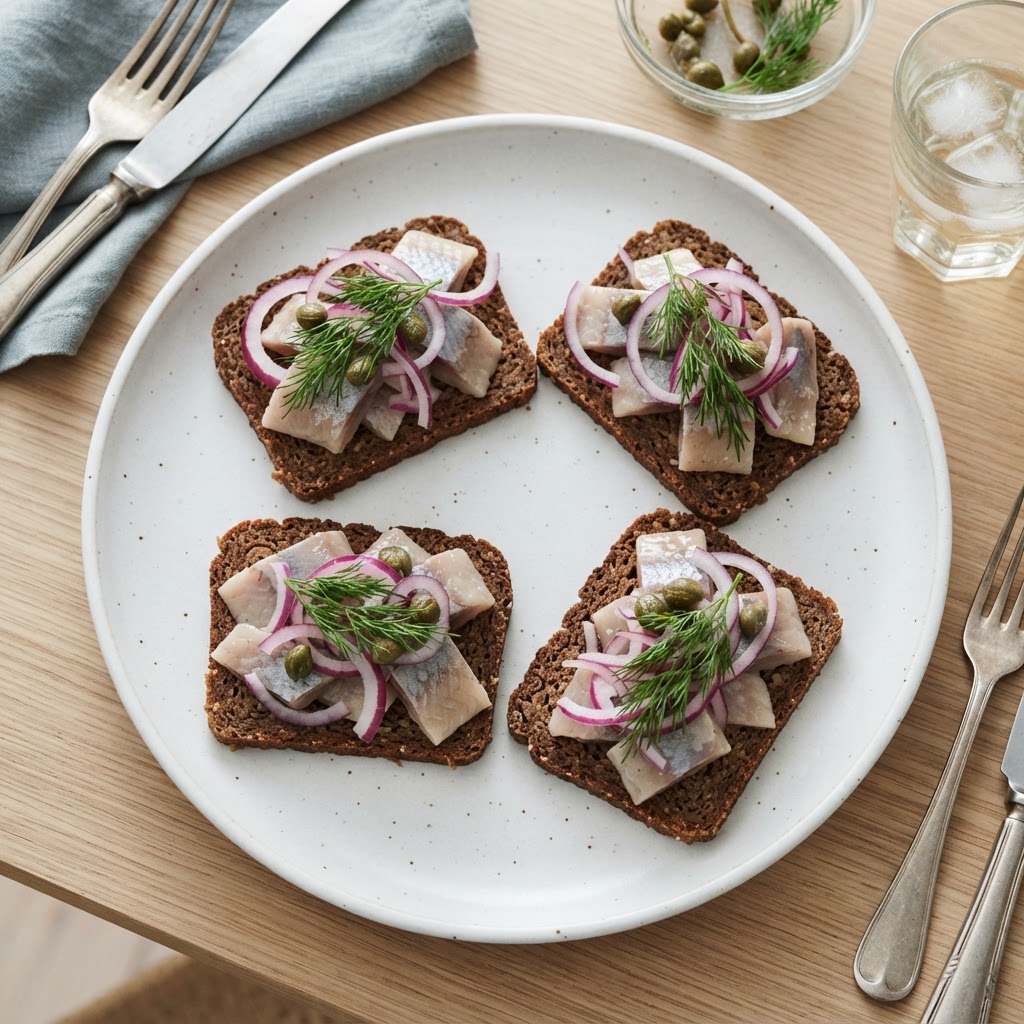
Danish Smørrebrød with Pickled Herring and Crème Fraîche
July 22, 2026
Smørrebrød (pronounced smuhr-bruhr) is the national lunch of Denmark — an open-faced sandwich built on a slice of dense, dark rye bread (rugbrød), spread with butter, and topped with an array of carefully composed ingredients. The name literally means "butter and bread." Smørrebrød is eaten at every Danish lunch table, from the simplest home kitchen to the most elegant lunch restaurants (frokoststeder) in Copenhagen, where the art of the open-faced sandwich has been refined to extraordinary heights over more than a century.
The pickled herring smørrebrød is one of the most traditional and popular varieties. Herring has been a staple of Scandinavian cuisine for over a thousand years — the fish was abundant in the North Sea and the Baltic, and pickling was the primary method of preservation before refrigeration. Danish pickled herring (syltede sild) is marinated in a sweet-sour brine of vinegar, sugar, and spices, and it is the classic first course of any proper Danish lunch, accompanied by snaps (aquavit) and beer. For a party, miniature smørrebrød on small rye bread squares is an elegant, authentic Scandinavian appetizer.
The rye bread (rugbrød) is the foundation of smørrebrød and must not be substituted. Danish rye is a dense, dark, sourdough-based bread made with whole rye flour and seeds — it is nothing like American sandwich rye. Its dense, chewy texture and deep, sour flavor are what make smørrebrød work.
About the Ingredients
Rugbrød (Danish rye bread) can be purchased at Scandinavian specialty shops or made at home (a multi-day sourdough process). Scandinavian Butik ships rugbrød nationwide in the United States. If unavailable, a very dense, seed-heavy whole rye bread from a good bakery is the closest substitute. Do not use soft, sliced deli rye — it lacks the density and complexity.
Pickled herring is available at Scandinavian markets, many gourmet shops, and online. Scandinavian Butik stocks multiple varieties of imported Danish and Swedish pickled herring. The most traditional for smørrebrød is the sweet-sour marinated herring in vinegar (syltede sild). Look for herring in glass jars — the quality is generally superior to canned.
Crème fraîche is a French cultured cream with a tangy, luxurious texture. It is the ideal accompaniment to pickled herring — richer and more elegant than sour cream. Vermont Creamery makes an excellent crème fraîche widely available in the United States.
Red onions, capers, and fresh dill are the traditional garnishes for herring smørrebrød. The sharpness of the raw onion, the brine of the capers, and the aromatic freshness of the dill create a layered flavor profile that complements the sweet-sour herring.
Ingredients (makes 24 smørrebrød bites): - 1 dense loaf of rugbrød (Danish rye bread), sliced ¼ inch thick - 1 jar (8–10 oz) pickled herring in vinegar (syltede sild), drained - ½ cup crème fraîche - 1 small red onion, very thinly sliced - 3 tablespoons capers, drained - Fresh dill sprigs - Softened unsalted butter - Flaky sea salt and white pepper
Instructions: Cut the rye bread into small rectangles or squares, approximately 2×2 inches. Spread a thin, even layer of softened butter on each piece of rye — the butter is traditional and acts as a moisture barrier that prevents the bread from becoming soggy.
Top each piece with a spoonful of crème fraîche, spread evenly. Place 2–3 pieces of pickled herring on top of the crème fraîche. Arrange a few slices of red onion over the herring. Scatter a few capers on top. Garnish with a small sprig of fresh dill. Finish with a pinch of flaky salt and a grind of white pepper.
Serve at cool room temperature — the herring should be chilled, the bread at room temperature.
The Mimosa Pairing Logic: The sweet-sour pickled herring, the tangy crème fraîche, and the dense rye bread create a complex flavor profile that is beautifully complemented by a mimosa. A classic Champagne mimosa or a cucumber mint mimosa is ideal — the crisp, clean citrus in the mimosa echoes the vinegar in the pickled herring, while the wine's acidity cuts through the richness of the crème fraîche and the dense rye. The bubbles provide a refreshing, palate-cleansing effect between bites of this intensely flavored Scandinavian classic. The mimosa replaces the traditional snaps (aquavit) with a lighter, brunch-appropriate alternative.
Reference Links: - Smørrebrød with pickled herring: Serious Eats - Danish open-faced sandwiches: Skandibaking - Danish cuisine guide: TasteAtlas
Make-Ahead: The pickled herring can be drained and kept refrigerated for up to 1 week. The rye bread can be sliced up to 2 days ahead and stored airtight. The crème fraîche can be portioned 1 day ahead. Assemble the smørrebrød no more than 1 hour before serving — the butter barrier helps, but the bread will eventually soften from the toppings. The assembled sandwiches should be kept cool and covered until serving.
Pro Tips: The butter layer is not optional — it is the traditional moisture barrier that keeps the dense ry bread from becoming soggy under the wet toppings. The herring should be well-drained — excess brine makes the bread soggy and overpowers the other flavors. Slice the red onion paper-thin — thick slices are too aggressive against the delicate herring. The dill should be fresh and added at the very end — it is the aromatic element that ties the dish together. Serve the smørrebrød with a fork and knife, as is traditional in Denmark — these are composed bites, not finger food, though in party format they can be eaten in one or two bites.
Rate this recipe
Be the first to rate this recipe
to submit your rating.
Perfect Mimosa Pairings
Mimosas that pair perfectly with this dish
Recent Posts
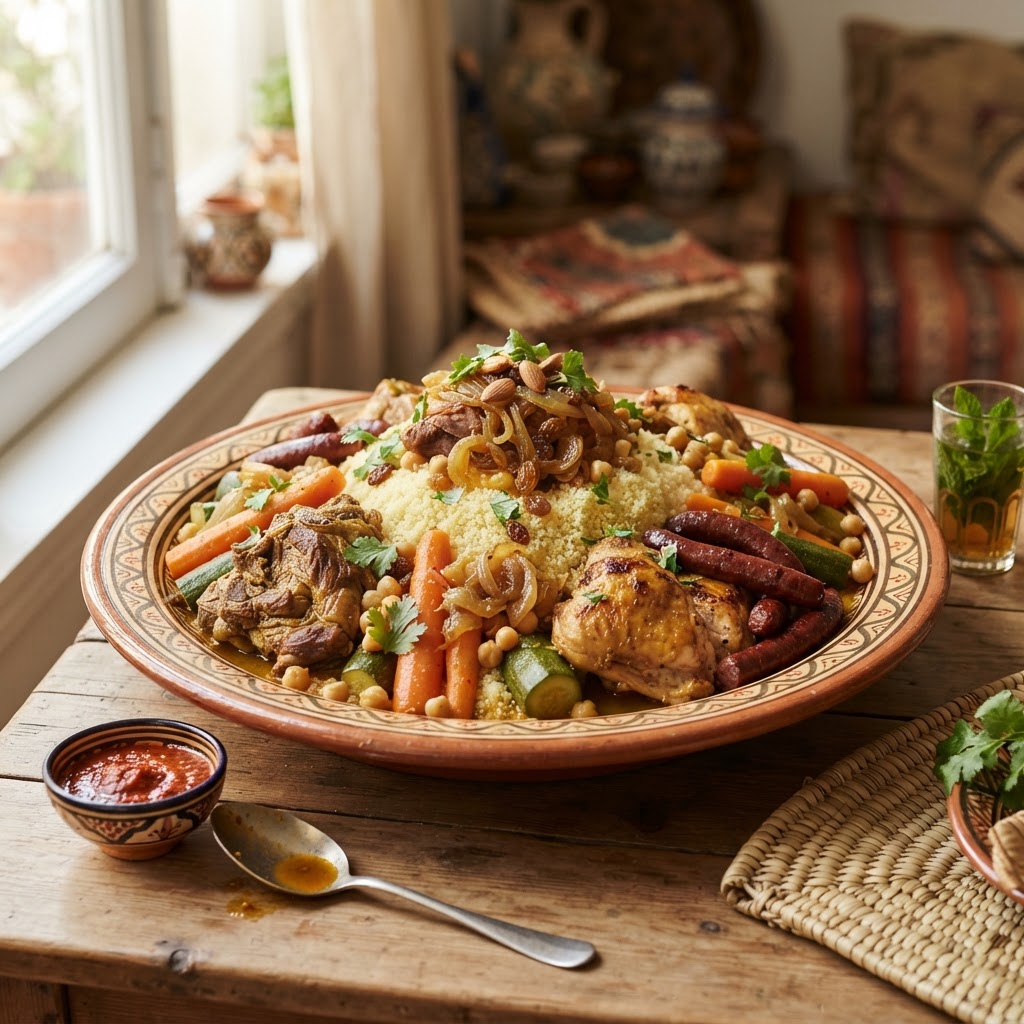
Couscous Royale: North Africa's Grand Platter of Lamb, Chicken, and Merguez
October 14, 2026
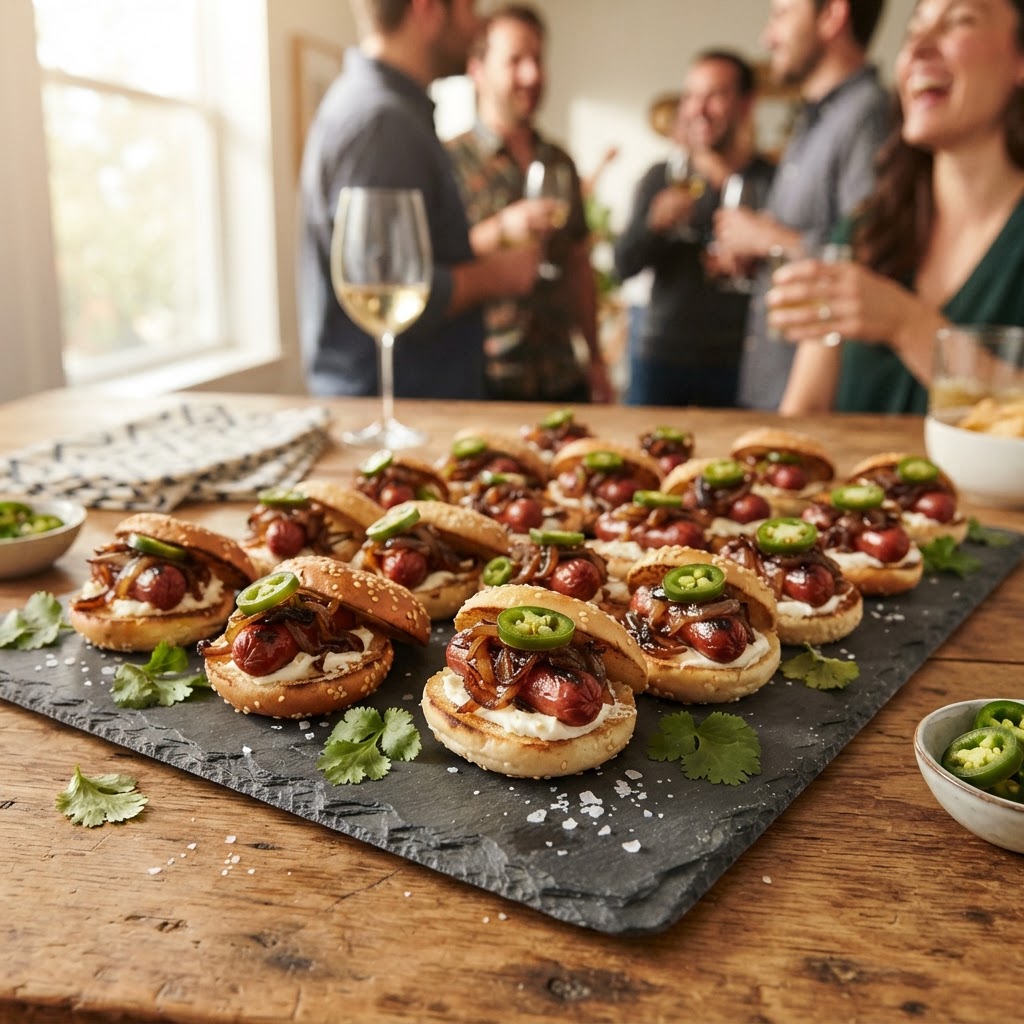
Seattle Cream Cheese Dog Bites: Hadley Long's 1989 Pioneer Square Invention
October 14, 2026
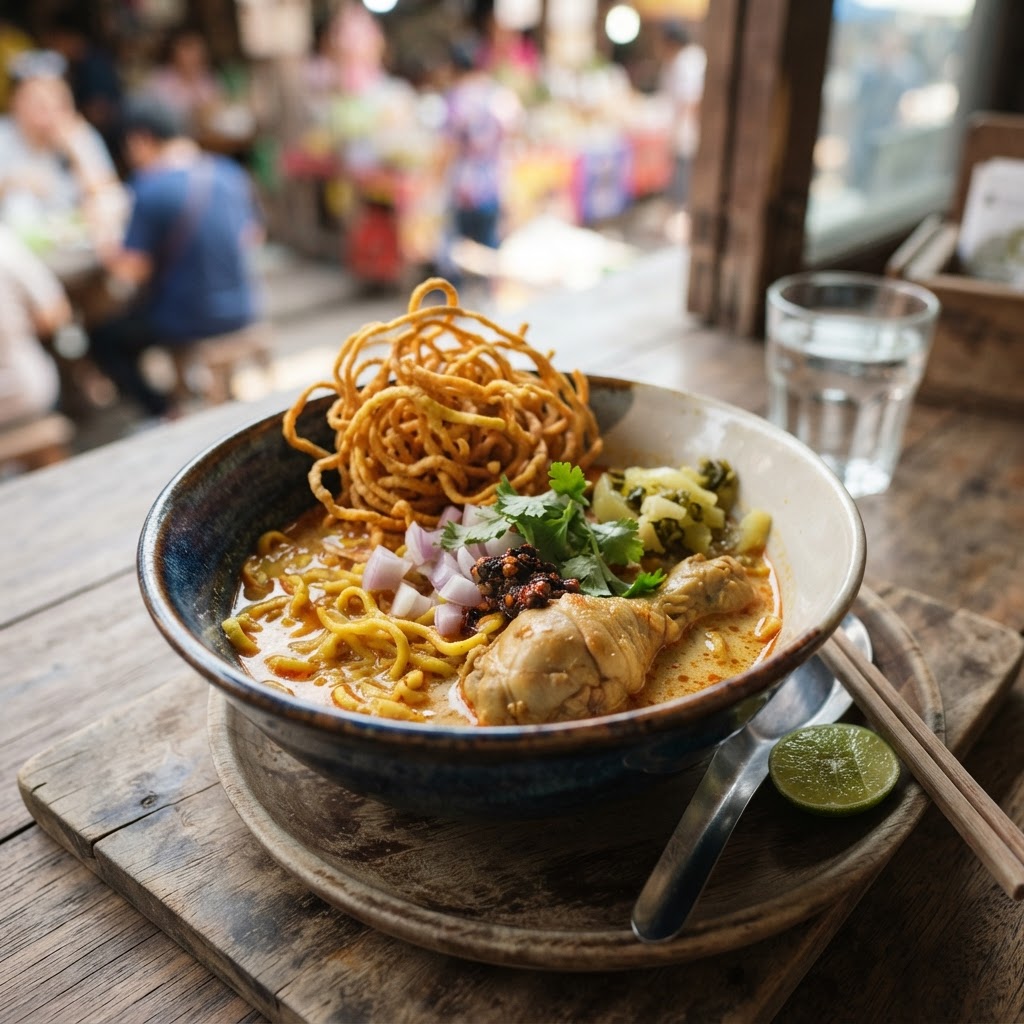
Khao Soi: Chiang Mai's Northern Thai Coconut Curry Noodles
October 13, 2026
Korean Bibimbap: Jeonju's Joseon Dynasty Mixed Rice
October 11, 2026
Spaghetti alla Carbonara: Rome's World War II Pasta of Eggs, Guanciale, and Pecorino
October 9, 2026