Daifuku: The Japanese Strawberry Mochi Sweet
June 28, 2026
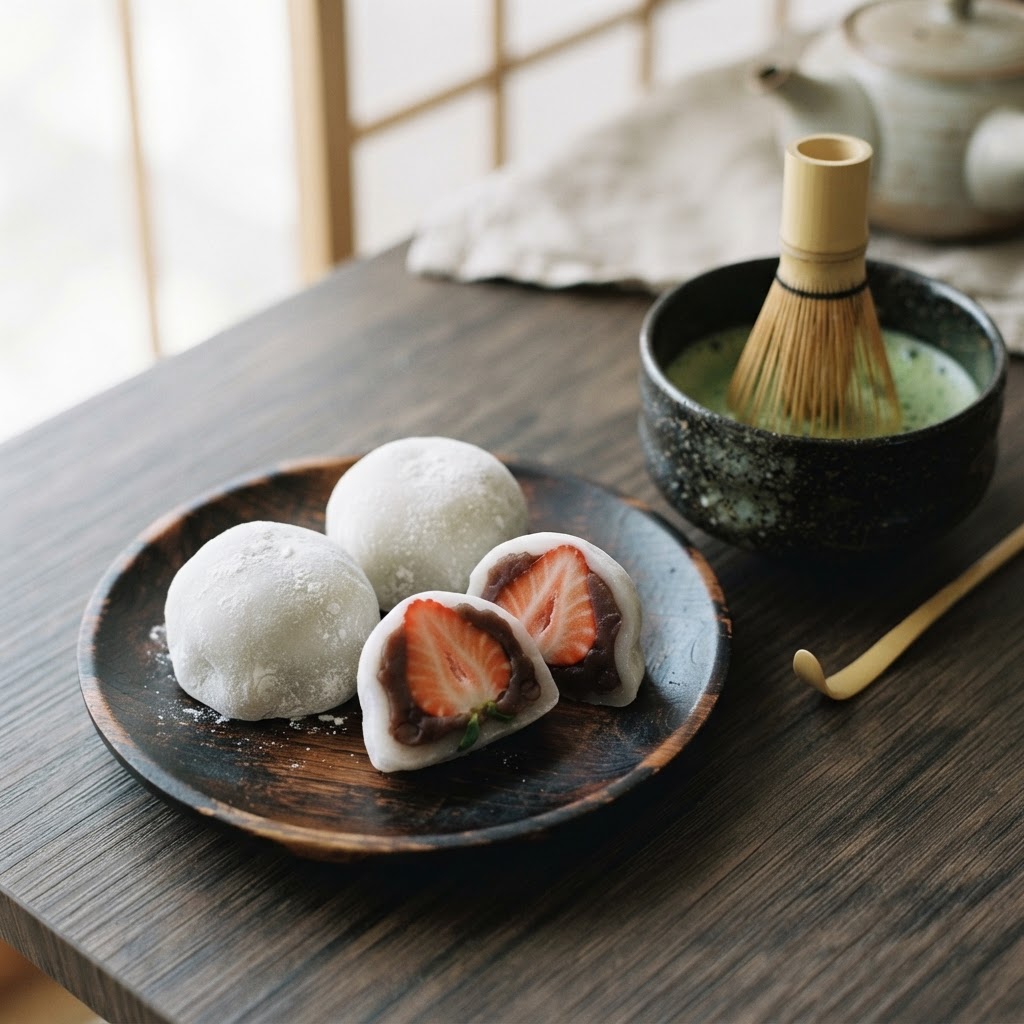
Daifuku is the great confection of Japan — a soft, round, slightly yielding ball of mochi (pounded glutinous rice) stuffed with a sweet filling, most beautifully with a whole fresh strawberry and sweetened red bean paste (*anko*), a confection called *ichigo daifuku* that is one of the most beautiful two-bite sweets in the world. The mochi is delicate and elastic, dissolving on the tongue, and the surprise of the whole strawberry — tart and juicy — at the center is one of the great pleasures of Japanese confectionery. According to Wikipedia, daifuku is a soft, round mochi stuffed with a sweet filling, such as sweetened red bean paste (*anko*) or white bean paste (*shiro an*); *ichigo daifuku* is a version containing a whole strawberry inside. The Wikipedia entry on mochi records that mochi is a Japanese rice cake made of *mochigome*, a short-grain glutinous rice, steamed and pounded into paste and molded into the desired shape; the custom of sweetened mochi became popular among the general public in the 18th and 19th centuries, when sugar became more accessible in Japan.
The genius of daifuku is the texture. The mochi, made by pounding steamed glutinous rice until it becomes a smooth, elastic paste, is unlike any Western confection — soft, stretchy, and yielding, dissolving into a subtle sweetness on the tongue. The sweet red bean paste (*anko*) inside is smooth and earthy, and in the *ichigo* version, a whole fresh strawberry is tucked between the bean paste and the mochi, so that each bite carries the soft mochi, the sweet bean, and the tart, juicy fruit in a single, perfect mouthful.
About the Ingredients
Mochiko (glutinous rice flour) — sweet rice flour (mochiko or shiratamako), the modern shortcut for making mochi at home without the traditional pounding (*mochitsuki*); the flour is mixed with water and sugar and microwaved or steamed into a smooth, elastic dough.
Sugar — a little sugar in the mochi dough for a subtle sweetness; the mochi itself is mildly sweet, and the filling provides the rest.
Cornstarch or potato starch — for dusting; the mochi is extremely sticky when fresh, and a generous dusting of starch on the work surface, hands, and tools is essential for shaping.
Anko (sweet red bean paste) — smooth, sweetened adzuki bean paste, the traditional filling of daifuku; it can be homemade or bought from a Japanese grocer, and the smooth (*koshi-an*) version is preferred for daifuku.
Fresh strawberries — small, ripe, fragrant strawberries, hulled, for *ichigo daifuku*; the strawberry is wrapped in a thin layer of anko, then enclosed in the mochi.
Ingredients (makes 8 daifuku): - 1 cup mochiko (glutinous sweet rice flour) - 1/4 cup granulated sugar - 3/4 cup water - Cornstarch or potato starch, for dusting - 1/2 cup smooth anko (sweet red bean paste) - 8 small ripe strawberries, hulled
Instructions: In a microwave-safe bowl, whisk the mochiko, sugar, and water until smooth. Cover loosely with plastic wrap and microwave on high for 1 minute. Stir with a wet spatula. Cover and microwave another 1 minute, then stir again; microwave 30 seconds more until the dough is glossy, slightly translucent, and very sticky.
Dust a work surface generously with cornstarch. Turn the hot mochi out onto the starch and dust the top. Cut into 8 equal pieces. Flatten one piece into a 3-inch round on a starch-dusted surface.
Wrap a strawberry in a thin layer of anko (about 1 tbsp), covering the berry except the top. Place the wrapped berry in the center of the mochi round, top-side down. Gather the edges of the mochi up around the filling, pinch to seal, and invert so the seam is on the bottom. Repeat with the remaining mochi and berries. Serve the day they are made.
The Mimosa Pairing Logic: The soft, subtly sweet mochi and the tart strawberry want a bright, fruit-driven drink that echoes the fruit and lifts the rice's delicacy. A strawberry mimosa is the inspired match — the strawberry is a direct mirror of the *ichigo* and the bubbles lift the mochi's delicacy. A classic Champagne mimosa is equally lovely, the orange a bright, clean counter to the sweet bean and the soft rice. This is the brunch equivalent of a fresh daifuku and a cup of matcha — a sparkling toast to Japan and the confection that turned pounded rice into a jewel.
Reference Links: - Daifuku (soft mochi, sweet red bean paste, ichigo daifuku, strawberry): Wikipedia - Mochi (Japanese rice cake, mochigome, mochitsuki, sweetened 18th century): Wikipedia
Make-Ahead: Daifuku must be made the day they are eaten — ideally within hours. The mochi hardens and the strawberry weeps overnight, and a day-old daifuku is a hard, weeping shadow of a fresh one. The anko can be made or bought days ahead and held refrigerated. The strawberries should be hulled and dried the day of. Mochi does not refrigerate well; the cold hardens it, and it should be kept at a cool room temperature, covered, until serving.
Pro Tips: Use mochiko (glutinous sweet rice flour), not regular rice flour; only glutinous rice has the stretchy, elastic texture of mochi, and regular rice flour makes a crumbly dough. Dust everything generously with cornstarch; fresh mochi is aggressively sticky, and under-dusted hands and surfaces make a mess. Work while the mochi is warm; cold mochi is less pliable and tears more easily. Wrap the strawberry in a thin layer of anko; too much anko overwhelms the berry, and the strawberry should be the surprise at the center. Seal the mochi well at the bottom; an unsealed daifuku leaks the filling and dries out. Eat the day they are made; a fresh daifuku is soft and yielding, and a day-old one is hard and weeping. Choose small, ripe strawberries; a large berry bursts the mochi, and an underripe one lacks the fragrance that makes the *ichigo* special.
Rate this recipe
Be the first to rate this recipe
to submit your rating.
Recent Posts

Couscous Royale: North Africa's Grand Platter of Lamb, Chicken, and Merguez
October 14, 2026

Seattle Cream Cheese Dog Bites: Hadley Long's 1989 Pioneer Square Invention
October 14, 2026

Khao Soi: Chiang Mai's Northern Thai Coconut Curry Noodles
October 13, 2026

Korean Bibimbap: Jeonju's Joseon Dynasty Mixed Rice
October 11, 2026

Spaghetti alla Carbonara: Rome's World War II Pasta of Eggs, Guanciale, and Pecorino
October 9, 2026