Crème Caramel al Moscato
March 22, 2026
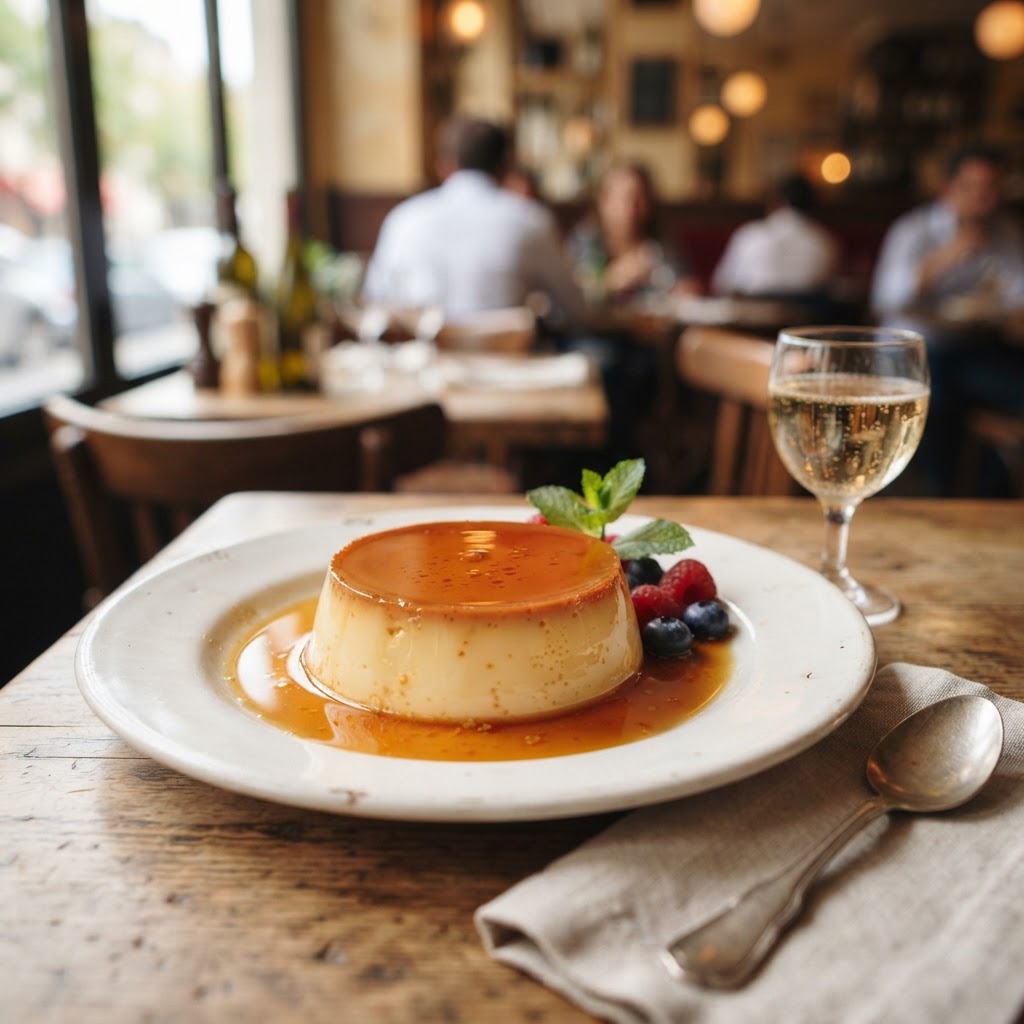
Crème caramel — known as flan in Spanish-speaking countries, pudim in Portugal, and crème renversée in French — is one of the most elegant and ancient desserts in the world. A silky smooth custard baked in a caramel-lined mold, then inverted so the caramel sauce pools around and over the custard. It's simple, refined, and has a history spanning over two thousand years.
The origins of custard desserts trace back to ancient Rome. The Romans were the first to farm chickens for their eggs on a large scale, and egg surpluses led to the creation of various custard dishes, both sweet and savory. The Roman dish called "tyropatinam" — a mixture of cheese, honey, and eggs — is sometimes cited as an early ancestor of the flan. The word "flan" itself comes from the Latin "flado" (also spelled "flaon"), which referred to a flat cake or custard.
The dish evolved significantly during the medieval period in Spain. Spanish convents and monasteries became centers of custard-making, and the Spanish added caramel to the dish — the innovation that distinguishes crème caramel from other custards. The caramel, which begins as a hard, brittle layer at the bottom of the mold, dissolves during baking into a rich, golden syrup that coats the custard when inverted. The Spanish brought flan to the Americas during the colonial period, where it became deeply embedded in the cuisines of Mexico, Central America, and the Caribbean.
In France, the dish is called crème caramel (or crème renversée, meaning "upside-down cream"), and it was refined by French chefs into the elegant version we know today. The French version is typically lighter and more delicate than the Spanish flan, made with milk (or a mix of milk and cream) rather than sweetened condensed milk, and baked in a water bath for the gentlest, most even cooking.
Our Mimosavated version adds a splash of Moscato d'Asti to the custard — the fragrant, lightly sparkling sweet wine with aromas of peach, orange blossom, and honeysuckle adds a delicate floral sweetness that elevates the simple custard without overpowering its delicate flavor.
Ingredients (serves 6):
The Caramel: - 7 oz granulated sugar - ¼ cup water - 1 tablespoon lemon juice (to prevent crystallization)
The Moscato Custard: - 2 ⅛ cups whole milk - 4 large eggs - 2 large egg yolks - 4 ¼ oz granulated sugar - ¼ cup Moscato d'Asti - 1 teaspoon vanilla extract - Zest of 1 lemon (strips, for infusing the milk) - A pinch of salt
Making the Caramel: Preheat the oven to 302°F (300°F). Have six ⅔ cup ramekins ready.
In a saucepan, combine the sugar, water, and lemon juice. Bring to a boil over medium-high heat, without stirring — swirling the pan gently if needed to distribute the heat. Cook until the caramel turns a deep amber color — about 8–10 minutes. Watch carefully, as caramel goes from amber to burnt very quickly. Remove from heat immediately when it reaches the right color.
Carefully and quickly pour the hot caramel into the ramekins, tilting to coat the bottom evenly. The caramel will harden immediately — this is correct. Work quickly, as the caramel sets fast.
Making the Moscato Custard: In a saucepan, heat the milk with the lemon zest strips until just below boiling. Remove from heat and let steep for 10 minutes, then remove the zest.
In a bowl, whisk together the eggs, egg yolks, sugar, and salt until just combined — don't whisk too vigorously, or you'll incorporate too much air, which creates bubbles in the custard. Gradually whisk in the warm milk, then the Moscato and vanilla. Strain through a fine sieve into a pitcher, to remove any egg strands or bubbles.
Baking: Pour the custard mixture into the caramel-lined ramekins. Place the ramekins in a large roasting pan and pour boiling water into the pan to come halfway up the sides of the ramekins — this water bath ensures gentle, even cooking and prevents the custard from curdling.
Bake for 35–45 minutes, until the custards are set around the edges but still have a slight wobble in the center — they will continue to set as they cool. Remove from the water bath and let cool to room temperature, then refrigerate for at least 4 hours, ideally overnight.
Serving: To unmold, run a thin knife around the edge of each ramekin. Place a dessert plate upside-down on top of the ramekin, then quickly invert the whole thing. Give it a gentle shake — the crème caramel should release onto the plate, with the caramel sauce pooling around it. Serve cold.
The Mimosa Pairing Logic: Since the custard contains Moscato d'Asti, pair with a peach bellini mimosa — peach purée and Prosecco. The peach echoes the Moscato and complements the delicate, creamy custard. A classic Prosecco mimosa — orange juice and Prosecco — is also excellent, the bright citrus cutting through the rich custard. Avoid heavy or creamy mimosas — crème caramel is delicate and elegant, and you need something equally light and bright.
Reference Links: - Crème caramel on Wikipedia (French origin): Wikipedia - The Extensive History of Flan (Roman origins, Spanish evolution): Socarrat NYC - Flan: The Awe-Inspiring 2000-Year Evolution: Food Culture Bites - Creme Caramel or Flan recipe (French vs Spanish): David Lebovitz - Moscato d'Asti wine guide: Wine Folly
Make-Ahead: Crème caramel must be made at least 4 hours ahead and ideally overnight. It can be refrigerated for up to 3 days — it actually improves after a day as the caramel continues to dissolve and soak into the custard. The caramel can be made a day ahead and kept in the ramekins at room temperature. Do not freeze — the texture will suffer and the custard will separate.
Pro Tips: Watch the caramel like a hawk — it goes from golden to burnt in seconds, and burnt caramel is bitter and inedible. Remove from heat the moment it turns deep amber. Pour the caramel into the ramekins immediately — it hardens fast and you won't be able to pour it once it sets. Don't whisk the eggs too vigorously — incorporating air creates bubbles in the custard, which ruins the silky texture. Strain the custard mixture through a fine sieve — this removes any egg strands and ensures a perfectly smooth texture. The water bath is essential — it provides gentle, even heat that prevents the custard from curdling or overcooking. Don't overbake — the custards should still wobble in the center when you remove them; they continue to set as they cool. Chill thoroughly before unmolding — at least 4 hours, ideally overnight. Warm or under-chilled custards will fall apart when inverted. Run a knife around the edge before unmolding — this breaks the seal and allows air to enter, helping the custard release.
Rate this recipe
Be the first to rate this recipe
to submit your rating.
Recent Posts

Couscous Royale: North Africa's Grand Platter of Lamb, Chicken, and Merguez
October 14, 2026

Seattle Cream Cheese Dog Bites: Hadley Long's 1989 Pioneer Square Invention
October 14, 2026

Khao Soi: Chiang Mai's Northern Thai Coconut Curry Noodles
October 13, 2026

Korean Bibimbap: Jeonju's Joseon Dynasty Mixed Rice
October 11, 2026

Spaghetti alla Carbonara: Rome's World War II Pasta of Eggs, Guanciale, and Pecorino
October 9, 2026