Congee (Jook): The Ancient Chinese Rice Porridge That Heals
April 3, 2026
Congee — known as jook in Cantonese, zhou in Mandarin, and by many other names across Asia — is one of the oldest and most comforting foods in the world. A simple rice porridge, cooked slowly with plenty of water until the rice breaks down into a silky, creamy gruel, congee is the ultimate comfort food: nourishing, gentle on the stomach, and infinitely customizable with toppings. It's the Asian equivalent of chicken soup — the food you eat when you're sick, when you're cold, when you need comfort, or when you just want a warm, satisfying breakfast.
The history of congee is ancient. The word "congee" itself comes from the Tamil word "kanji," meaning "boiled [rice]," reflecting the dish's presence across South and East Asia. Congee probably originated in China, and cookbook author Eileen Yin-Fei Lo maintains that congee dates back to approximately 1000 BCE — over 3,000 years ago. The dish appears in ancient Chinese texts since the Zhou dynasty (c. 1046–256 BCE). One ancient text, the Zhou Shu, records the legend that the Yellow Emperor (Huangdi) began to cook porridge, suggesting that congee has been part of Chinese cuisine since the mythical origins of Chinese civilization. Since the history of rice cultivation in Asia stretches back to around 10,000 BCE in the lower Yangtze region, congee is among the oldest prepared foods in human history.
Congee was originally a food of necessity and economy — by cooking a small amount of rice with a large amount of water, a family could stretch a limited rice supply into a filling meal. Over centuries, this humble porridge evolved into a sophisticated dish with countless regional variations across China and the rest of Asia. In southern China (Cantonese cuisine), congee is typically made smooth and creamy, cooked for hours until the rice completely breaks down, and served with a wide array of toppings. In northern China, congee is often thicker and coarser, with the rice grains still partially intact. Beyond China, congee appears as "okayu" in Japan, "juk" in Korea, "lugaw" in the Philippines, "bubur" in Malaysia and Indonesia, and "khichdi" or "kanji" in India.
Congee is traditionally eaten for breakfast in China, and it's also the food of choice when someone is ill — the gentle, easily digestible porridge is soothing to an upset stomach. But congee is far more than just a sick-day food: a well-made congee with a beautiful array of toppings is one of the great breakfast dishes in world cuisine.
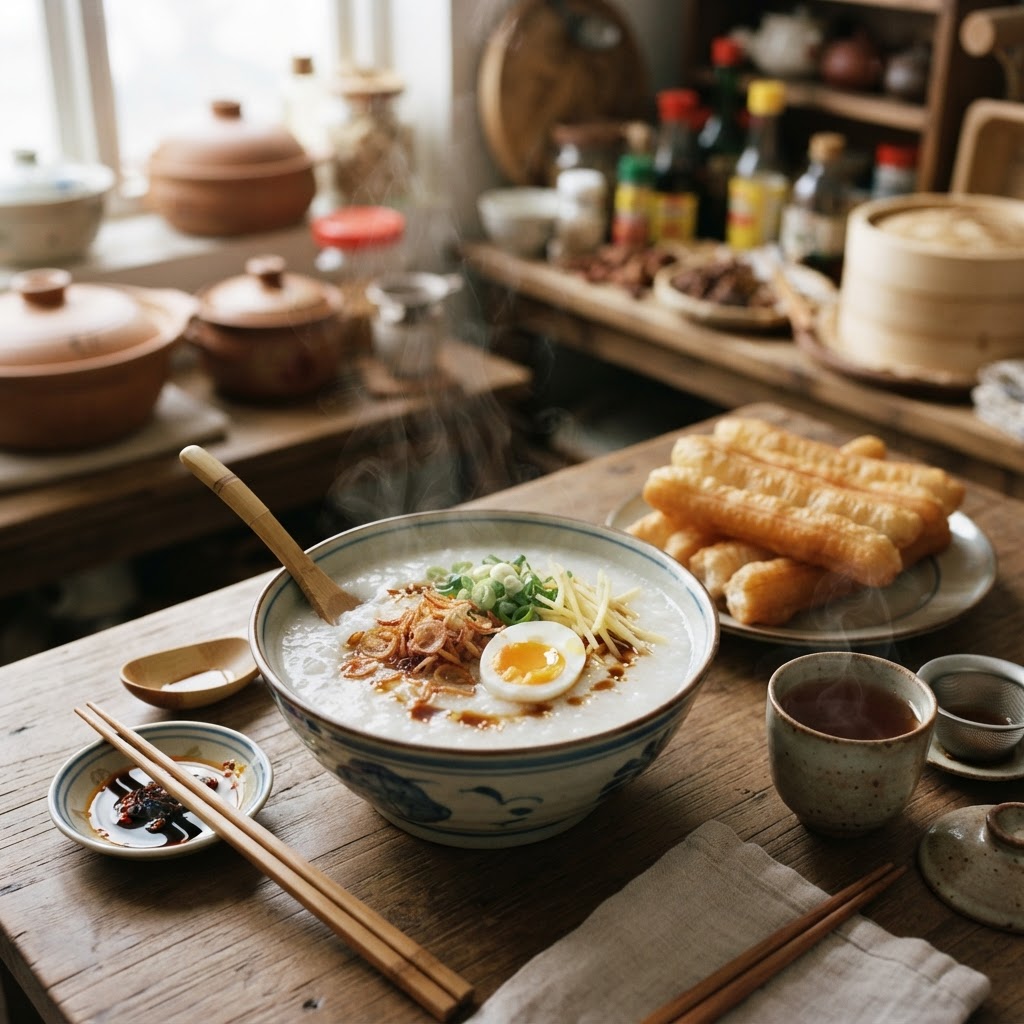
The key to a great congee is patience. The rice must be cooked slowly with plenty of water — typically a 1:8 or even 1:10 ratio of rice to water — for at least an hour, until the grains break down and the starches release, creating a silky, creamy texture. The congee itself is a blank canvas; it's the toppings that give it character. Traditional toppings include crispy fried shallots, sliced scallions, julienned ginger, a drizzle of soy sauce and sesame oil, soft-boiled or century eggs, sliced pork or fish, crispy youtiao (Chinese fried dough sticks), and a sprinkle of white pepper.
Our Mimosavated version makes a classic Cantonese-style congee, silky and smooth, topped with a beautiful array of traditional garnishes and served with youtiao for dipping.
Ingredients (serves 4):
The Congee: - 3 ½ oz long-grain white rice (Jasmine or regular) - 1 qt water (or a mix of water and chicken broth) - 2 ⅛ cups chicken broth (or more water for a vegetarian version) - 1 slice fresh ginger (about ⅓ oz), smashed - 1 teaspoon salt (or to taste) - 1 teaspoon vegetable oil (helps the rice break down faster)
The Toppings (choose your favorites): - 4 spring onions (scallions), sliced - 1 small piece fresh ginger, peeled and julienned into fine matchsticks - 4 soft-boiled eggs (cooked 6 minutes), halved - 3 ½ oz cooked chicken breast, shredded (optional) - 2 tablespoons crispy fried shallots (store-bought or homemade) - 2 tablespoons soy sauce - 1 tablespoon toasted sesame oil - 1 teaspoon white pepper (or to taste) - 4 youtiao (Chinese fried dough sticks), cut into pieces - Cilantro, chopped (optional) - Chili oil (optional)
Preparing the Congee: Rinse the rice in cold water until the water runs clear. Drain. In a large pot, combine the rice, water, chicken broth, ginger slice, salt, and oil. Bring to a boil over high heat, then reduce heat to low and simmer, partially covered, for 60–90 minutes, stirring occasionally to prevent the rice from sticking to the bottom. The congee is done when the rice grains have broken down completely and the mixture is creamy and silky — it should have the consistency of a thin porridge. If it's too thick, add more hot water or broth; if too thin, cook a little longer.
Remove the ginger slice. Taste and adjust the salt. Keep warm.
*(Shortcut method: For a faster congee, soak the rice for 2 hours, then freeze it for 1 hour before cooking. The frozen grains break down much faster, cutting the cooking time to 30–40 minutes.)*
Preparing the Toppings: While the congee is cooking, prepare the toppings. Soft-boil the eggs (6 minutes for runny yolks), then peel and halve. Shred the cooked chicken. Slice the scallions and julienne the ginger. Have the crispy shallots, soy sauce, sesame oil, white pepper, and youtiji ready.
Serving: Ladle the hot congee into bowls. Let each person top their own congee with their choice of garnishes: a drizzle of soy sauce and sesame oil, a sprinkle of white pepper, sliced scallions, julienned ginger, crispy fried shallots, a soft-boiled egg half, shredded chicken, and cilantro. Serve the youtiao on the side for dipping into the congee. Stir everything together and eat hot.
The Mimosa Pairing Logic: Congee is savory, comforting, and gentle. The ideal mimosa pairing is a classic Prosecco mimosa — orange juice and Prosecco. The bright, acidic citrus provides a refreshing contrast to the warm, soothing porridge, while the Prosecco's effervescence cleanses the palate between spoonfuls. A grapefruit mimosa is also excellent — the slight bitterness of grapefruit comple the savory, umami-rich toppings. Avoid heavy or sweet mimosas — congee is a gentle, savory dish, and you need something bright and clean to balance it.
Reference Links: - Congee on Wikipedia (ancient origins, Tamil "kanji"): Wikipedia - Congee Is A Comforting Rice Porridge With Many Faces (1000 BCE): Food52 - The history of congee (Zhou dynasty, 3000 years): SBS Food - Congee: The Rice Porridge That Bridges Cultures (Zhou dynasty): Slurrp - Jook (Chinese rice porridge) recipe: NYT Cooking
Make-Ahead: The congee can be made up to 3 days ahead and refrigerated — it will thicken as it sits; reheat gently with additional water or broth to reach the desired consistency. The congee can also be frozen for up to 1 month — thaw overnight in the refrigerator and reheat with extra liquid. The toppings should be prepared fresh, just before serving. Youtiao is best fresh; if reheating, warm in a 347°F/350°F oven for 3 minutes — do not microwave. Leftover congee makes an excellent base for a quick lunch — just reheat, add toppings, and serve.
Pro Tips: Rinse the rice before cooking — this removes excess starch and surface powder, which can make the congee gummy. Use a 1:8 to 1:10 ratio of rice to liquid — the rice will absorb a tremendous amount of water as it breaks down, and you want a loose, porridge-like consistency, not a thick paste. The addition of a little oil helps the rice grains break down faster — a traditional Chinese trick. Stir occasionally to prevent sticking — the rice will settle to the bottom of the pot and burn if left unstirred. Be patient — a proper congee takes at least an hour to cook; the rice grains must break down completely for the silky texture that characterizes the dish. For a shortcut, freeze the soaked rice before cooking — the frozen grains shatter as they cook, breaking down much faster. Let each person customize their toppings — the joy of congee is in the personalization, and everyone has their favorite combination. Serve piping hot — the congee should be steaming when it reaches the table, and the toppings should be added at the last minute so they retain their individual textures.
Rate this recipe
Be the first to rate this recipe
to submit your rating.
Recent Posts
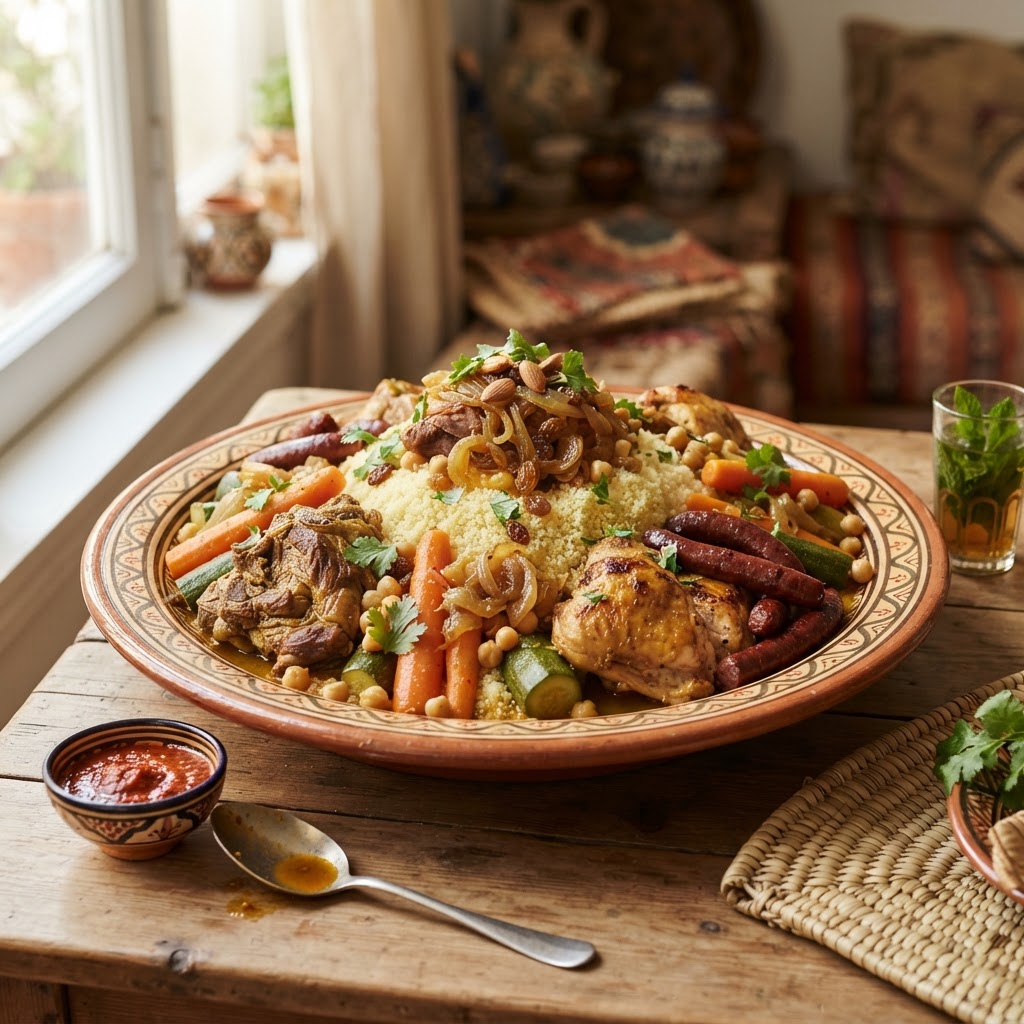
Couscous Royale: North Africa's Grand Platter of Lamb, Chicken, and Merguez
October 14, 2026
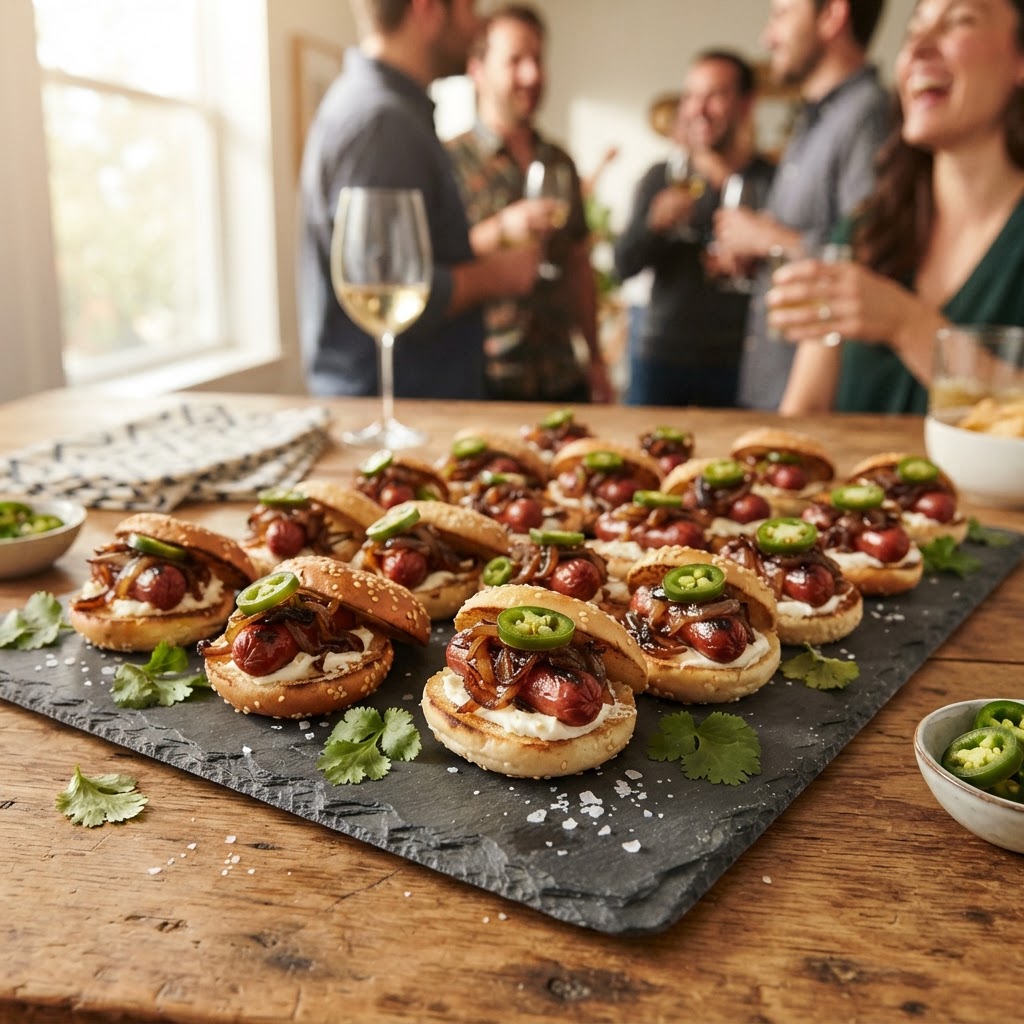
Seattle Cream Cheese Dog Bites: Hadley Long's 1989 Pioneer Square Invention
October 14, 2026
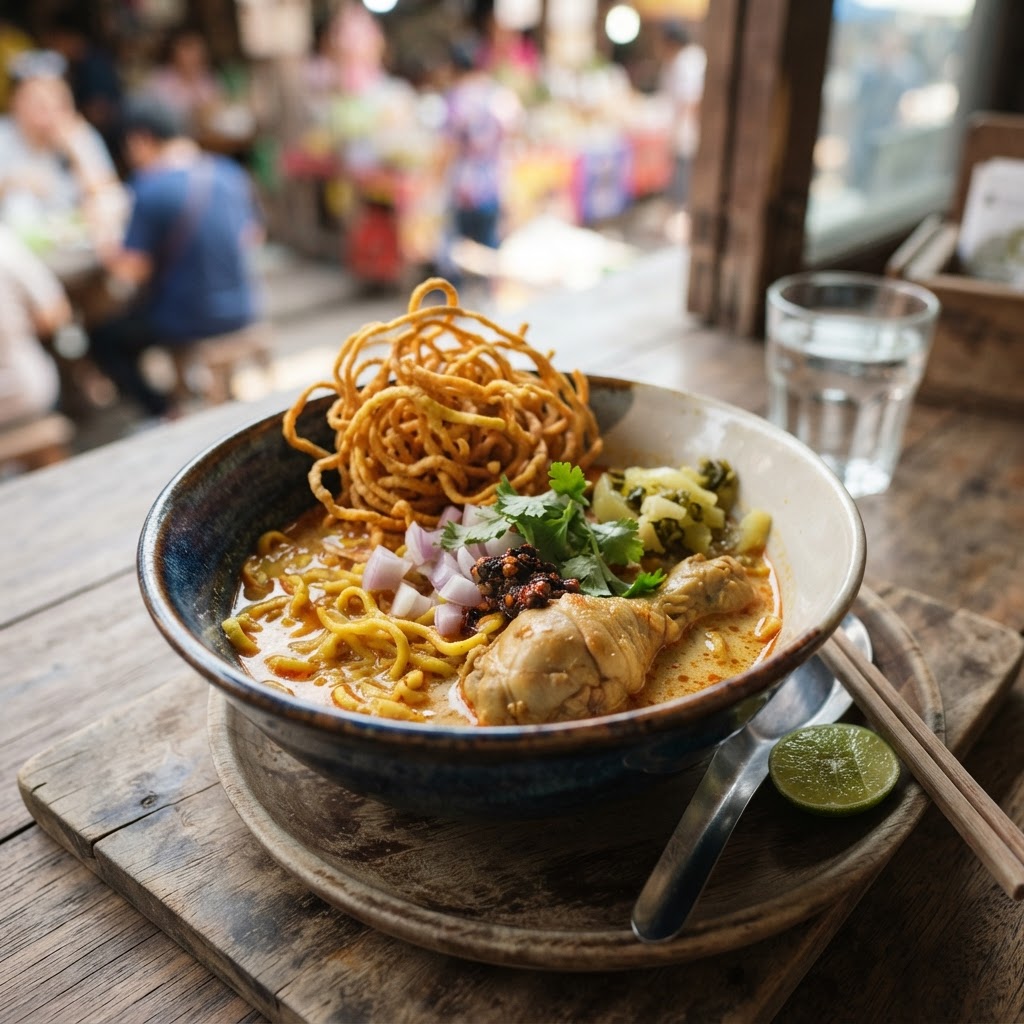
Khao Soi: Chiang Mai's Northern Thai Coconut Curry Noodles
October 13, 2026
Korean Bibimbap: Jeonju's Joseon Dynasty Mixed Rice
October 11, 2026
Spaghetti alla Carbonara: Rome's World War II Pasta of Eggs, Guanciale, and Pecorino
October 9, 2026