Classic American Snickerdoodles: The Cinnamon-Sugar Crackle Cookie
September 20, 2026
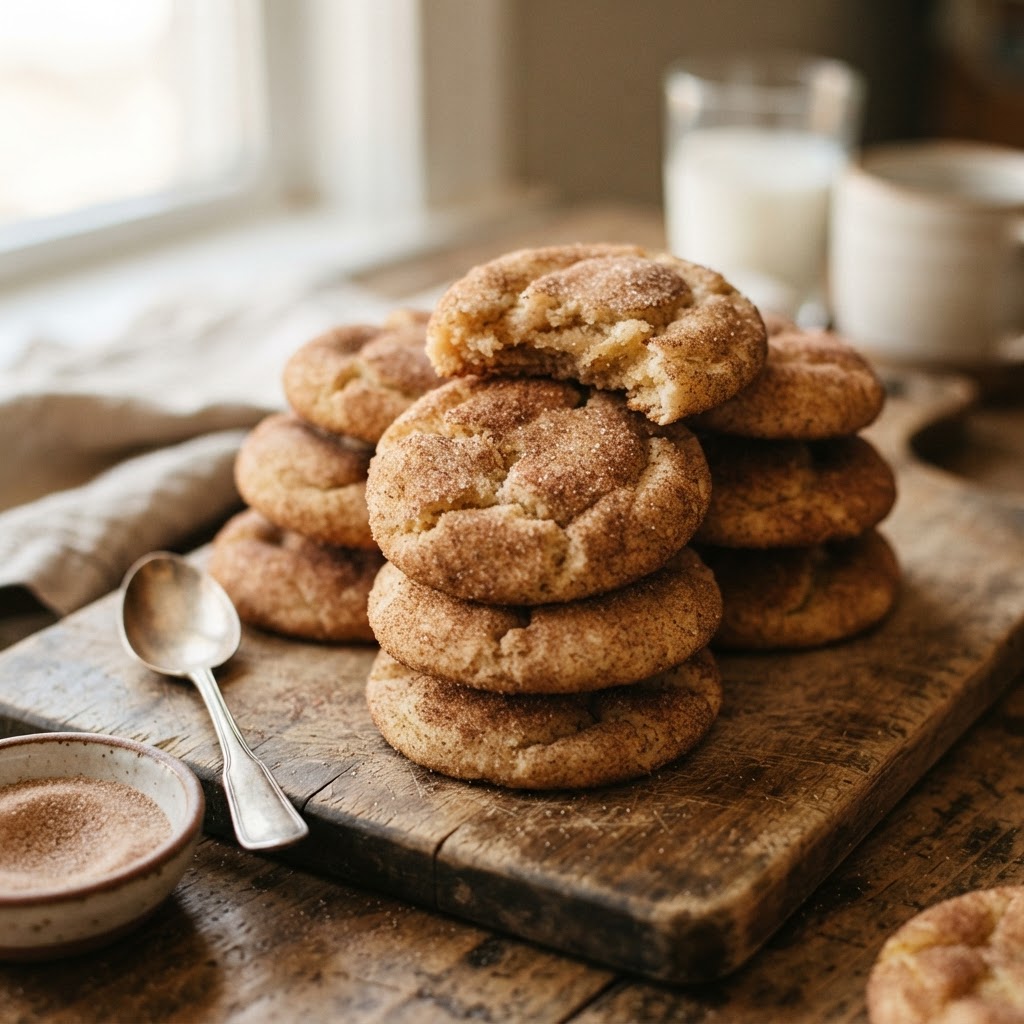
The snickerdoodle is the great American cinnamon-sugar cookie — a soft, puffy, crackle-topped round of buttery sugar cookie dough rolled in cinnamon sugar before baking, so that the surface cracks into a mosaic of cinnamon and the interior stays tender and cakey, a cookie so identified with American home baking that it has been a lunchbox and church-supper staple for over a century. According to Wikipedia, the snickerdoodle is a drop cookie topped with cinnamon and sugar, and some cooking claims hold that it is probably German in origin, originating from a New England tradition of whimsical cookie names; the word "snickerdoodle" itself appears in English print at least as early as 1889. Grit magazine traces the snickerdoodle to late-19th-century America, noting the debate over its roots — German, Dutch, or New England — and observing that the cookie was popularized across the United States in the late 19th century and has remained a popular classic ever since.
The genius of the snickerdoodle is the cream of tartar: it gives the cookie its characteristic tangy undertone and its crackled, puffy top, reacting with the baking soda to leaven the dough and giving a flavor that plain sugar cookies lack. The cinnamon-sugar coating, applied before baking, cracks as the cookie spreads and puffs, creating the signature mosaic surface.
About the Ingredients
Butter — unsalted butter, creamed with sugar for a tender, rich cookie.
Cream of tartar — the defining ingredient; an acid (tartaric acid) that reacts with the baking soda for lift and gives the cookie its signature tangy flavor and crackled top. Without it, the cookie is just a sugar cookie.
Baking soda — the leavening, which reacts with the cream of tartar.
Flour and eggs — all-purpose flour for structure; an egg for richness and binding.
Cinnamon and sugar — the coating; ground cinnamon mixed into granulated sugar, rolled onto the dough balls before baking.
Ingredients (makes about 2 dozen cookies): - 1/2 cup (1 stick) unsalted butter, softened - 1 cup granulated sugar (plus 1/4 cup for the coating) - 1 large egg - 1 tsp vanilla extract - 1 1/2 cups all-purpose flour - 1 tsp cream of tartar - 1/2 tsp baking soda - 1/4 tsp salt - 2 tsp ground cinnamon (for the coating)
Instructions: Preheat the oven to 400°F. Line baking sheets with parchment. In a bowl, whisk the flour, cream of tartar, baking soda, and salt. In another bowl, cream the butter and 1 cup sugar until light and fluffy. Beat in the egg and vanilla. Gradually stir in the dry ingredients until just combined.
In a small bowl, stir the remaining 1/4 cup sugar with the cinnamon. Roll the dough into 1-inch balls, then roll each in the cinnamon sugar to coat. Place 2 inches apart on the sheets.
Bake 8–10 minutes until the edges are set and the tops are crackled and just barely golden — do not overbake; the centers should look slightly underdone and will set as they cool. Cool 2 minutes on the sheets, then transfer to a rack.
The Mimosa Pairing Logic: The warm cinnamon and the buttery, tangy cookie want a bright, aromatic drink that echoes the spice and lifts the richness. A cardamom-orange-blossom mimosa is the inspired match — the cardamom is a beautiful warm-spice echo of the cinnamon, and the orange blossom brightens the cookie. A classic Champagne mimosa is equally right, the orange a bright, acidic counter to the buttery cookie. This is the brunch equivalent of a warm snickerdoodle and a glass of cold milk — a sparkling toast to the American cookie that has crackled for over a century.
Reference Links: - Snickerdoodle (cinnamon-sugar cookie, New England, 1889): Wikipedia - Snickerdoodle History: Sweet Story of Snickerdoodles (German, Dutch, New England origins): Grit
Make-Ahead: The dough can be made and chilled up to 2 days ahead; roll and bake from chilled, adding a minute to the bake time. The dough also freezes beautifully — roll into balls, freeze on a tray, then transfer to a bag and bake from frozen, rolling in cinnamon sugar first. Baked snickerdoodles keep 3 days in an airtight container; they are best the day they are baked, when the crackled tops are crisp and the centers soft.
Pro Tips: Do not omit the cream of tartar; it is the ingredient that makes a snickerdoodle a snickerdoodle — the tang and the crackle both depend on it, and a substitution (baking powder) makes a different, lesser cookie. Do not overbake; the cookies should look slightly underdone in the center when you pull them, and they will set as they cool into the perfect soft, chewy texture. Roll the dough balls generously in the cinnamon sugar; the coating is the point, and a stingy roll makes a pale, plain cookie. Space the cookies 2 inches apart; they spread and puff, and crowded sheets merge.
Rate this recipe
Be the first to rate this recipe
to submit your rating.
Recent Posts

Couscous Royale: North Africa's Grand Platter of Lamb, Chicken, and Merguez
October 14, 2026

Seattle Cream Cheese Dog Bites: Hadley Long's 1989 Pioneer Square Invention
October 14, 2026

Khao Soi: Chiang Mai's Northern Thai Coconut Curry Noodles
October 13, 2026

Korean Bibimbap: Jeonju's Joseon Dynasty Mixed Rice
October 11, 2026

Spaghetti alla Carbonara: Rome's World War II Pasta of Eggs, Guanciale, and Pecorino
October 9, 2026