Cioppino (San Francisco Italian-American Seafood Stew)
February 24, 2026
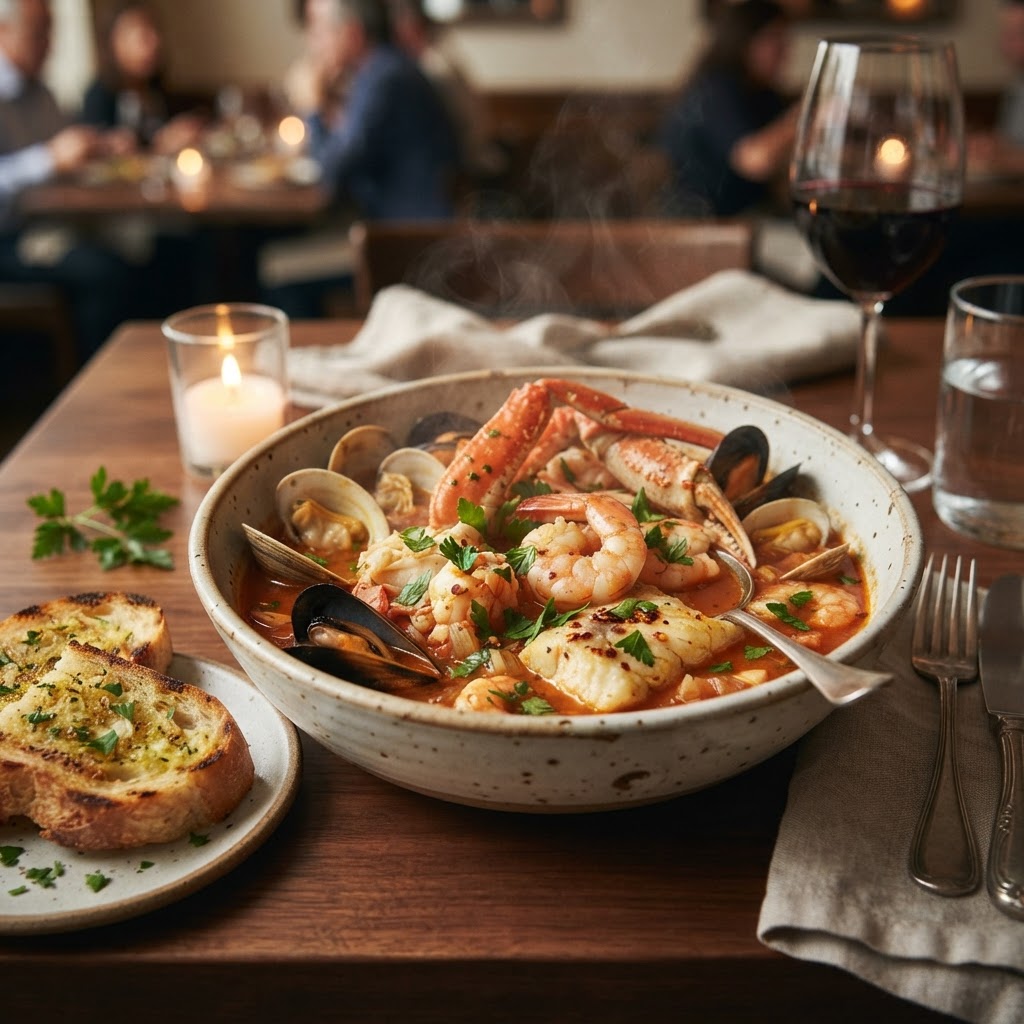
Cioppino is San Francisco's gift to American cuisine — a rich, briny seafood stew of crab, shrimp, clams, mussels, and white fish simmered in a tomato-wine broth with garlic, herbs, and a touch of spice. The dish was invented in the late 1800s by Italian and Portuguese fishermen who worked the waters off Meiggs Wharf in San Francisco's North Beach neighborhood. Many of these fishermen hailed from the port city of Genoa, in the Liguria region of Italy, and they created cioppino as a way to use the leftover catch of the day — a communal stew made from whatever the sea had provided.
The name "cioppino" is believed to derive from "ciuppin" (also spelled "cioppin"), the Ligurian dialect word for a classic fish soup from Genoa, similar in flavor but with less tomato and using Mediterranean seafood cooked until it falls apart. Another folk etymology holds that the name comes from the fishermen's practice of "chipping in" their leftover catch to a communal pot, but linguists consider this a later invention. The earliest printed description of cioppino appears in a 1901 recipe in the San Francisco Call, where it is called "chespini." The modern spelling "cioppino" first appears in the 1906 Refugee's Cookbook, a fundraising effort to benefit San Franciscans displaced by the great earthquake and fire of that year.
What makes cioppino distinct from other seafood stews — bouillabaisse, for example — is its generous, American character. It is abundant, brimming with shellfish and large pieces of fish, and it is served with a deeply tomato-forward broth that is more robust and less saffron-driven than its French cousin. The Dungeness crab is the signature ingredient — the sweet, delicate meat of the Pacific crab is the heart of an authentic San Francisco cioppino.
Ingredients (serves 8 as a main course):
The Seafood: - 1 whole Dungeness crab (about 2 lbs), cleaned, quartered, and cracked (or 1 lb crab legs, cracked) - 1 lb large shrimp (16–20 count), peeled and deveined, tails left on - 24 littleneck clams, scrubbed - 24 mussels, scrubbed and debearded - 1 lb firm white fish fillets (halibut, sea bass, or cod), cut into 2-inch chunks - ½ lb scallops (optional)
The Broth: - ¼ cup extra-virgin olive oil - 1 large onion, finely diced - 1 large fennel bulb, finely diced - 6 garlic cloves, minced - 1 teaspoon fennel seeds, crushed - ½ teaspoon red pepper flakes (or to taste) - 2 tablespoons tomato paste - 1 can (28 oz) San Marzano crushed tomatoes - ½ cup dry white wine (Sauvignon Blanc or Pinot Grigio) - 2 tablespoons brandy or Pernod (optional) - 4 cups fish stock or clam juice (or a combination) - 1 bouquet garni (thyme, bay leaves, parsley stems) - 2 tablespoons fresh basil, chopped - 2 tablespoons fresh parsley, chopped - Salt and black pepper
To Serve: - 1 large baguette, sliced and toasted - Garlic butter (for the toast) - Lemon wedges - Fresh parsley and basil
The Broth: Heat the olive oil in a large stockpot or Dutch oven over medium heat. Add the onion and fennel; cook 8 minutes until softened. Add the garlic, fennel seeds, and red pepper flakes; cook 1 minute until fragrant. Add the tomato paste and cook 1 minute until darkened. Add the white wine and brandy (if using); bring to a simmer and cook 3 minutes to burn off the alcohol. Add the crushed tomatoes, fish stock, and bouquet garni. Bring to a simmer and cook 20 minutes to develop the flavors. Season with salt and pepper.
Cooking the Seafood (in stages): Bring the broth to a gentle simmer. Add the crab pieces first (they take the longest) and cook 5 minutes. Add the clams and mussels; cover and cook 4–5 minutes until they begin to open. Add the white fish chunks and shrimp; cook 3–4 minutes until the fish is opaque and the shrimp are pink. Add the scallops (if using) in the last 2 minutes. Do not overcook — the seafood should be just done, and the shellfish should be tender, not rubbery. Discard any clams or mussels that do not open.
Finishing: Remove the pot from the heat. Stir in the fresh basil and parsley. Taste and adjust seasoning — the broth should be deeply savory, slightly spicy, and bright with herbs.
Service: Ladle generous portions into wide, shallow bowls, making sure each serving has crab, shrimp, clams, mussels, and fish. Serve with toasted garlic bread for soaking up the broth — this is essential. Garnish with lemon wedges and fresh herbs. Provide seafood crackers, small forks, and plenty of napkins. The ritual of eating cioppino — cracking the crab, pulling the mussels from their shells, soaking the broth with bread — is part of the dish's communal character.
The Mimosa Pairing Logic: The briny, tomato-rich character of cioppino calls for a mimosa with bright acidity and citrus that complements the seafood without competing. A classic orange mimosa is the most natural pairing — the citrus echoes the lemon wedges and the champagne's acidity balances the rich tomato broth. A blood orange mimosa is exceptional — the slight bitterness of the blood orange provides an elegant counterpoint to the briny seafood. For a more aromatic pairing, a grapefruit rosemary mimosa offers a bright, herbal contrast that refreshes the palate between shellfish. Avoid very sweet tropical mimosas — they overwhelm the delicate seafood flavors.
Reference Links: - Cioppino history and origins: Wikipedia - The fishy origins of cioppino: KQED - San Francisco cioppino origin: Fog Harbor Fish Market - Dungeness crab guide: Monterey Bay Aquarium Seafood Watch
Make-Ahead: The broth can be made up to 2 days ahead and refrigerated — it improves overnight as the flavors meld. The seafood should be purchased fresh and cooked just before service. The broth can be reheated gently while the seafood is added in stages.
Pro Tips: The Dungeness crab is the authentic and essential ingredient — its sweet, delicate meat is the heart of San Francisco cioppino, and substituting other crab produces a noticeably different result. The seafood must be cooked in stages, with the longest-cooking items (crab) added first and the most delicate (shrimp, scallops) added last — dumping everything in at once produces overcooked shrimp and rubbery scallops. The broth should be robust and tomato-forward, not delicate — cioppino is a hearty, abundant stew, not a refined consommé. The toasted garlic bread is non-negotiable — the ritual of soaking up the broth with bread is as important as the seafood itself.
Rate this recipe
Be the first to rate this recipe
to submit your rating.
Recent Posts

Couscous Royale: North Africa's Grand Platter of Lamb, Chicken, and Merguez
October 14, 2026

Seattle Cream Cheese Dog Bites: Hadley Long's 1989 Pioneer Square Invention
October 14, 2026

Khao Soi: Chiang Mai's Northern Thai Coconut Curry Noodles
October 13, 2026

Korean Bibimbap: Jeonju's Joseon Dynasty Mixed Rice
October 11, 2026

Spaghetti alla Carbonara: Rome's World War II Pasta of Eggs, Guanciale, and Pecorino
October 9, 2026