Cinnamon Rolls with Cream Cheese Frosting
January 27, 2026
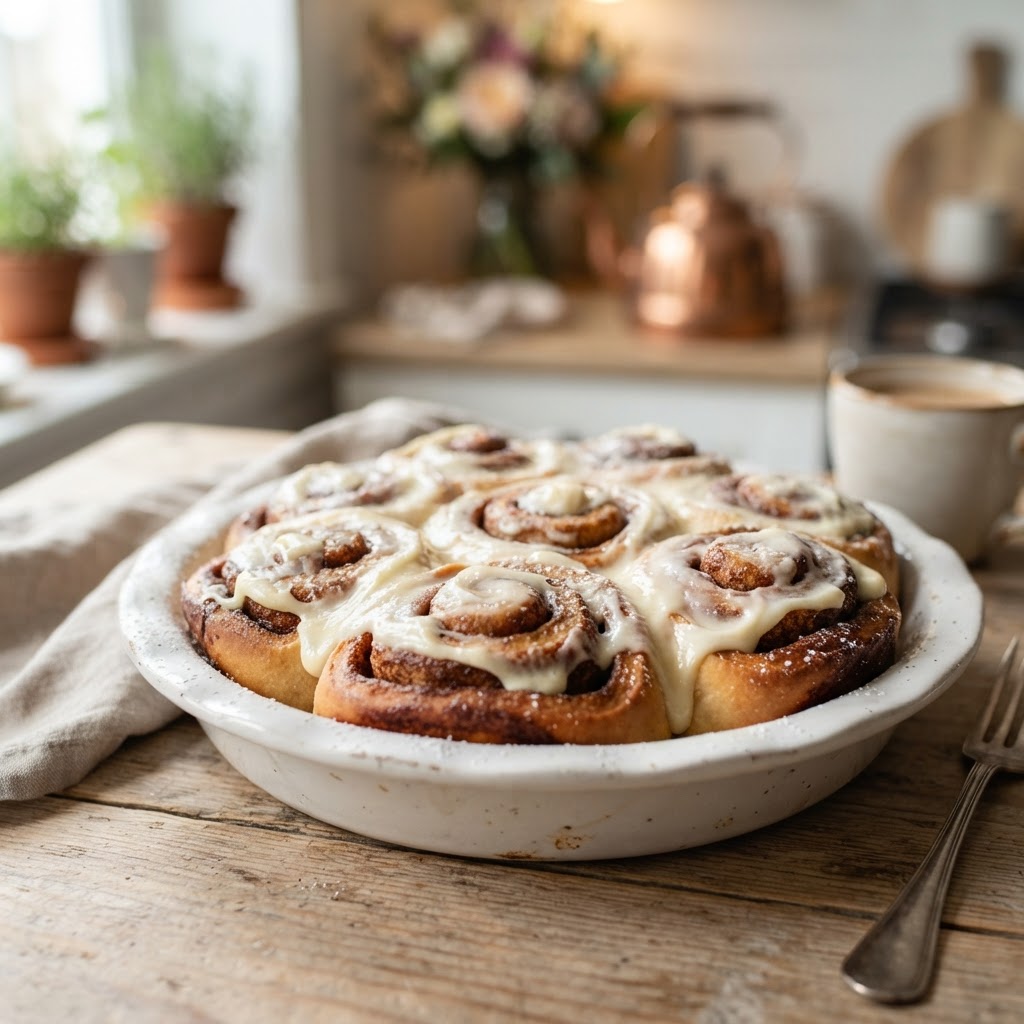
Cinnamon Rolls are one of the most popular brunch pastries in the world — soft, pillowy spirals of yeasted dough layered with butter, brown sugar, and cinnamon, baked until golden, and topped with a thick layer of tangy cream cheese frosting that melts into every spiral. The aroma of cinnamon rolls baking is one of the most evocative smells in all of cooking — it fills the house with warmth and comfort and signals that something special is happening.
The cinnamon roll has its origins in Sweden, where the kanelbulle (cinnamon bun) emerged in the 1920s when spices and sugar became more affordable after World War I. The Swedish kanelbulle is smaller and less sweet than its American cousin, flavored with cardamom and topped with pearl sugar rather than frosting. Sweden even celebrates Cinnamon Bun Day (Kanelbullens dag) on October 4th. The American version evolved into a larger, richer, sweeter roll topped with cream cheese frosting — a distinctly American innovation that transformed the modest Swedish bun into the decadent brunch pastry we know today. The American cinnamon roll became a fixture of American bakeries and brunch tables in the mid-20th century, and was further popularized by chains like Cinnabon (founded in 1985 in Seattle).
The key to great cinnamon rolls is a soft, enriched dough (enriched with butter, milk, and eggs), a generous filling of butter, brown sugar, and cinnamon, and a tangy cream cheese frosting that is spread over the warm rolls so it melts into every crevice. The dough should be given plenty of time to rise — overnight in the refrigerator is ideal, as the slow, cold fermentation develops deeper flavor.
Ingredients (makes 12 rolls):
The Dough: - 1 cup whole milk, warm (105–115°F / 40–115°F) - 1 packet (2¼ teaspoons) active dry yeast - 1 ¾ oz granulated sugar - 2 large eggs, at room temperature - 2 ⅔ oz unsalted butter, melted and cooled - 1 lb 2 oz all-purpose flour (or bread flour for chewier rolls) - 1 teaspoon salt
The Filling: - 3 ½ oz unsalted butter, very soft (at room temperature) - 5 ¼ oz dark brown sugar (light brown can be substituted, but dark has more caramel depth) - 2 tablespoons ground cinnamon (use fresh, fragrant cinnamon — Vietnamese or Saigon cinnamon is best) - ½ teaspoon ground nutmeg (optional) - ½ teaspoon vanilla extract
The Cream Cheese Frosting: - 7 oz cream cheese, at room temperature (full-fat, not reduced-fat) - 1 ¾ oz unsalted butter, at room temperature - 7 oz powdered sugar (confectioners' sugar), sifted - 1 teaspoon vanilla extract - ½ teaspoon salt - 1 tablespoon milk or cream (to thin if needed)
Making the Dough: In the bowl of a stand mixer, combine the warm milk, yeast, and a pinch of sugar. Let stand for 5 minutes until foamy. Add the sugar, eggs, melted butter, flour, and salt. Knead with the dough hook for 5–7 minutes until the dough is smooth and elastic and pulls away from the sides of the bowl. The dough should be soft and slightly tacky but not sticky.
Transfer to an oiled bowl, cover with plastic wrap or a damp towel, and let rise in a warm place for 1–1.5 hours until doubled in size. Alternatively, refrigerate overnight for a slow, cold fermentation that develops deeper flavor — this is the preferred method. If refrigerating, let the dough come to room temperature for 1 hour before rolling.
Rolling and Filling: On a lightly floured surface, roll the dough into a 16x12-inch rectangle. Spread the very soft butter evenly over the dough, leaving a ½-inch border on one long edge. In a bowl, mix the brown sugar, cinnamon, nutmeg, and vanilla. Sprinkle the sugar mixture evenly over the butter. Starting from the long edge opposite the border, roll the dough tightly into a log. Pinch the seam to seal.
Using a sharp knife or unflavored dental floss (the floss technique produces clean cuts without compressing the dough), cut the log into 12 equal slices (about 1½ inches each).
The Second Rise: Place the rolls cut-side up in a greased 9x13-inch baking dish (they should be touching but not crammed). Cover with plastic wrap and let rise in a warm place for 45–60 minutes until puffed and nearly doubled.
Baking: Preheat oven to 350°F (347°F). Bake the rolls for 25–30 minutes until golden brown on top and the centers are set. Do not overbake — the rolls should be soft and gooey, not dry.
The Cream Cheese Frosting: While the rolls are baking, make the frosting. In a bowl, beat the cream cheese and butter together until smooth and creamy. Gradually add the sifted powdered sugar, beating until light and fluffy. Beat in the vanilla and salt. If the frosting is too thick, add milk or cream 1 teaspoon at a time until it reaches a spreadable consistency.
Service: Spread the frosting over the warm rolls immediately after they come out of the oven — the heat will melt the frosting slightly, allowing it to seep into every spiral and crevice. Serve warm. Pull apart and eat with your hands — this is a finger food.
The Mimosa Pairing Logic: The sweet, cinnamon-spiced, creamy character of cinnamon rolls calls for a mimosa with bright acidity that cuts through the sweetness while complementing the cinnamon. A classic orange mimosa is the most natural pairing — the citrus provides a refreshing contrast to the rich, sweet pastry and the champagne's effervescence cleanses the palate. A peach bellini mimosa is inspired — the peach's sweetness echoes the brown sugar in the rolls and the prosecco's fruitiness complements the cinnamon. For a more structured pairing, a cardamom orange blossom mimosa creates a beautiful resonance with the warm spices in the filling. Avoid very dry, bitter mimosas — the rolls' sweet, spiced character needs a mimosa with complementary fruit and warmth.
Reference Links: - Cinnamon roll history: Wikipedia - Swedish kanelbulle origins: Sweden.se - Cinnamon rolls recipe: King Arthur Baking - Cream cheese frosting technique: Serious Eats
Make-Ahead: Cinnamon rolls are specifically designed to be made ahead. The dough can be mixed and refrigerated overnight after the first rise (the cold fermentation develops deeper flavor). The assembled (cut and placed in the pan) rolls can be refrigerated overnight before the second rise — let them come to room temperature for 1 hour, then rise for 45 minutes before baking. The frosting can be made up to 3 days ahead and refrigerated. The baked rolls are best served warm from the oven but can be reheated in the microwave for 15 seconds.
Pro Tips: The dough should be soft and slightly tacky — if it is too stiff, the rolls will be dense and dry. Do not add too much flour during kneading. The butter for the filling must be very soft (room temperature) — if it is too cold, it will tear the dough when spread. The dental floss cutting technique produces clean, even cuts without compressing the dough — a knife presses down and distorts the rolls. Do not overbake — the rolls should be soft and gooey in the center. The cream cheese frosting should be spread over the warm rolls immediately after baking — the heat melts the frosting into every spiral, creating the characteristic gooey, creamy texture. Full-fat cream cheese is essential — reduced-fat cream cheese produces a runny, less flavorful frosting.
Rate this recipe
Be the first to rate this recipe
to submit your rating.
Recent Posts

Couscous Royale: North Africa's Grand Platter of Lamb, Chicken, and Merguez
October 14, 2026

Seattle Cream Cheese Dog Bites: Hadley Long's 1989 Pioneer Square Invention
October 14, 2026

Khao Soi: Chiang Mai's Northern Thai Coconut Curry Noodles
October 13, 2026

Korean Bibimbap: Jeonju's Joseon Dynasty Mixed Rice
October 11, 2026

Spaghetti alla Carbonara: Rome's World War II Pasta of Eggs, Guanciale, and Pecorino
October 9, 2026