Chicken Fried Steak: Texas Cream Gravy and the German Immigrant Legacy
April 5, 2026
The origins of chicken fried steak are contested, but the most widely accepted theory points to German and Austrian immigrants who settled in Texas between 1844 and 1850. They brought with them the technique of wiener schnitzel, the breaded and fried veal cutlet, and adapted it to the tougher, cheaper cuts of beef that were abundant on the Texas frontier. The result was a dish that used cube steak, pounded thin, dredged in seasoned flour, and pan-fried until golden, then served with a creamy white gravy made from the pan drippings.
Another story claims that Jimmy Don Perkins, a short-order cook in a cafe in Lamesa, Texas, invented the dish by accident in 1911 when he misread an order and breaded a steak instead of frying chicken. Whatever the true origin, the dish became a staple of Texas cafes and diners, and the distinction between chicken-fried steak (white cream gravy) and country-fried steak (brown gravy) became a matter of fierce regional pride. In Texas, it is always chicken-fried, and it is always white gravy.
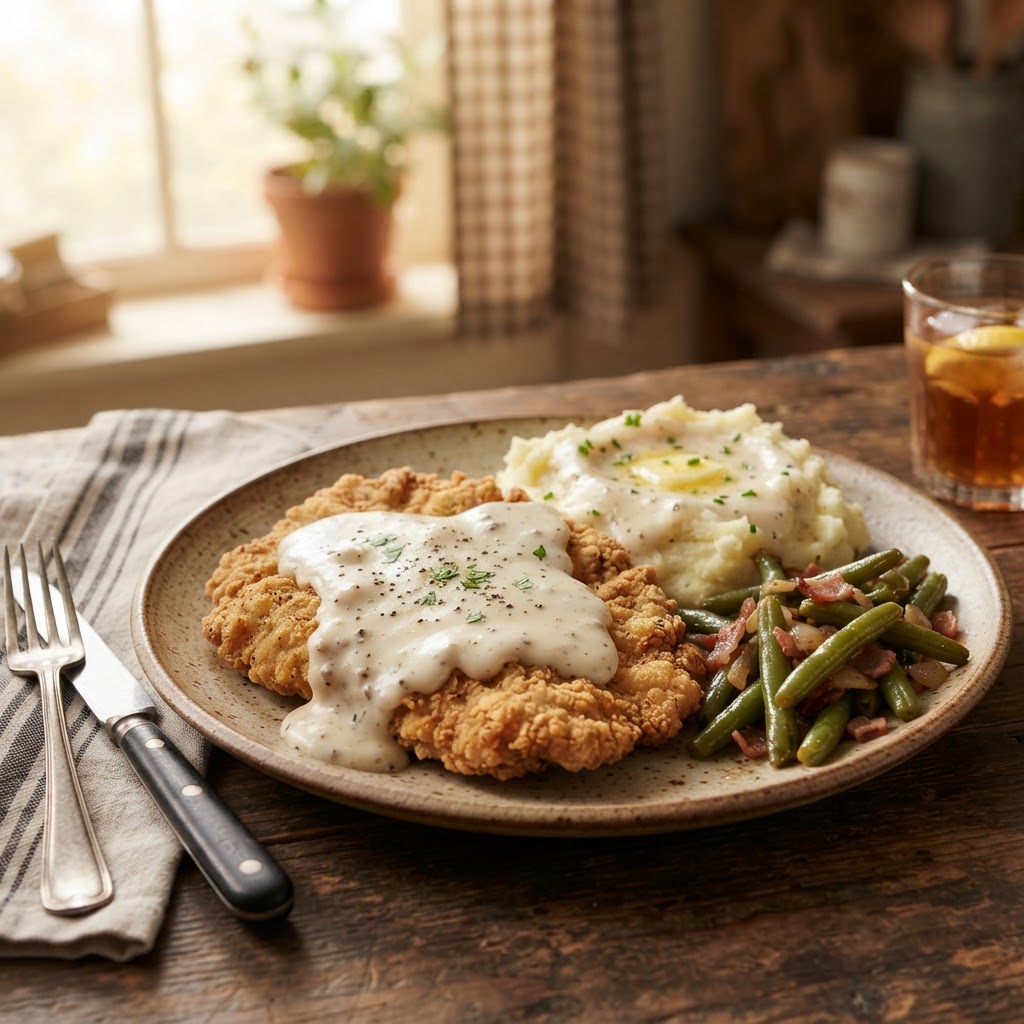
About the Ingredients: The steak should be cube steak, also called minute steak, which has been mechanically tenderized. If unavailable, buy bottom round or top sirloin and pound it thin with a meat mallet. The breading is a double dredge: first in seasoned flour, then in egg wash, then back in flour. The gravy is made from the pan drippings, whisked with flour and milk until thick and creamy. The pepper in the gravy is what gives it its characteristic speckled appearance, which is why it is sometimes called sawmill gravy.
Ingredients (serves 4): - 4 cube steaks (about 6 oz each), pounded to ¼-inch thickness - 1 cup all-purpose flour - 1 teaspoon salt - 1 teaspoon black pepper - ½ teaspoon garlic powder - ½ teaspoon paprika - 2 large eggs - ¼ cup milk - Vegetable oil for frying
The Cream Gravy: - ¼ cup pan drippings (from frying the steaks) - ¼ cup all-purpose flour - 2 cups whole milk, warmed - ½ teaspoon salt - 1 teaspoon freshly ground black pepper (or to taste)
Instructions: In a shallow dish, combine the flour, salt, pepper, garlic powder, and paprika. In another shallow dish, whisk together the eggs and milk. Season the cube steaks with salt and pepper.
Dredge each steak in the flour mixture, pressing firmly so the flour adheres. Shake off the excess. Dip in the egg wash, letting the excess drip off. Dredge again in the flour, pressing to create a thick, craggy coating. Set aside on a wire rack.
Pour oil into a large cast iron skillet to a depth of ¼ inch. Heat over medium-high heat until the oil shimmers, about 375°F. Carefully place two steaks in the pan (do not overcrowd) and fry for 3 to 4 minutes per side until deep golden brown and crispy. Transfer to a wire rack set over a baking sheet and keep warm in a 200°F oven. Repeat with the remaining steaks.
To make the gravy, pour off all but ¼ cup of the pan drippings, leaving the browned bits in the skillet. Reduce the heat to medium and whisk in the flour. Cook, whisking constantly, for 1 to 2 minutes until the roux is lightly browned. Gradually whisk in the warm milk, scraping up the browned bits from the bottom of the pan. Cook, whisking constantly, until the gravy thickens, about 5 minutes. Season with salt and a generous amount of black pepper.
Serve the steaks smothered in the cream gravy, alongside mashed potatoes and green beans.
The Mimosa Pairing Logic: The rich, peppery gravy and crispy steak call for a mimosa with bright fruit to cut through the heaviness. The Classic Champagne Mimosa provides the acidic contrast the dish needs. For a more adventurous pairing, the Peach Ginger Mimosa adds a sweet, spiced warmth that complements the Texas comfort food flavors.
Reference Links: - Chicken-Fried Steak – Texas State Historical Association - Chicken Fried Steak – Wikipedia
Make-Ahead: The steaks can be breaded up to 2 hours ahead and kept on a wire rack in the refrigerator. Bring them to room temperature for 15 minutes before frying. The gravy must be made at the last minute, directly from the pan drippings, as it cannot be reheated without separating.
Pro Tips: The oil temperature is critical. Too hot and the coating burns before the steak is cooked. Too cool and the coating absorbs oil and becomes greasy. Test the oil by dropping a pinch of flour in. It should sizzle immediately but not smoke. The double dredge is what creates the thick, craggy crust. Press the flour firmly into the meat on the second pass, and do not shake off too much. The gravy should be pepper-forward. Do not be shy with the black pepper. It is the defining flavor of cream gravy.
Rate this recipe
Be the first to rate this recipe
to submit your rating.
Recent Posts

Couscous Royale: North Africa's Grand Platter of Lamb, Chicken, and Merguez
October 14, 2026

Seattle Cream Cheese Dog Bites: Hadley Long's 1989 Pioneer Square Invention
October 14, 2026

Khao Soi: Chiang Mai's Northern Thai Coconut Curry Noodles
October 13, 2026

Korean Bibimbap: Jeonju's Joseon Dynasty Mixed Rice
October 11, 2026

Spaghetti alla Carbonara: Rome's World War II Pasta of Eggs, Guanciale, and Pecorino
October 9, 2026