Cape Cod Cranberry Orange Scones: New England's Bog-Harvested Breakfast Pastry
June 14, 2026
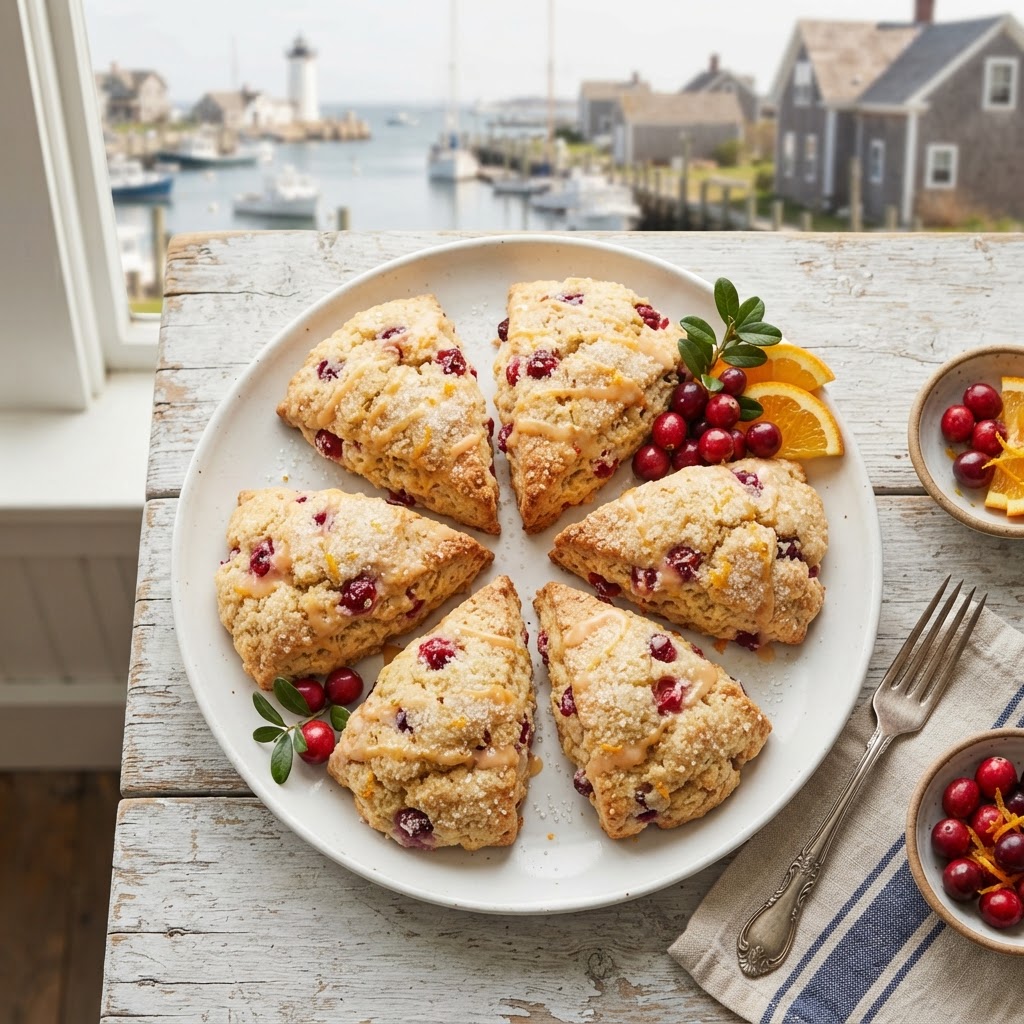
Cranberry orange scones are the breakfast pastry of the New England autumn — a buttery, tender scone studded with bright red cranberries from the Cape Cod bogs and perfumed with the zest and juice of a navel orange, baked until deep golden and finished with a sprinkle of coarse sugar, a pastry born of the cranberry harvest that turns the marshes of Massachusetts crimson each October. According to Wikipedia, cranberries are a group of evergreen dwarf shrubs or trailing vines in the genus *Vaccinium*, native to the cool temperate bogs of North America, and were an important food source for Native Americans, who used them in pemmican and as a medicine; the cranberry is one of the few fruits native to North America and has been cultivated in the cranberry bogs of Massachusetts since the early nineteenth century. Cape Cod Select describes cranberry orange scones as a New England classic, the tart cranberries and sweet orange zest a natural pairing in a buttery scone, "a perfect balance of tart and sweet."
The genius of the cranberry orange scone is the pairing: the tartness of the cranberry cuts the richness of the butter, and the orange zest brightens both — the two flavors are natural partners because they share aromatic compounds, which is why the combination feels harmonious rather than forced. Eaten warm, split, with butter and a drizzle of honey, the scone is the most New England breakfast there is, inseparable from the autumn cranberry harvest and the wooden bogs of the Cape.
About the Ingredients
Cranberries — fresh or frozen cranberries, coarsely chopped; if using frozen, do not thaw first. Dried cranberries (craisins) can be substituted but are sweeter and less tart.
Orange — fresh orange zest (the colored part of the peel only, not the bitter white pith) and a little fresh orange juice for the glaze; the zest contains the aromatic oils that flavor the scone.
Flour — all-purpose flour, sifted with the leavening.
Butter — cold unsalted butter, cut into small cubes or grated; the cold butter, cut into the flour, creates the flaky layers.
Cream — heavy cream for richness and to bring the dough together; buttermilk can be substituted for a tangier scone.
Leavening — baking powder and a pinch of salt.
Topping — coarse sugar (turbinado or demerara) for a crunchy, sparkling crust.
Ingredients (makes 8 scones): - 2 cups all-purpose flour, plus more for dusting - 1/3 cup granulated sugar, plus more for sprinkling - 1 tbsp baking powder - 1/2 tsp salt - 6 tbsp cold unsalted butter, cut into small cubes - 1 cup fresh or frozen cranberries, coarsely chopped (do not thaw frozen) - 1 tbsp freshly grated orange zest (from 1 orange) - 3/4 cup heavy cream, plus more for brushing - Coarse sugar (turbinado), for sprinkling - Optional glaze: 1 cup powdered sugar, 2–3 tbsp fresh orange juice
Instructions: In a bowl, whisk the flour, sugar, baking powder, and salt. Cut or grate in the cold butter until the mixture resembles coarse crumbs with some pea-sized pieces. Toss in the chopped cranberries and the orange zest.
Pour in the cream and stir gently with a fork just until the dough comes together in a shaggy mass — do not overwork; overworked dough makes tough scones.
Turn out onto a floured surface and gently pat into an 8-inch round, about 1 inch thick. Cut into 8 wedges. Place on a parchment-lined baking sheet, spacing well. Brush the tops with cream and sprinkle generously with coarse sugar.
Bake at 425°F for 15–18 minutes until deep golden. Cool slightly on a rack. If glazing, whisk the powdered sugar with enough orange juice to make a thin glaze and drizzle over the warm scones. Serve warm, split, with butter.
The Mimosa Pairing Logic: The tart cranberry and the bright orange want a fruit-driven drink that echoes both and lifts the butter. A classic Champagne mimosa is the natural choice — the orange juice mirrors the orange zest and the bubbles lift the pastry. A cranberry holiday mimosa is equally lovely, its tart berry a beautiful mirror for the cranberry in the scone. This pairing is, in its way, the brunch equivalent of a warm cranberry orange scone and a cup of strong New England coffee — a sparkling toast to the Cape Cod bog and the October cranberry harvest.
Reference Links: - Cranberry (native North American fruit, Massachusetts cultivation, Cape Cod bogs): Wikipedia - Cranberry Orange Scones Recipe (New England classic): Cape Cod Select
Make-Ahead: The dry mix can be cut with the butter ahead and frozen; thaw in the refrigerator overnight, then add the cream and bake. Cut scones can also be frozen raw on a tray, then transferred to a bag; bake from frozen, adding 3–4 minutes. Scones are best eaten the day they are baked, ideally warm; the glaze should be added while they are still warm.
Pro Tips: Keep the butter genuinely cold and work quickly; warm butter melts into the flour and the flaky layers vanish. Do not overwork the dough; a few gentle turns are enough, and over-kneading makes a tough scone. Chop the cranberries coarsely, not finely; small pieces distribute flavor, but large pieces give bursts of tart juice. Use fresh orange zest, not extract; the zest contains the aromatic oils that make the scone sing. Bake hot — 425°F — so the outside sets fast and the inside stays tender. Eat warm; a cold scone is a diminished thing, and a warm one is among the finest breakfasts in New England.
Rate this recipe
Be the first to rate this recipe
to submit your rating.
Recent Posts

Couscous Royale: North Africa's Grand Platter of Lamb, Chicken, and Merguez
October 14, 2026

Seattle Cream Cheese Dog Bites: Hadley Long's 1989 Pioneer Square Invention
October 14, 2026

Khao Soi: Chiang Mai's Northern Thai Coconut Curry Noodles
October 13, 2026

Korean Bibimbap: Jeonju's Joseon Dynasty Mixed Rice
October 11, 2026

Spaghetti alla Carbonara: Rome's World War II Pasta of Eggs, Guanciale, and Pecorino
October 9, 2026