Canelé de Bordeaux: The Rum and Vanilla Pastry of Bordeaux
June 4, 2026
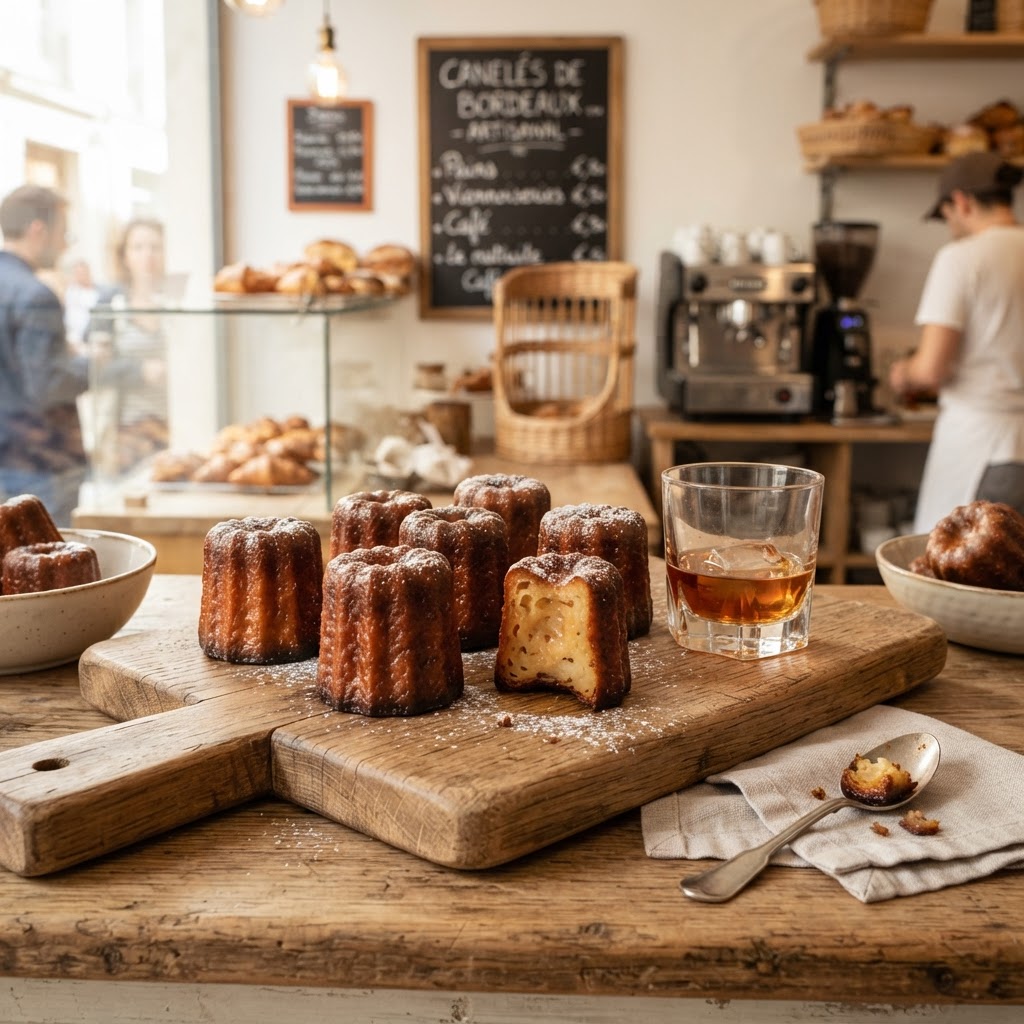
The canelé is the great little pastry of Bordeaux — a small, fluted cylinder with a dark, thick caramelized crust and a soft, custardy, rum-and-vanilla-scented center. According to Wikipedia, a canelé is a small French pâtisserie flavoured with rum and vanilla, having a soft and tender centre and a dark, thick, caramelized crust, taking the form of a small striated cylinder with a depression at the top; it is a specialty of the region around Bordeaux, and is believed to originate from the Couvent des Annonciades in Bordeaux in either the 15th or the 18th century. French Moments notes that most historians agree the canelés de Bordeaux emerged around the 17th or 18th century, and that an unknown pastry chef re-popularised the antique recipe in the first quarter of the 20th century by adding rum and vanilla. The Institute of Culinary Education notes that, as Bordeaux is a port, the recipe naturally evolved to include rum and vanilla — key components added by the wine trade.
The canelé is a study in contrast: a nearly black, caramelized crust that crunches, then gives way to a soft, custardy, vanilla-rum interior that is almost like a baked custard. The traditional copper molds are brushed with beeswax and butter, which gives the pastry its signature dark, glossy crust and the crisp shell that holds the soft center.
About the Ingredients
Milk and egg yolks — the base of the custard; the richness comes from the yolks, and the milk keeps it tender.
Rum and vanilla — the two flavors that define the canelé; dark rum and a pod of real vanilla. Both infuse the batter, which must rest overnight.
Beeswax and butter — the traditional coating for the copper molds; the beeswax gives the dark, glossy, caramelized crust. A mix of beeswax and butter is the modern compromise.
Ingredients (makes 12 small canelés): - 2 cups whole milk - 2 tbsp butter - 1 cup all-purpose flour - 3/4 cup sugar - 3 egg yolks - 1 whole egg - 2 tbsp dark rum - 1 vanilla bean, split and scraped (or 1 tbsp vanilla extract) - Beeswax and butter, for the molds (or just butter)
Instructions: In a saucepan, bring the milk and butter to a simmer with the scraped vanilla bean and seeds. Remove from heat and let steep 15 minutes; remove the bean. Whisk the flour and sugar in a bowl; pour in the warm milk, whisking smooth. Whisk in the egg yolks and whole egg, then the rum. Strain the batter through a fine sieve. Cover and refrigerate at least 24 hours (the rest is essential — it hydrates the flour and relaxes the gluten).
Preheat the oven to 425°F (428°F). Brush the canelé molds (copper is traditional; silicone works) with melted beeswax-and-butter, or just melted butter, coating well. Stir the rested batter and pour into the molds, filling to about 1/4 inch from the top. Bake 20 minutes at 425°F, then reduce to 375°F (374°F) and bake 40–50 minutes more until the canelés are dark brown and the crusts are caramelized. (A proper canelé is dark — almost black — on the outside; pale canelés are underbaked.) Unmold immediately onto a rack and cool. The crust will crisp as it cools.
The Mimosa Pairing Logic: The dark, caramelized crust and the rum-vanilla center of the canelé want a bright, refreshing drink that can cut the richness and echo the vanilla. A classic Champagne mimosa is the safe and perfect choice — the citrus lifts the rich custard, and the wine's effervescence refreshes the palate of the dark, caramelized crust. A vanilla-spiced mimosa is equally lovely, the orange blossom a beautiful bright partner for the rum and vanilla. This pairing is, in its way, the brunch equivalent of a canelé and a cup of Bordeaux coffee — a sparkling toast to the Bordelais pâtisserie.
Reference Links: - Canelé (Bordeaux, Couvent des Annonciades, rum and vanilla): Wikipedia - Canelés de Bordeaux: History, Tradition, Taste and Recipe: French Moments - Classic Canelé: The History of the Fluted French Pastry: Institute of Culinary Education
Make-Ahead: The batter must rest 24 hours — this is not optional; an unrested batter makes a pale, gummy canelé. The batter keeps, refrigerated, up to 3 days. The baked canelés are best the day they are made; the crisp crust softens within hours. Reheat in a hot oven for 3–4 minutes to re-crisp the crust the next day.
Pro Tips: Rest the batter a full 24 hours — the rest hydrates the flour and relaxes the gluten, which gives the soft, custardy interior. The molds must be well coated with beeswax-and-butter (or butter) so the canelés release and the crust caramelizes; a thin coating gives a pale, stuck canelé. Bake the canelés dark — a proper canelé is deep, almost black, brown; pulling them pale leaves the crust soft and the interior gummy. Unmold the moment they come out of the oven; cooling in the molds steams the crust soft. Eat the day they are baked; the crust is the point and does not hold.
Rate this recipe
Be the first to rate this recipe
to submit your rating.
Recent Posts

Couscous Royale: North Africa's Grand Platter of Lamb, Chicken, and Merguez
October 14, 2026

Seattle Cream Cheese Dog Bites: Hadley Long's 1989 Pioneer Square Invention
October 14, 2026

Khao Soi: Chiang Mai's Northern Thai Coconut Curry Noodles
October 13, 2026

Korean Bibimbap: Jeonju's Joseon Dynasty Mixed Rice
October 11, 2026

Spaghetti alla Carbonara: Rome's World War II Pasta of Eggs, Guanciale, and Pecorino
October 9, 2026