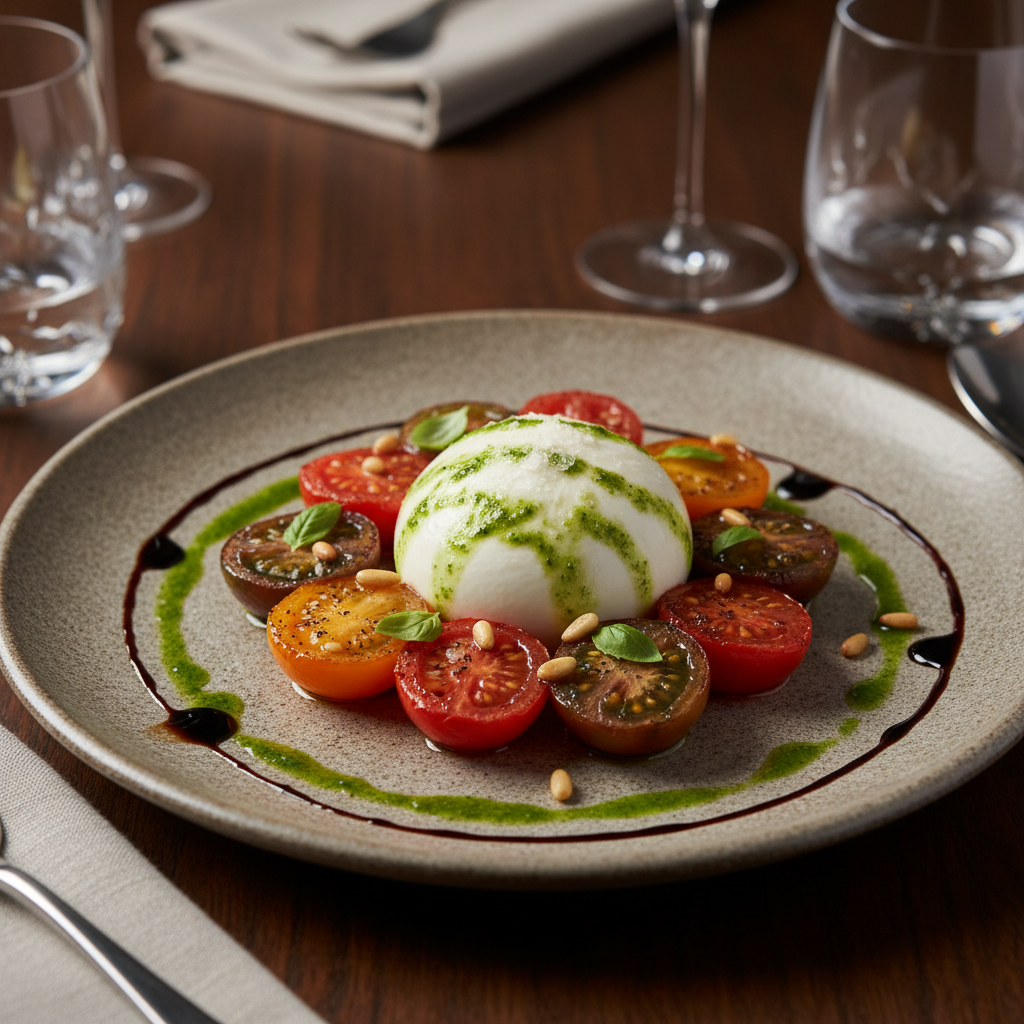
Burrata with Roasted Heirloom Tomatoes & Basil Oil
May 31, 2026
This is the event starter where exceptional ingredients and almost no technique produce an undeniably elegant result. The slow-roasted heirloom tomatoes — 45–55 minutes at 325°F, concentrated and jammy without drying out — are the preparation that makes this dish. High heat bursts them and dries them. Low heat intensifies them.
Burrata, from Puglia, is a fresh mozzarella shell filled with stracciatella and cream — mild, milky, delicate, and best understood as the canvas that lets the tomatoes and basil oil be the statement. Buy it the day of the event. Burrata more than 24 hours old loses the fluidity of the interior cream.
Ingredients (serves 12 as a plated event starter): - 6 balls fresh burrata (4 ⅓ oz each), at room temperature - 1¼ lbs mixed heirloom cherry tomatoes (a variety of colors — red, yellow, orange, and green if available) - 4 tablespoons excellent extra virgin olive oil - 4 garlic cloves, thinly sliced - 1 teaspoon sugar - ½ teaspoon red pepper flakes - Fresh thyme sprigs - Flaky sea salt and cracked black pepper
Basil Oil: - 2 ⅛ oz fresh basil leaves (packed tightly) - ½ cup extra virgin olive oil - Pinch of fine salt
To Finish: - 4 tablespoons aged balsamic glaze - 2 ⅞ oz pine nuts, toasted until golden - Fresh basil leaves - Flaky sea salt - Toasted country bread or focaccia, sliced (optional but highly recommended)
Roasted Tomatoes: Preheat oven to 325°F. Toss cherry tomatoes with olive oil, sliced garlic, sugar, red pepper flakes, thyme sprigs, salt, and cracked pepper. Spread in a single layer on a parchment-lined baking sheet. Roast for 45–55 minutes, very slowly, until the tomatoes are concentrated, jammy, and just beginning to caramelize at the edges but have not dried out. They should still hold their shape but feel soft and yielding. Cool to room temperature.
The slow roast at low temperature is the key — high heat bursts and dries the tomatoes; low heat concentrates them while preserving moisture. (Can be made 3 days ahead; refrigerate and bring to room temperature before using.)
Basil Oil: Blanch basil leaves for 10 seconds in boiling salted water. Transfer immediately to an ice bath. Drain thoroughly and squeeze dry. Blend blanched basil with olive oil and salt for 2 minutes until very smooth. Strain through a fine sieve or cheesecloth for a clear, vivid oil. (The blanching fixes the chlorophyll and prevents oxidation — a bright green oil after 24 hours indicates proper technique.) Store refrigerated for up to 1 week.
Plating: Spoon a generous pool of roasted tomatoes (with their concentrated juices) onto each plate. Carefully tear or halve a burrata ball and place it in the center of the tomatoes — the interior cream will pool outward immediately. Drizzle basil oil around the plate, including over the burrata. Spoon several drops of balsamic glaze around the tomatoes. Scatter toasted pine nuts. Arrange 2–3 fresh basil leaves. Finish with a generous pinch of flaky salt and cracked pepper.
Service: Serve with toasted sourdough or focaccia alongside for the essential mopping of the basil oil and burrata cream.
The Temperature Element: Burrata must be at room temperature — cold burrata has a rubbery exterior and non-fluid interior. The roasted tomatoes should be at room temperature or very slightly warm. The basil oil should be at room temperature. The contrast of cool, yielding burrata against the warmer tomatoes and the vivid, herbal oil creates the dish's complexity.
Pro Tips: The quality of the burrata is the entire dish — buy it from a specialty Italian deli on the day of the event. Burrata that is more than 24 hours old begins to lose the creaminess of the interior and the delicacy of the outer shell. If burrata is unavailable, fresh buffalo mozzarella is an acceptable substitute, though the dish loses its defining element.
Rate this recipe
Be the first to rate this recipe
to submit your rating.
Recent Posts

Couscous Royale: North Africa's Grand Platter of Lamb, Chicken, and Merguez
October 14, 2026

Seattle Cream Cheese Dog Bites: Hadley Long's 1989 Pioneer Square Invention
October 14, 2026

Khao Soi: Chiang Mai's Northern Thai Coconut Curry Noodles
October 13, 2026

Korean Bibimbap: Jeonju's Joseon Dynasty Mixed Rice
October 11, 2026

Spaghetti alla Carbonara: Rome's World War II Pasta of Eggs, Guanciale, and Pecorino
October 9, 2026