Breakfast Poutine with Hollandaise and Cheese Curds: Canada's Brunch Twist
April 27, 2026
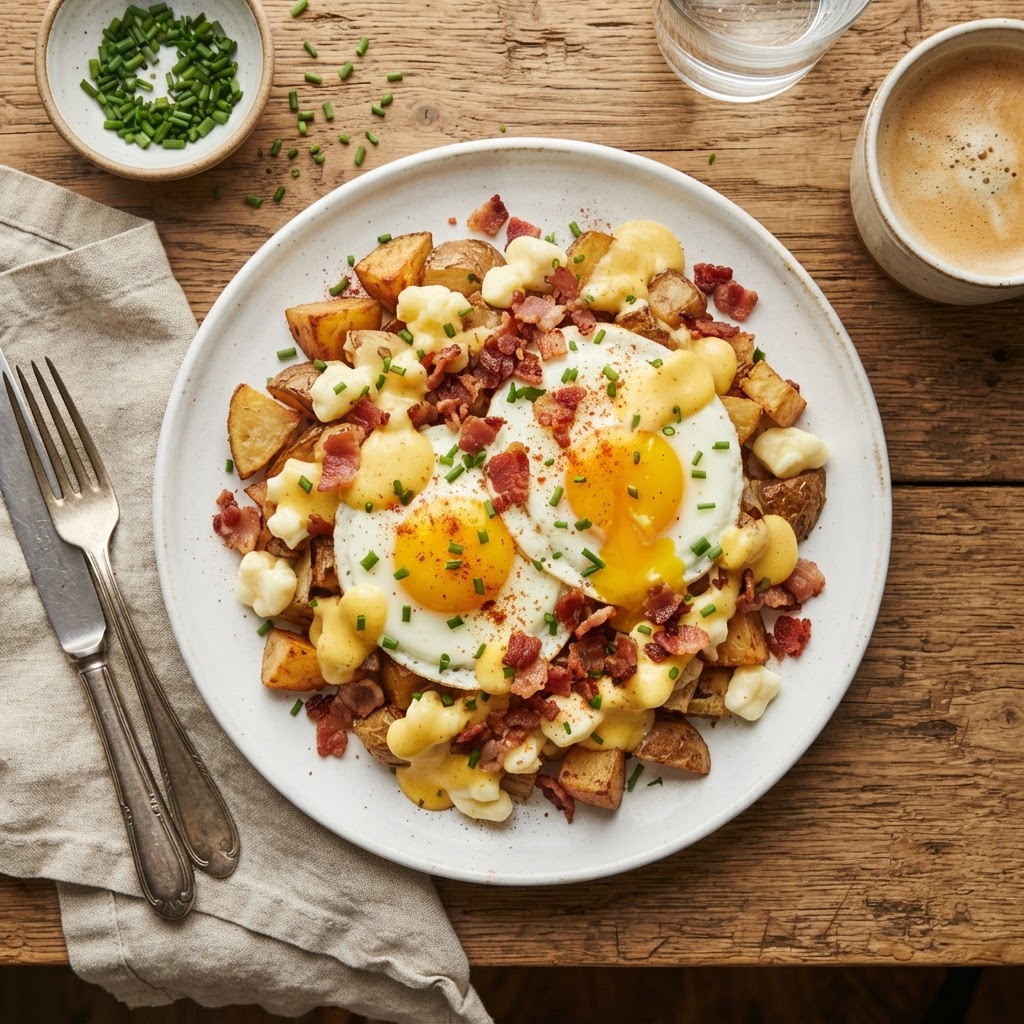
Poutine — the gloriously indulgent Canadian dish of crispy fries, cheese curds, and gravy — is one of the most popular comfort foods in North America. The breakfast poutine takes this Quebecois icon and gives it a brunch twist: replacing the gravy with hollandaise sauce, adding sunny-side-up eggs with runny yolks, and incorporating breakfast potatoes and bacon. The result is a dish of extraordinary richness and satisfaction — a Canadian brunch creation that brings the spirit of poutine to the morning table.
Poutine originated in rural Quebec in the late 1950s. The most widely accepted origin story credits Fernand Lachance, owner of a restaurant called "Le Café Idéal" (later "Le Lutin qui rit") in Warwick, Quebec. In 1957, a customer named Eddy Lainesse reportedly asked Lachance to add cheese curds to his bag of fries. Lachance allegedly responded, "Ça va faire une maudite poutine" ("That's going to make a damn mess"), giving the dish its name. The gravy was added later — originally as a way to keep the fries warm — and by the 1970s, poutine as we know it had become a staple of Quebec snack bars (*casse-croûtes*).
The word "poutine" has disputed etymology. It may derive from the English word "pudding" (adapted as "poutingue" in Quebec French), or from a Quebec slang word meaning "mess." Whatever the origin, poutine has become a national symbol of Canadian cuisine, exported worldwide and endlessly riffed upon. In 2007, the CBC declared poutine one of Canada's greatest inventions. Quebec has even lobbied for poutine to receive Protected Geographical Indication status.
The **cheese curd** is the soul of poutine. Made from fresh cheddar curds (before pressing), cheese curds have a distinctive "squeak" when bitten — a sign of their freshness. St-Albert Cheese and Kingsey Cheese produce the classic Quebec cheese curds. Fresh curds should be used within 24 hours of production for the best squeak; after that, they lose their signature texture.
About the Ingredients
Potatoes for breakfast poutine should be cut into home-fry-style cubes (½-inch) rather than French fry strips — this distinguishes the dish from traditional poutine and makes it more breakfast-appropriate. Russet potatoes produce the crispiest result.
Cheese curds should be fresh, at room temperature — cold curds do not melt properly when the hot sauce hits them. BelGioioso produces widely available cheese curds in the US. For the most authentic experience, order directly from St-Albert Cheese in Quebec.
Hollandaise sauce replaces the traditional brown gravy. Made with egg yolks, butter, and lemon juice, it provides the richness that gravy normally supplies but with a brighter, more brunch-appropriate flavour.
Bacon should be thick-cut and crisp. Nueske's applewood-smoked bacon is an excellent choice.
Ingredients (serves 6): - 3 lbs russet potatoes, peeled and cut into ½-inch cubes - 3 tablespoons vegetable oil - 1 teaspoon smoked paprika - ½ teaspoon garlic powder - Salt and freshly ground black pepper - 6 strips thick-cut bacon, cooked crisp and crumbled - 12 oz fresh cheese curds (BelGioioso or St-Albert), at room temperature - 6 large eggs - 2 tablespoons butter (for frying eggs) - Chopped fresh chives for garnish - A sprinkle of paprika for garnish
For the hollandaise sauce: - 4 large egg yolks - 1 cup (2 sticks) unsalted butter, melted and kept warm - 2 tablespoons fresh lemon juice - Pinch of cayenne pepper - Salt to taste
For the Potatoes: Preheat oven to 425°F. Toss the potato cubes with vegetable oil, smoked paprika, garlic powder, salt, and pepper. Spread on a large baking sheet in a single layer (use two sheets if needed). Roast 25–30 minutes, flipping once, until golden brown and crispy. Alternatively, pan-fry in a cast-iron skillet for crispier results.
For the Hollandaise: In a heatproof bowl set over a pan of barely simmering water (do not let the bowl touch the water), whisk the egg yolks with 1 tablespoon of water until pale and slightly thickened (about 3 minutes). Remove from heat. While whisking constantly, slowly drizzle in the melted butter in a thin stream. Stir in the lemon juice, cayenne, and salt. Keep warm.
For the Eggs: In a large skillet over medium heat, melt the butter. Crack the eggs into the pan and cook sunny-side-up (or over-easy) until the whites are set and the yolks are still runny. Season with salt and pepper.
To Assemble: Divide the crispy potatoes among plates or serve family-style in a large skillet. Scatter the crumbled bacon and cheese curds over the hot potatoes — the heat will soften the curds slightly. Top each portion with one or two fried eggs. Pour a generous amount of hollandaise sauce over everything. Garnish with chopped chives and a sprinkle of paprika. Serve immediately.
Batch (serves 12): - Double all quantities - Roast potatoes on two large baking sheets - Make hollandaise in a blender for larger volumes (it's more stable) - Set up an assembly line: potatoes, bacon, curds, eggs, hollandaise, garnish
Variations: - Replace hollandaise with traditional brown gravy for a more classic poutine base. - Add sautéed peppers and onions for a breakfast-skillet variation. - Replace bacon with crumbled breakfast sausage or diced ham. - Top with sliced avocado and salsa for a Tex-Mex breakfast poutine. - Use sweet potato cubes instead of russets for a sweet-savoury variation.
Pairing: Breakfast poutine pairs with strong coffee, a Virgin Mary (the acidity cuts through the richness), or an Arnold Palmer. For a brunch celebration, a Classic Champagne Mimosa is ideal — the bubbles and citrus complement the heavy, rich dish. A St-Ambroise or Unibroue beer would be the authentic Canadian accompaniment.
Pro Tips: The cheese curds must be at room temperature — cold curds will not soften when the hot potatoes and hollandaise hit them. The potatoes must be very crispy — soggy potatoes collapse under the weight of the toppings. The hollandaise should be pourable but not runny — if it's too thick, whisk in a teaspoon of warm water. Serve immediately — the dish does not hold well, as the potatoes soften, the curds cool, and the hollandaise breaks. The eggs must have runny yolks — when broken, the yolk mingles with the hollandaise to create a rich, golden sauce over the potatoes.
Reference Links: - Wikipedia — Poutine: en.wikipedia.org/wiki/Poutine - La Poutine Week: lapoutineweek.com - CBC — The History of Poutine: cbc.ca/history/History_PI.html - St-Albert Cheese: fromagest-albert.com - BelGioioso Cheese Curds: belgioioso.com - Serious Eats — Poutine Recipe: seriouseats.com/the-best-poutine-recipe
Rate this recipe
Be the first to rate this recipe
to submit your rating.
Recent Posts

Couscous Royale: North Africa's Grand Platter of Lamb, Chicken, and Merguez
October 14, 2026

Seattle Cream Cheese Dog Bites: Hadley Long's 1989 Pioneer Square Invention
October 14, 2026

Khao Soi: Chiang Mai's Northern Thai Coconut Curry Noodles
October 13, 2026

Korean Bibimbap: Jeonju's Joseon Dynasty Mixed Rice
October 11, 2026

Spaghetti alla Carbonara: Rome's World War II Pasta of Eggs, Guanciale, and Pecorino
October 9, 2026