Brazilian Pão de Queijo (Cheese Bread)
May 21, 2026
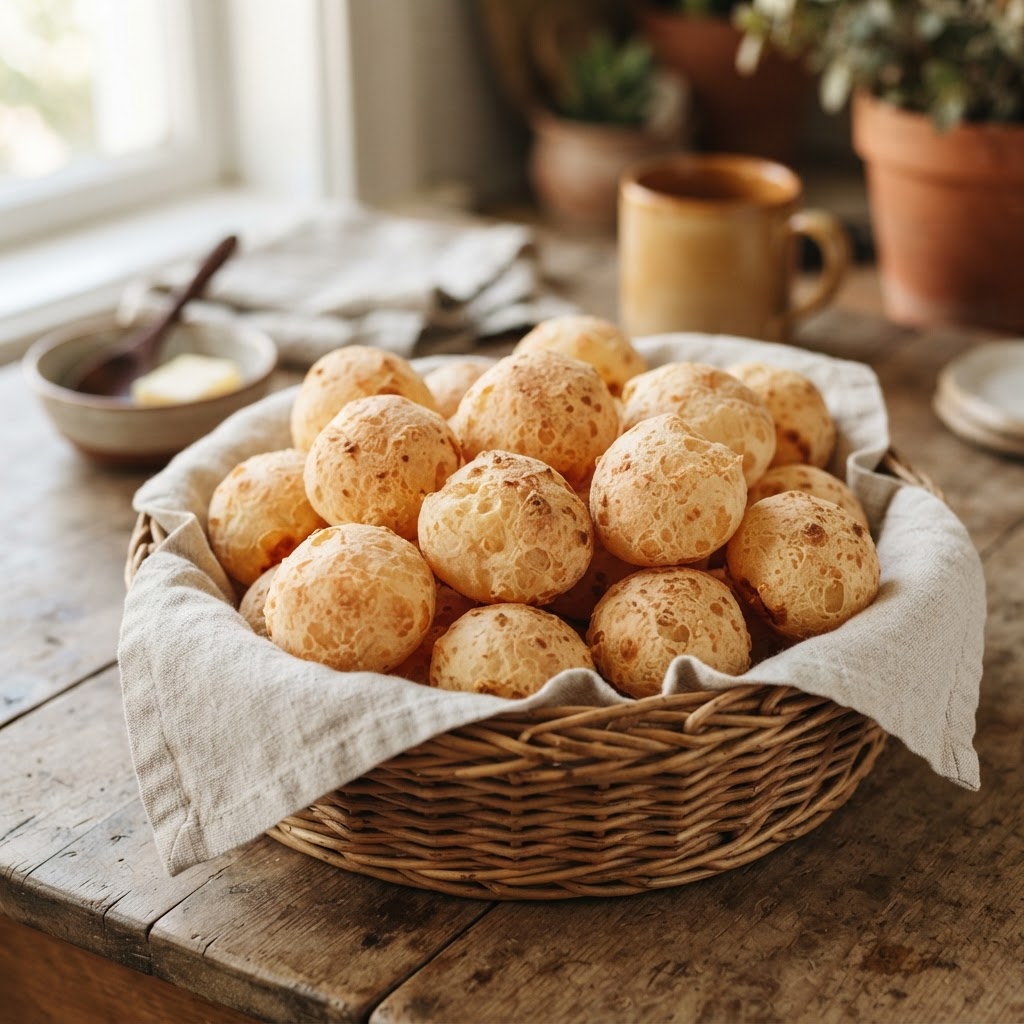
Pão de queijo (pronounced pownd-deh-KAY-zhoo) — "cheese bread" — is Brazil's most popular snack, a small, puffy, golden cheese roll made from cassava (tapioca) flour and cheese. It is eaten at every Brazilian breakfast table, served at every bakery and café, and sold from street carts across the country. The rolls are naturally gluten-free — they contain no wheat flour — and they have a distinctive chewy, almost mochi-like texture from the cassava starch, with a crisp, golden exterior and a hollow, airy interior.
Pão de queijo originated in the state of Minas Gerais in southeastern Brazil, dating to the 18th century. When miners discovered gold near Ouro Preto in the 1690s, a rush of settlers occupied the territory. Since wheat was not available, local cooks created a bread from cassava (manioc) starch, a staple derived from the cassava tuber that had been used by indigenous Tupiniquim peoples for centuries. In the late 19th century, grated hard cheese was added, creating the pão de queijo we know today. The traditional recipe uses both sweet and sour cassava flour (polvilho doce and polvilho azedo), oil, eggs, milk, salt, and cheese (typically Minas cheese, Canastra, or Parmesan).
For a party, these bite-sized cheese puffs are an appealing, naturally gluten-free appetizer that pairs beautifully with sparkling wine.
About the Ingredients
Cassava starch (polvilho) is the key ingredient — it gives pão de queijo its signature chewy, elastic texture. There are two types: *polvilho doce* (sweet cassava starch) and *polvilho azedo* (sour cassava starch, which has been fermented and gives a tangier flavor and lighter texture). The most authentic pão de queijo uses a blend of both, but using only sweet cassava starch (widely available as tapioca starch/flour) produces excellent results. Bob's Red Mill tapioca flour is widely available. Brazilian markets carry the authentic brands.
Cheese should be a hard, aged cheese. In Brazil, Queijo Minas (a semi-hard cow's milk cheese from Minas Gerais) or Canastra cheese is traditional. Outside Brazil, Parmesan is the most commonly used substitute and produces excellent results. A blend of Parmesan and mozzarella gives both flavor and stretch.
Oil — vegetable oil or butter — is used to make a hot paste (a choux-like technique) by boiling with milk, then stirring in the cassava starch. This pre-cooking step is what gives the breads their characteristic texture.
Ingredients (makes approximately 30 mini pão de queijo): - 2 cups sweet cassava starch (tapioca flour/polvilho doce) - ½ cup vegetable oil - ½ cup milk - ½ cup water - 1 teaspoon salt - 2 large eggs - 1½ cups Parmesan cheese, finely grated - ½ cup mozzarella cheese, finely grated (optional, for stretch)
Instructions: Preheat the oven to 400°F (392°F). Line a baking sheet with parchment paper.
In a saucepan, combine the oil, milk, water, and salt. Bring to a rolling boil. Remove from heat and immediately add all the cassava starch at once. Stir vigorously with a wooden spoon until the mixture forms a smooth, slightly sticky dough that pulls away from the sides of the pan. This is the same technique used for choux pastry — the hot liquid precooks the starch.
Let the dough cool for 10 minutes. Add the eggs one at a time, kneading by hand after each addition until fully incorporated. The dough will be sticky and slightly elastic. Add the grated cheeses and knead until evenly distributed.
Pinch off tablespoon-sized pieces and roll into smooth balls. Place on the prepared baking sheet, leaving 2 inches between them. The balls should be smooth on the surface — cracks will cause them to split during baking.
Bake for 15–18 minutes until puffed and golden brown. The tops should have a slight golden tint and the bottoms should be lightly browned. Serve immediately — pão de queijo is best eaten warm, when the interior is still chewy and the cheese is molten.
The Mimosa Pairing Logic: The chewy, cheesy pão de queijo demands a bright, acidic beverage to cut through the richness of the cheese and the dense, starchy texture. A classic Champagne mimosa or a passionfruit mimosa is ideal — the passionfruit pays homage to pão de queijo's Brazilian origins, while the citrus acidity cuts through the cheese and the starch, and the bubbles refresh the palate. The pairing echoes the Brazilian tradition of eating pão de queijo with café com leite, but with a celebratory brunch twist.
Reference Links: - Pão de queijo history and recipe: Wikipedia - Pão de queijo cultural guide: TSL News - Brazilian cuisine guide: TasteAtlas
Make-Ahead: The dough can be made 1 day ahead and refrigerated, wrapped tightly. Bring to room temperature before shaping and baking. The shaped, unbaked balls can be frozen on a baking sheet, then transferred to a freezer bag for up to 1 month. Bake from frozen, adding 2–3 minutes to the baking time. Pão de queijo does not reheat well — it is best eaten fresh from the oven, as the chewy texture degrades upon cooling and reheating.
Pro Tips: The liquid must be at a rolling boil before the starch is added — this is what precooks the starch and creates the characteristic texture. If the liquid is merely warm, the dough will be grainy and the breads will not puff. The dough should be sticky but workable — if it is too wet, add a little more starch; if too dry, add a splash of milk. The balls must be smooth — surface cracks cause the breads to split open during baking. Bake until the tops are golden — underbaked pão de queijo will be gummy inside. Serve immediately — the texture is best when warm.
Rate this recipe
Be the first to rate this recipe
to submit your rating.
Perfect Mimosa Pairings
Mimosas that pair perfectly with this dish
Recent Posts

Couscous Royale: North Africa's Grand Platter of Lamb, Chicken, and Merguez
October 14, 2026

Seattle Cream Cheese Dog Bites: Hadley Long's 1989 Pioneer Square Invention
October 14, 2026

Khao Soi: Chiang Mai's Northern Thai Coconut Curry Noodles
October 13, 2026

Korean Bibimbap: Jeonju's Joseon Dynasty Mixed Rice
October 11, 2026

Spaghetti alla Carbonara: Rome's World War II Pasta of Eggs, Guanciale, and Pecorino
October 9, 2026