The Brazilian Cupuaçu & Lime Mimosa
July 18, 2026
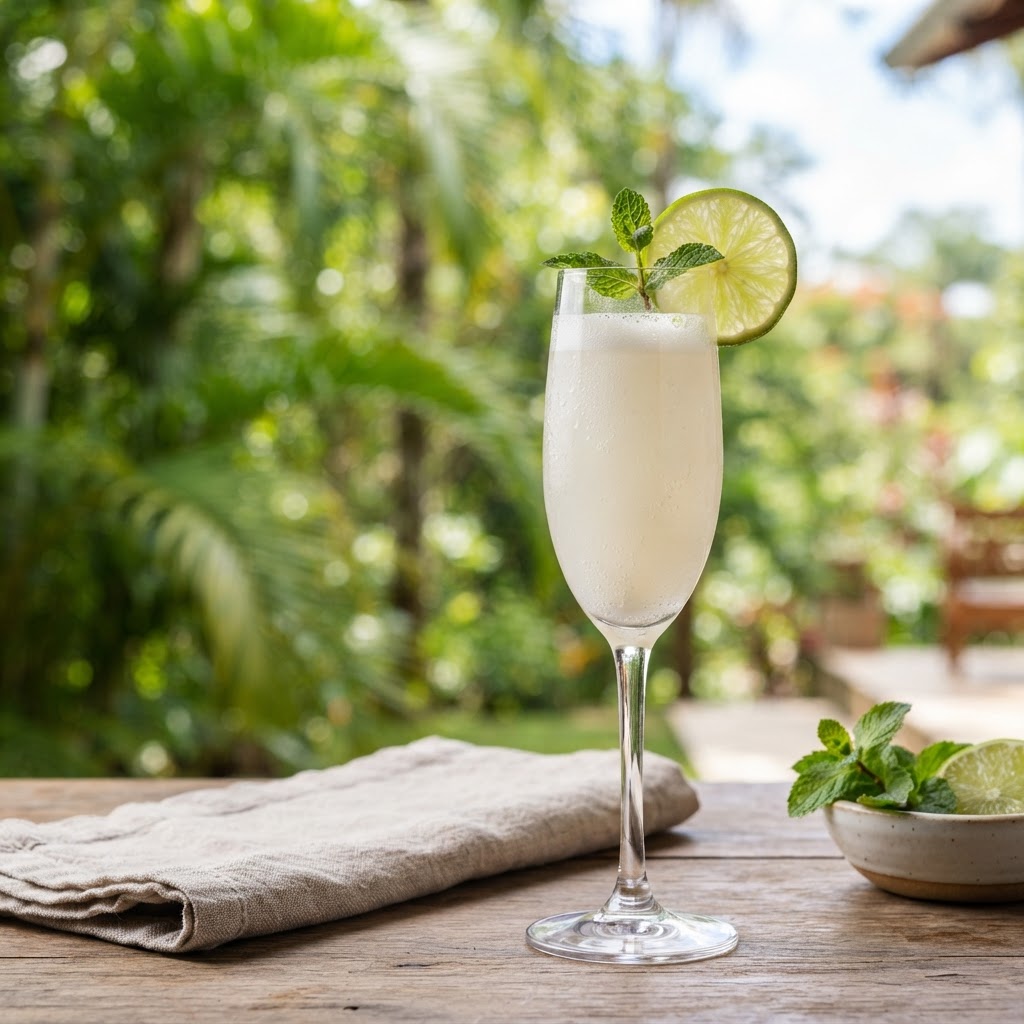
Cupuaçu (Theobroma grandiflorum) is the Amazonian fruit that Brazil has quietly loved for generations and the rest of the world is only beginning to discover. It is a close relative of cacao — the two share the same genus, Theobroma, "food of the gods" — and its creamy white pulp is one of the most distinctive flavors in the entire Brazilian fruit canon: tropical and tart, with notes that tasters variously describe as pineapple, banana, pear, passion fruit, and a faint suggestion of chocolate. The texture is uniquely creamy, almost custard-like, which makes it behave in a glass more like a smoothie than a juice (Wikipedia).
Cupuaçu is consumed throughout the northern states of Brazil, particularly Pará and Amazonas, where it is turned into juices, ice creams, mousses, and the popular cupuaçu cream (creme de cupuaçu) that fills cakes and tarts. Fresh cupuaçu pulp is difficult to find outside Brazil, but frozen pulp — sold in sachets at Latin American and Brazilian grocers, or online — is an excellent and authentic substitute that preserves the fruit's remarkable flavor. Combined with lime and dry sparkling wine, cupuaçu produces a mimosa unlike any other in this collection: pale, creamy, tropical, and faintly complex in a way that keeps guests guessing.
Ingredients (serves 6): - 1 cup cupuaçu pulp (frozen pulp sachets, thawed) — or ¾ cup cupuaçu pulp thinned with ¼ cup water if very thick - 2 oz fresh lime juice (about 3–4 limes) - 2 tablespoons condensed milk or coconut cream (optional, for a creamier texture) - 1 tablespoon agave nectar or honey (to taste) - 1 bottle (3 ⅛ cups) chilled Cava Brut or dry Prosecco - Lime wheels and fresh mint for garnish
Instructions: Blend the cupuaçu pulp with the lime juice, condensed milk or coconut cream (if using), and agave nectar until completely smooth. The blend will be pale and creamy. Taste and adjust sweetness — cupuaçu is naturally tart, so the sweetener is essential. Strain if the pulp is fibrous. Chill thoroughly.
Chill champagne flutes for 5 minutes. Pour 2 oz of the cupuaçu blend into each flute. Top slowly with chilled Cava, pouring gently down the side — the creamy pulp will swirl beautifully through the bubbles. Garnish with a lime wheel on the rim and a small mint sprig.
For a Mimosa Bar (serves 12): - 2 cups cupuaçu pulp - 4 oz fresh lime juice - 3 tablespoons condensed milk or coconut cream - 2 tablespoons agave nectar - 2 bottles chilled Cava Brut
Variations: - Cupuaçu Caipirinha Mimosa: Add 1 oz cachaça to the blend for a mimosa that nods to Brazil's national cocktail. - Cupuaçu Coconut: Use coconut cream and replace the Cava with a dry sparkling wine for a richer, dairy-free tropical version. - Cupuaçu Passion Fruit: Add 2 oz fresh passion fruit pulp to the blend for a deeper tropical complexity.
Pairing: This tropical mimosa pairs beautifully with Brazilian-inspired brunch dishes — pão de queijo (cheese bread), açaí bowls, and tropical fruit platters. Its creamy acidity also complements coconut-based desserts and anything with lime.
Reference Links: - Theobroma grandiflorum (cupuaçu, Amazonian fruit, cacao relative): Wikipedia - Cupuaçu flavor and uses (Brazilian national fruit): Healthline
Pro Tips: Frozen cupuaçu pulp is the most practical option outside Brazil — seek it at Brazilian and Latin American grocers or online specialty suppliers. The pulp is naturally thick and fibrous; blending thoroughly and straining produces the smoothest result. The condensed milk is optional but traditional in Brazilian cupuaçu drinks — it rounds the fruit's tartness and gives the mimosa a silky texture. Adjust the sweetener carefully: cupuaçu's tartness varies between batches, and the sparkling wine's dryness changes the balance. Serve immediately, as the creamy pulp separates if the drink sits for too long.
Rate this recipe
Be the first to rate this recipe
to submit your rating.
Recent Posts

Couscous Royale: North Africa's Grand Platter of Lamb, Chicken, and Merguez
October 14, 2026

Seattle Cream Cheese Dog Bites: Hadley Long's 1989 Pioneer Square Invention
October 14, 2026

Khao Soi: Chiang Mai's Northern Thai Coconut Curry Noodles
October 13, 2026

Korean Bibimbap: Jeonju's Joseon Dynasty Mixed Rice
October 11, 2026

Spaghetti alla Carbonara: Rome's World War II Pasta of Eggs, Guanciale, and Pecorino
October 9, 2026