Biscotti di Vin Santo e Prosecco
May 23, 2026
Around 1691, a Florentine notary named Amadio Baldanzi wrote down a recipe for cantucci in a manuscript that still survives. The cookies he described came from Prato, a city in Tuscany just north of Florence, where they had been made since at least the sixteenth century. The name *biscotti* comes from the Latin *panis biscotus*, bread twice-baked, and it is literal: a dough is shaped into logs, baked once, sliced, and baked again until dry and crisp. The result keeps for weeks, and it was designed for dipping into wine. Not milk. Wine.
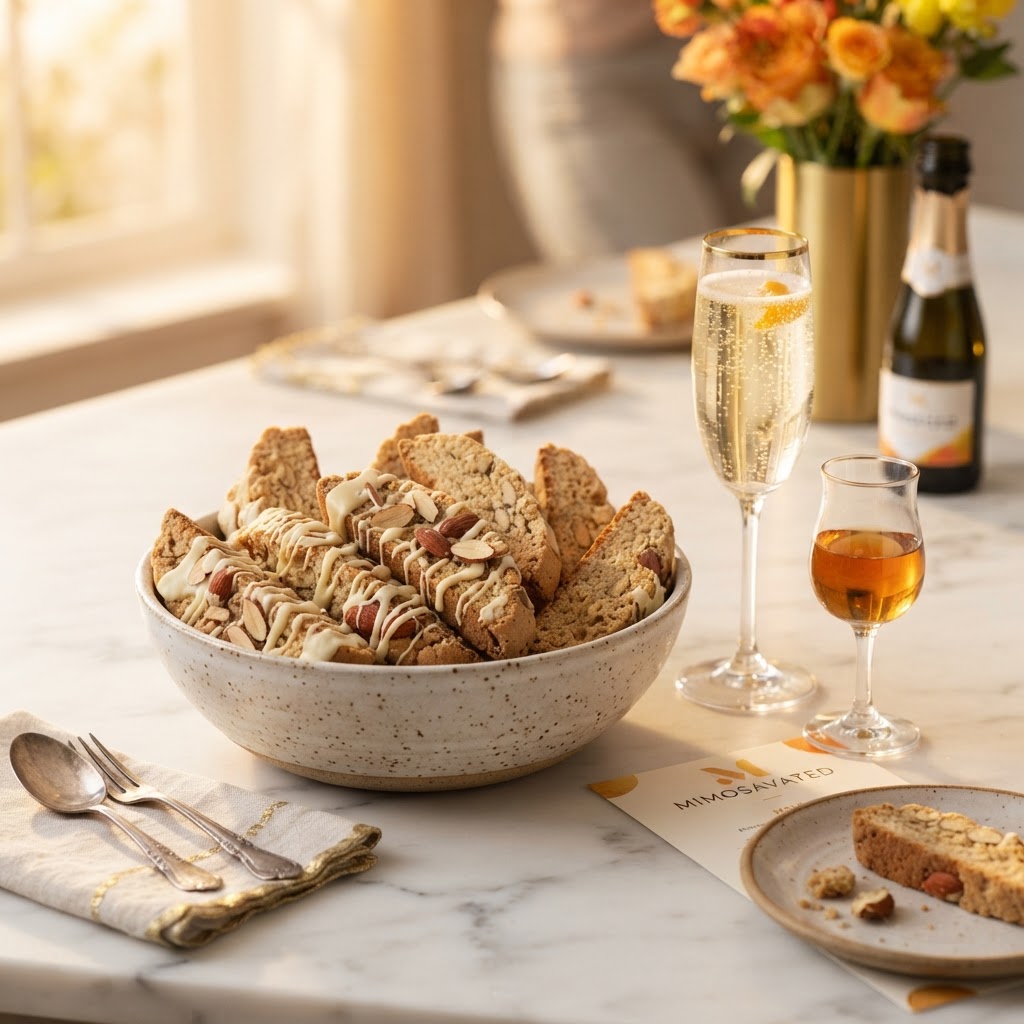
The cantucci of Prato are studded with whole almonds, skins on, and flavored with a little lemon zest. In Tuscany they are served at the end of a meal with a glass of Vin Santo, "holy wine," the sweet, amber dessert wine made from dried grapes. You dip the cookie into the wine, which softens it just enough to bite through.
Our Mimosavated version adds a splash of Prosecco to the dough, which lightens the texture and gives a subtle floral note, and we suggest dipping them in Prosecco alongside the traditional Vin Santo, a brunch setting where wine-dipped cookies feel entirely appropriate.
Ingredients (makes about 40 cantucci):
The Cantucci: - 1 lb 2 oz all-purpose flour (or Tipo 00 flour) - 8 ⅞ oz granulated sugar - 3 large eggs, plus 1 egg for brushing - ½ cup Prosecco - 1 teaspoon baking powder - A pinch of salt - Zest of 1 lemon (unwaxed, organic) - 1 teaspoon vanilla extract - 8 ⅞ oz whole almonds, skin on, toasted
To Serve: - Vin Santo (traditional) and/or Prosecco for dipping - White chocolate, melted (optional, for drizzling)
Making the Cantucci: Preheat the oven to 356°F (350°F). Line two baking sheets with parchment paper.
In a large bowl, whisk together the flour, sugar, baking powder, and salt. Make a well in the center. In a separate bowl, beat the 3 eggs, then add the Prosecco, lemon zest, and vanilla extract. Pour the wet mixture into the well and mix with a wooden spoon until a dough starts to form. Add the toasted almonds and mix until evenly distributed — the dough will be stiff and slightly sticky.
Turn the dough out onto a lightly floured surface. Knead briefly until it comes together into a smooth ball. Divide into 4 pieces. Roll each piece into a log about 1 ⅛ in (1¼ inches) thick and 10 inches long. Place the logs on the prepared baking sheets, leaving space between them.
Beat the remaining egg with a tablespoon of water. Brush the logs generously with the egg wash. Bake for 20-25 minutes, until golden and firm to the touch. Remove from the oven and let cool for 10 minutes — they need to be cool enough to slice cleanly but still warm enough to cut without cracking.
Reduce the oven temperature to 302°F (300°F). Using a serrated knife, slice the logs diagonally into ⅓ in-thick pieces. Arrange the slices cut-side down on the baking sheets. Return to the oven and bake for 10-12 minutes, then flip each biscotto and bake for another 10-12 minutes, until they're dry, crisp, and lightly golden. The second bake is what gives cantucci their characteristic dry, crunchy texture.
Let cool completely on a wire rack. The biscotti will crisp up further as they cool.
Serving: Arrange the cantucci in a bowl or on a plate. Serve alongside glasses of Vin Santo for the traditional experience, or glasses of chilled Prosecco for the Mimosavated twist. If desired, drizzle some of the biscotti with melted white chocolate for an extra touch of sweetness.
The Mimosa Pairing Logic: Since the cantucci contain Prosecco, a classic Prosecco mimosa is the obvious pairing. An almond mimosa (sparkling wine with a splash of amaretto) is inspired: the amaretto echoes the almonds in the biscotti. An orange mimosa also works, as the orange complements the lemon zest in the dough. If serving with Vin Santo for dipping, a peach bellini mimosa is the closest match to the Vin Santo's amber sweetness.
Reference Links: - Biscotti (cantucci) history and Prato origins: Wikipedia - Cantucci meaning and authentic recipe: The Biscotti Company - Vin Santo wine guide: Wine Folly - Tuscany dessert wine tradition: Italy Magazine - Twice-baked cookie technique: King Arthur Baking
Make-Ahead: Cantucci are designed to keep — they can be stored in an airtight container at room temperature for up to 2 weeks. They can also be frozen for up to 3 months. The dough can be made a day ahead and refrigerated; let it come to room temperature before shaping. The first bake can be done a day ahead; slice and do the second bake the next day.
Pro Tips: The almonds should be whole, skin-on, and toasted — toasting brings out their flavor dramatically. Don't skip the toasting. The first bake should produce logs that are firm enough to slice but not fully hard — they'll continue to dry out during the second bake. The slicing is the trickiest part: use a serrated knife and a gentle sawing motion. If the logs are too hot, they'll fall apart; too cold, and they'll crack. The 10-minute cooling window is the sweet spot. The second bake at a lower temperature is what gives cantucci their dry, crunchy texture — don't rush it. The biscotti should be dry enough to snap cleanly. If you're not serving them with Vin Santo or Prosecco, they're also excellent with espresso or coffee.
Rate this recipe
Be the first to rate this recipe
to submit your rating.
Recent Posts

Couscous Royale: North Africa's Grand Platter of Lamb, Chicken, and Merguez
October 14, 2026

Seattle Cream Cheese Dog Bites: Hadley Long's 1989 Pioneer Square Invention
October 14, 2026

Khao Soi: Chiang Mai's Northern Thai Coconut Curry Noodles
October 13, 2026

Korean Bibimbap: Jeonju's Joseon Dynasty Mixed Rice
October 11, 2026

Spaghetti alla Carbonara: Rome's World War II Pasta of Eggs, Guanciale, and Pecorino
October 9, 2026