Bananas Foster al Rum e Spumante
April 1, 2026
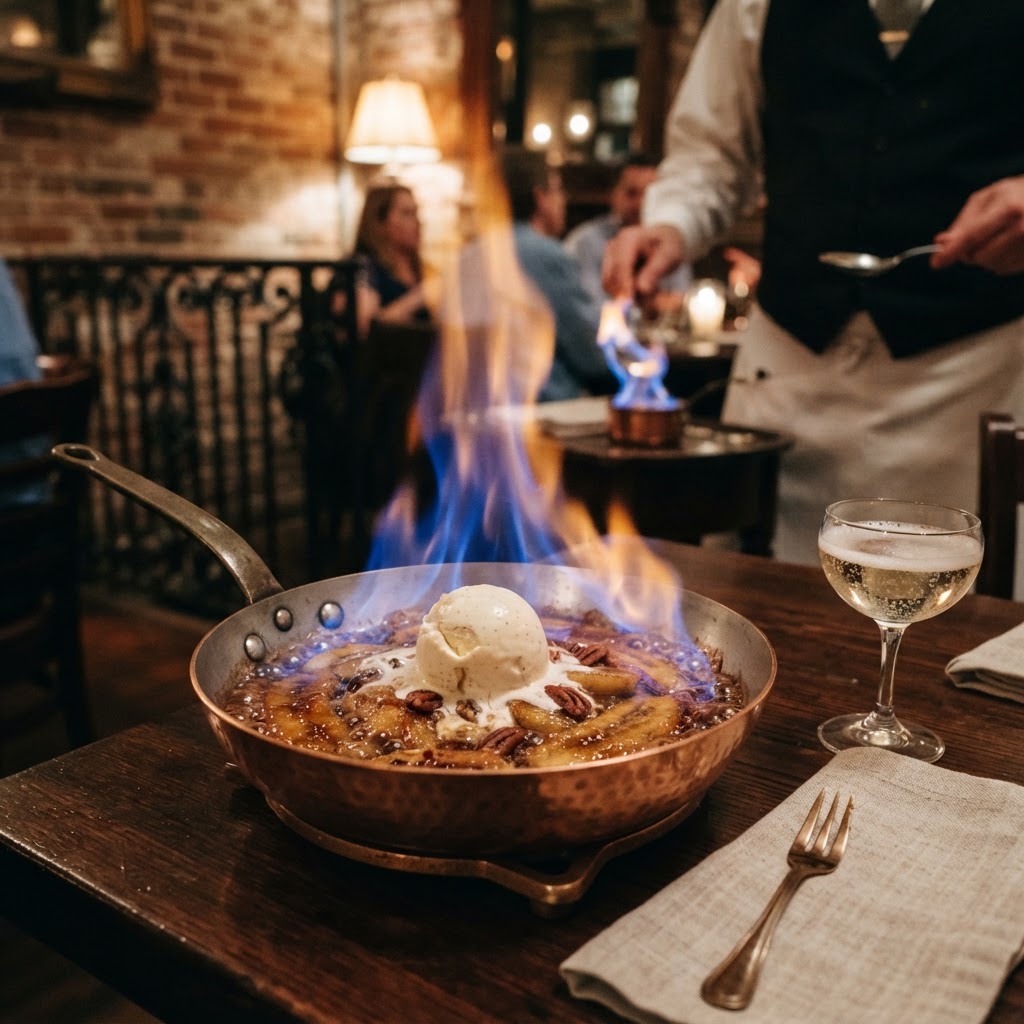
Bananas Foster is the most theatrical dessert in the American canon — and one of the most delicious. Sliced bananas sautéed in butter, brown sugar, cinnamon, and banana liqueur, then flambéed with dark rum and served over vanilla ice cream. The spectacle of the flame, the caramelized aroma, and the melting ice cream make it one of the great restaurant desserts — and it was born in New Orleans.
The dessert was created in 1951 at Brennan's, the legendary New Orleans restaurant on Bourbon Street in the French Quarter. Owen Brennan, the restaurant's founder, challenged his executive chef Paul Blangé to create a dish that would promote New Orleans' position as a major importer of bananas from Central and South America. The Port of New Orleans was a key entry point for bananas arriving by ship, and the city's business leaders wanted to highlight this trade. Blangé's solution was to sauté bananas in butter and brown sugar, add banana liqueur and dark rum, and ignite the whole pan tableside — creating a spectacle that was as memorable to watch as it was to eat.
The dessert was named after Richard Foster, a friend of Owen Brennan's who served as chairman of the New Orleans Crime Commission. The dish quickly became Brennan's signature dessert and one of the most famous dishes in New Orleans, alongside oysters Rockefeller, shrimp rémoulade, and gumbo. Brennan's still serves it today, flamed tableside by tuxedoed waiters, and the recipe has spread to steakhouses and French restaurants across America.
Our Mimosavated version splits the flambéing between dark rum and Spumante (Italian sparkling wine). The rum provides the traditional flame and depth, while the Spumante adds a bright, slightly acidic note that cuts through the butter and brown sugar. The Spumante doesn't get flambéed — it's stirred in after the flame dies down, to preserve its bright, fruity character.
Ingredients (serves 4):
- 4 ripe but firm bananas (not overripe — they should hold their shape) - 3 ½ oz unsalted butter - 5 ¼ oz brown sugar (dark or light) - 1 teaspoon ground cinnamon - 3 ⅓ tbsp banana liqueur (such as Marie Brizard or Bols) - ⅓ cup dark rum (such as Myers's or Bacardi Black) - ¼ cup Spumante (Italian sparkling wine, brut) - 1 teaspoon vanilla extract - Vanilla ice cream, for serving - Chopped toasted pecans or walnuts, for garnish (optional)
Preparing the Bananas: Peel the bananas and slice them in half lengthwise, then cut each half crosswise into two pieces — you'll have 4 pieces per banana. They should be thick enough to hold their shape during cooking.
Making the Sauce: In a large, heavy-bottomed skillet (cast iron or copper is traditional), melt the butter over medium heat. Add the brown sugar and cinnamon, stirring until the sugar dissolves and the mixture bubbles — about 2 minutes. Add the banana liqueur and stir to combine.
Cooking the Bananas: Add the banana pieces to the skillet, cut side down. Cook for about 2 minutes per side, gently spooning the sauce over them, until they're softened and lightly caramelized but not falling apart. Be gentle — the goal is to warm and glaze them, not to turn them into mush.
The Flambé (the Theatrical Part): Remove the skillet from the heat. Add the dark rum — the skillet should be off the flame when you add it. Return to the heat. The alcohol will warm and the vapors will ignite — you can tilt the pan slightly toward the flame to help it along, or use a long match or lighter to ignite it. The flame will flare up dramatically — step back and let it burn. The flame will die down on its own after about 30 seconds, once the alcohol has burned off. Gently shake the pan to ensure all the alcohol is gone.
If you're nervous about flambéing, you can skip the flame and simply cook the rum for 1–2 minutes until the alcohol evaporates — the flavor is nearly identical, though you lose the spectacle.
Finishing with Spumante: Once the flame has died (or after cooking off the rum), remove from heat and stir in the Spumante and vanilla extract. The Spumante adds a bright, slightly acidic note that cuts through the richness of the butter and brown sugar. Serve immediately — the sauce should still be bubbling.
Serving: Place a scoop of vanilla ice cream in each serving dish. Spoon the warm bananas and sauce over the ice cream. Garnish with chopped toasted pecans if desired. The contrast between the warm, caramelized bananas and the cold ice cream is the whole point — serve immediately.
The Mimosa Pairing Logic: Since the sauce contains Spumante and dark rum, pair with a classic Prosecco mimosa — orange juice and Prosecco. The citrus will echo the tropical notes of the bananas. For a more adventurous pairing, a tropical mango mimosa is inspired — the mango complements the banana and the rum. Avoid heavy or bitter mimosas — the dessert is sweet and buttery, and you need something bright and refreshing.
Reference Links: - Bananas Foster recipe (Brennan's, Paul Blangé, 1951): Brennan's New Orleans - The Legend of Bananas Foster: New Orleans & Company - Brennan's Bananas Foster History and Recipe: Southern Living - History of Bananas Foster: Kitchen Project - Spumante Italian sparkling wine guide: Wine Folly
Make-Ahead: Bananas Foster is a made-to-order dessert — it must be cooked and served immediately. You can prepare the brown sugar-butter base a few hours ahead and reheat it, but the bananas must be sliced and cooked just before serving. Do not attempt to make this ahead and reheat — the bananas will turn to mush and the ice cream will melt. The vanilla ice cream should be frozen and ready to scoop. Have all ingredients measured and ready before you start — once you begin, the cooking takes less than 10 minutes.
Pro Tips: Use bananas that are ripe but still firm — overripe bananas will disintegrate. For the flambé, make sure the pan is off the heat when you add the rum, then return to the heat to ignite — adding rum to a pan already over a flame can cause dangerous flare-ups. Never pour rum directly from the bottle near a flame — measure it first into a small cup. Use a long match or lighter to ignite if the pan doesn't catch on its own. Keep a lid nearby to smother the flame if it gets too high. The flame will die on its own — be patient. If you're serving this to guests, dim the lights before flambéing — the flame is the show, and it's worth seeing.
Rate this recipe
Be the first to rate this recipe
to submit your rating.
Recent Posts

Couscous Royale: North Africa's Grand Platter of Lamb, Chicken, and Merguez
October 14, 2026

Seattle Cream Cheese Dog Bites: Hadley Long's 1989 Pioneer Square Invention
October 14, 2026

Khao Soi: Chiang Mai's Northern Thai Coconut Curry Noodles
October 13, 2026

Korean Bibimbap: Jeonju's Joseon Dynasty Mixed Rice
October 11, 2026

Spaghetti alla Carbonara: Rome's World War II Pasta of Eggs, Guanciale, and Pecorino
October 9, 2026