Wiener Schnitzel
May 7, 2026
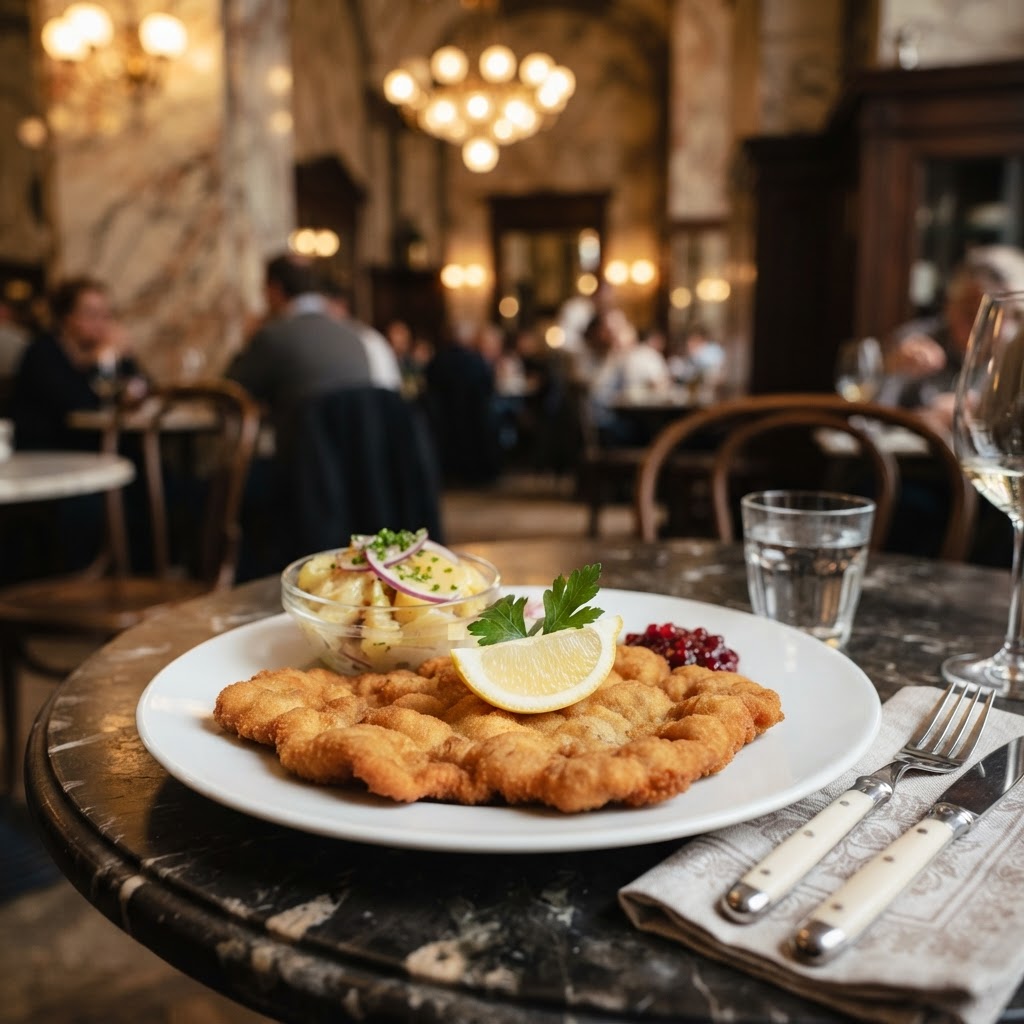
Wiener Schnitzel, "Viennese cutlet," is Austria's national dish: a thin, breaded, pan-fried veal cutlet, golden and crisp, served with a slice of lemon and a side of potato salad or lingonberry jam. The designation first appeared in the nineteenth century, with the first known mention in an 1831 cookbook by Maria Anna Neudecker of Prague, where it was called *eingebröselte Kalbsschnitzchen*, roughly "breaded veal cutlets." A popular tale credits Field Marshal Joseph Radetzky von Radetz with bringing the recipe from Italy to Vienna in 1857, though the linguist Heinz-Dieter Pohl has described this as invented, noting the dish is more likely related to the Italian *cotoletta alla Milanese* and to earlier Austrian breaded dishes like *Backhendl*, first mentioned in 1719. By Austrian law, the name "Wiener Schnitzel" may only be used for veal (Wikipedia; BBC Travel).
Wiener Schnitzel is the centerpiece of the Austrian table, elegant, simple, and widely cherished, served at every Viennese restaurant and the standard for any festive Austrian meal.
Ingredients (serves 6): - 6 veal cutlets (about 5 oz each), from the leg (top round) - 1 cup all-purpose flour - 3 large eggs - 2 cups fresh bread crumbs (preferably from day-old white bread, not panko) - 1 cup vegetable oil (or clarified butter / Butterschmalz) - 2 lemons, cut into wedges - 1 bunch parsley, for garnish - Salt to taste - Potato salad, lingonberry jam, and cucumber salad, for serving
Instructions: Place each veal cutlet between two sheets of plastic wrap and pound with a meat mallet until very thin (about ¼ inch and 8 inches across), working gently so the meat does not tear. Season both sides with salt. Set up three shallow dishes: one with flour, one with the eggs beaten, and one with the bread crumbs. Dredge each cutlet in flour, shaking off excess. Dip in the egg, letting excess drip off. Coat thoroughly in bread crumbs, pressing gently so they adhere — do not press hard, or the coating will be dense. Heat the oil in a large skillet over medium-high heat to 350°F. Fry the cutlets one or two at a time, about 2 minutes per side, until golden and crisp. Do not overcrowd. Drain on paper towels and keep warm. Serve immediately with lemon wedges, parsley, and the traditional sides.
For a Crowd (serves 12): - 12 veal cutlets, 2 cups flour, 6 eggs, 4 cups bread crumbs, 2 cups oil - Fry in batches; keep finished cutlets warm on a wire rack in a 200°F oven.
Variations: - Schweineschnitzel (Pork Schnitzel): Replace the veal with pork loin — equally delicious, though by Austrian convention it must be called "Schnitzel vom Schwein," not "Wiener Schnitzel." - Hähnchenschnitzel (Chicken Schnitzel): Use chicken breasts pounded thin for a lighter, economical version. - Jägerschnitzel: Top the finished schnitzel with a creamy mushroom sauce (note: this is a German, not Austrian, tradition).
Pairing: Wiener Schnitzel pairs with a crisp Austrian white wine — a Grüner Veltliner or a dry Riesling. For a brunch or daytime gathering, a Cava or a light sparkling wine also works. The traditional sides are potato salad, cucumber salad, and lingonberry jam.
Reference Links: - Wiener schnitzel (Austria, 1831, veal): Wikipedia - Does this schnitzel define Vienna?: BBC Travel
Pro Tips: Use veal for a true Wiener Schnitzel — by Austrian regulation, only veal may bear the name. Pound the cutlets very thin and even; this is what gives the dish its characteristic delicacy. Use fresh bread crumbs from day-old white bread, not panko; the crumbs should be fine and light. Press the crumbs on gently — never hard — so they stay loose and create a puffy, crisp crust that pulls away slightly from the meat. Fry in enough oil to come halfway up the cutlet, and swirl the pan so the oil washes over the top — this is the secret to the puffed, airy crust. Serve immediately; a schnitzel waits for no one.
Rate this recipe
Be the first to rate this recipe
to submit your rating.
Recent Posts

Couscous Royale: North Africa's Grand Platter of Lamb, Chicken, and Merguez
October 14, 2026

Seattle Cream Cheese Dog Bites: Hadley Long's 1989 Pioneer Square Invention
October 14, 2026

Khao Soi: Chiang Mai's Northern Thai Coconut Curry Noodles
October 13, 2026

Korean Bibimbap: Jeonju's Joseon Dynasty Mixed Rice
October 11, 2026

Spaghetti alla Carbonara: Rome's World War II Pasta of Eggs, Guanciale, and Pecorino
October 9, 2026