Argentine Provoleta with Oregano and Olive Oil
July 18, 2026
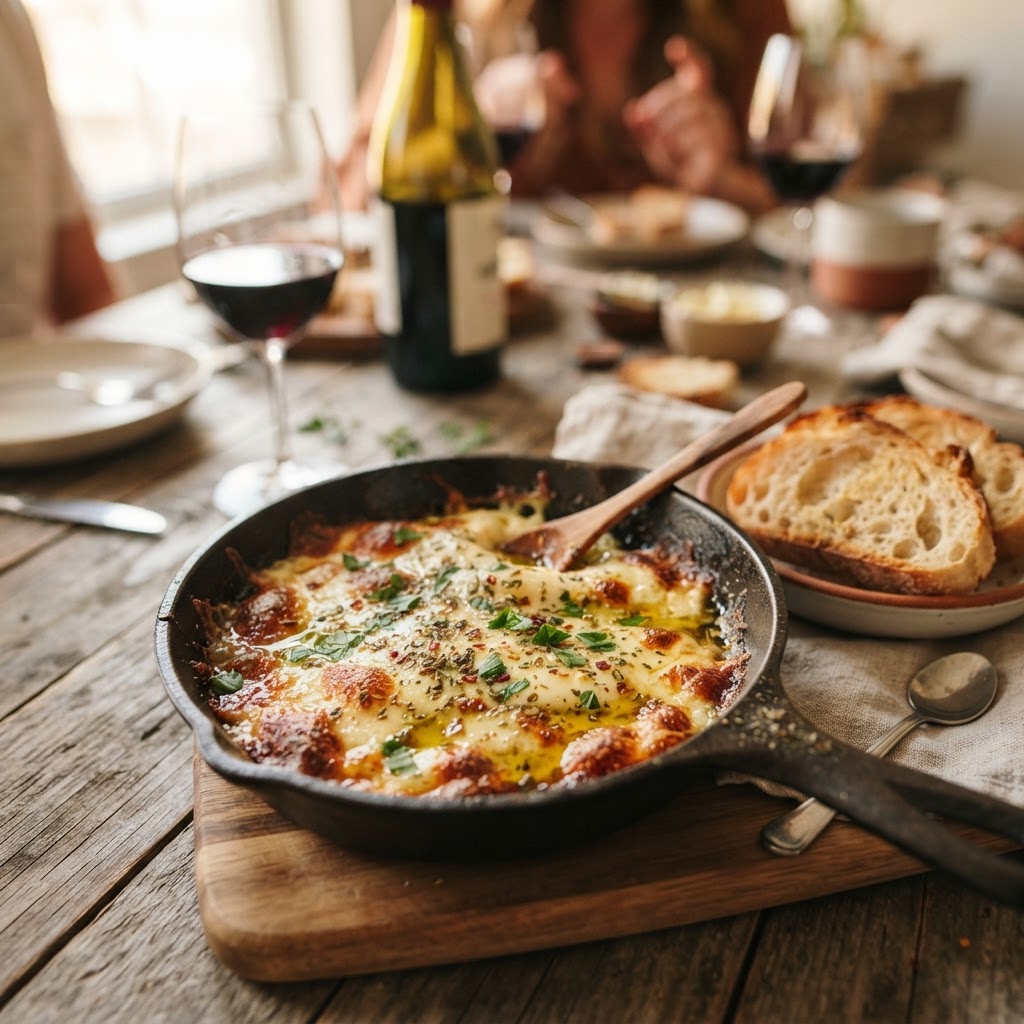
Provoleta is the great Argentine appetizer — a thick slab of provolone cheese, dusted with oregano and red pepper flakes, grilled or pan-seared until the outside is golden and crisp and the inside is melted, gooey, and stretchy. It is a staple of the Argentine asado (barbecue), brought out at the start of the meal to be eaten with crusty bread while the meats finish on the grill. The dish is named after the cheese itself (provolone, called provoleta in Argentina), and the technique — grilling a cheese until it is both crisp and molten — is one of the great pleasures of the Argentine table.
The key to provoleta is the cheese: it must be provoleta or a semi-aged provolone that can hold its shape under heat while melting inside. Young, soft provolone will melt into a puddle; old, dry provolone will not melt at all. A semi-aged provolone, dusted with oregano and a little flour to help it form a crust, is the authentic choice. For a party, we cook the provoleta in small cast-iron skillets, so each guest gets their own bubbling, golden portion with bread for dipping.
Ingredients (serves 8–12): - 1½ pounds semi-aged provolone cheese (provoleta if available), cut into ½-inch thick slabs - 2 tablespoons all-purpose flour (for dusting — helps the crust form) - 2 tablespoons extra-virgin olive oil - 1 tablespoon dried oregano - 1 teaspoon red pepper flakes - ½ teaspoon black pepper - Flaky sea salt - Crusty bread, sliced, for serving - Lemon wedges (optional, traditional)
Preparing the Cheese: Pat the cheese slabs dry with paper towels. Lightly dust both sides with flour, shaking off excess — the flour helps the exterior form a crisp crust that holds the melted interior. Sprinkle both sides with dried oregano and red pepper flakes, pressing gently to adhere. Let the cheese sit at room temperature 30 minutes before cooking — cold cheese straight from the refrigerator will not melt evenly.
Cooking: Heat a small cast-iron skillet (or a grill pan) over medium-high heat until very hot. Add 1 teaspoon of olive oil. Carefully place a cheese slab in the pan — it should sizzle immediately. Cook 2–3 minutes, undisturbed, until the bottom is deep golden brown and has formed a crisp crust. Carefully flip with a spatula (the cheese is now flexible — be gentle). Cook 1–2 minutes more, until the second side is golden and the interior is melted, gooey, and stretchy when you lift an edge.
Service: Serve immediately in the cast-iron skillet, directly from the heat — the pan keeps the cheese molten. Sprinkle with additional oregano and a pinch of flaky salt. Drizzle with a little more olive oil. Provide crusty bread for dragging through the melted cheese, and lemon wedges for a bright, acidic squeeze. Eat at once — provoleta is at its best for about 5 minutes out of the pan; after that, the cheese cools and firms, and the magic is lost.
The Mimosa Pairing Logic: The rich, salty, melted provolone and the aromatic oregano and olive oil call for a mimosa with bright acid to cut the cheese's fat and a fruit character that complements the herbs. A classic orange mimosa is the most natural pairing — the orange's acid balances the richness of the melted cheese and the champagne's bubbles cleanse the palate. A grapefruit rosemary mimosa is exceptional — the grapefruit's bitterness echoes the provolone's tang, while the rosemary adds a savory, herbal note that bridges to the oregano. For an Argentine-inspired pairing, a malbec-infused or red grape mimosa (using a touch of red grape juice) resonates with the asado tradition and the cheese's robust character. Avoid overly sweet mimosas — they flatten the cheese's savory complexity.
Reference Links: - Argentine provoleta recipe: Artisanal Cheese - Provoleta (Wikipedia): Wikipedia - Argentine asado and provoleta: Asado Argentina - Grilled cheese guide: Serious Eats
Make-Ahead: Provoleta must be cooked to order — it cannot be made ahead. The cheese can be sliced, floured, dusted with oregano, and brought to room temperature up to 1 hour ahead. Have the bread sliced and the skillets hot. The cooking itself takes only 4–5 minutes per portion, so it is easy to cook in batches as guests arrive.
Pro Tips: Semi-aged provolone is the only correct cheese — young provolone melts into a puddle, and aged provolone (provolone picante) is too hard and will not melt into the gooey texture that characterizes the dish. The flour dusting is not optional — without it, the cheese sticks to the pan and does not form the crisp crust that holds the melted interior. The pan must be very hot before the cheese goes in — a cold pan will melt the cheese before the crust forms, producing a puddle. Do not move the cheese once it is in the pan — let it cook undisturbed so the crust can develop. Flipping is the only movement. And serve in the hot skillet — the cast iron retains heat and keeps the cheese molten for those precious few minutes. Provoleta is a dish that must be eaten at the moment it is ready; it cannot wait.
Rate this recipe
Be the first to rate this recipe
to submit your rating.
Recent Posts

Couscous Royale: North Africa's Grand Platter of Lamb, Chicken, and Merguez
October 14, 2026

Seattle Cream Cheese Dog Bites: Hadley Long's 1989 Pioneer Square Invention
October 14, 2026

Khao Soi: Chiang Mai's Northern Thai Coconut Curry Noodles
October 13, 2026

Korean Bibimbap: Jeonju's Joseon Dynasty Mixed Rice
October 11, 2026

Spaghetti alla Carbonara: Rome's World War II Pasta of Eggs, Guanciale, and Pecorino
October 9, 2026