Argentine Chimichurri Steak Skewers: The Gaucho's Herb Sauce on the Asado's Most Popular Cut
July 6, 2026
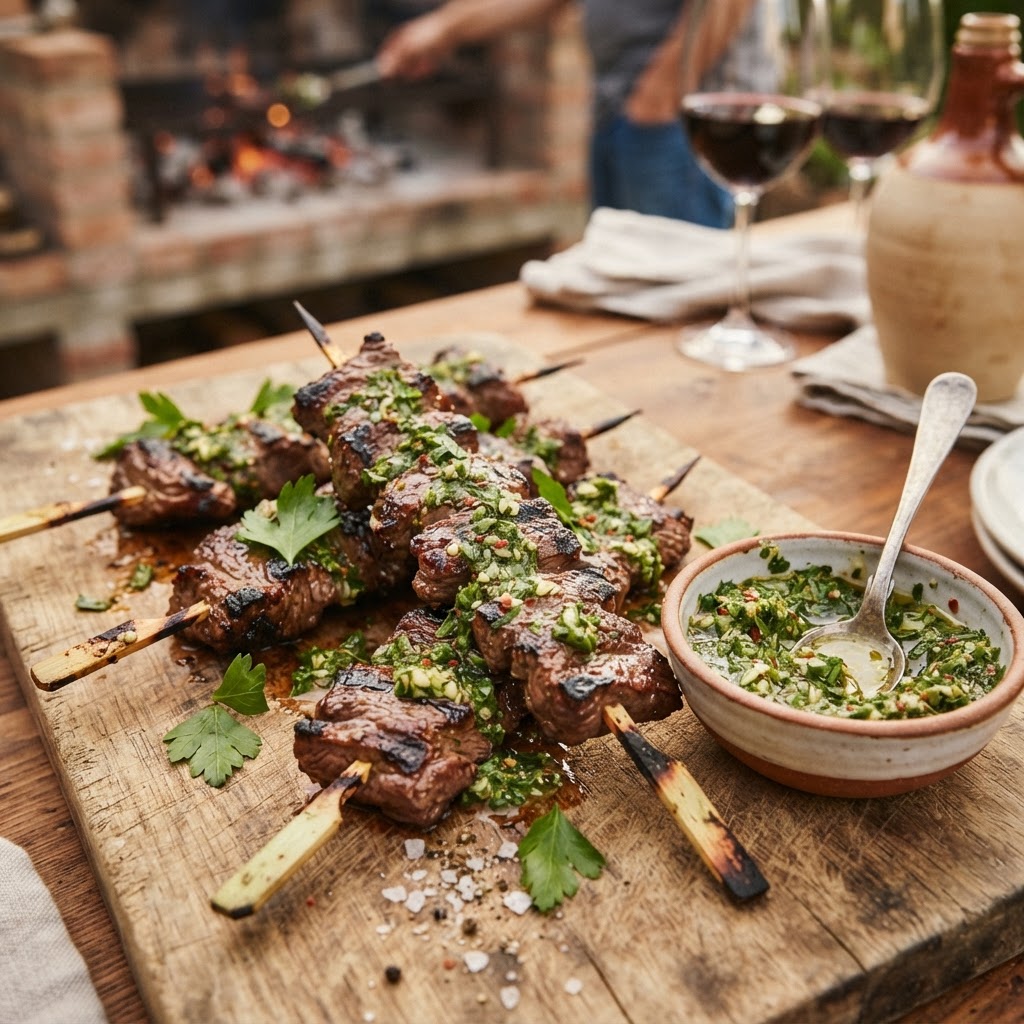
Argentine chimichurri steak skewers are the asado's most popular cut on a stick — charred pieces of skirt steak on bamboo skewers, drizzled generously with vibrant green chimichurri sauce. They are the kind of appetizer that tastes like an Argentine Sunday afternoon, the kind that makes the whole table smell of grilled meat and fresh herbs.
The History of Chimichurri
Chimichurri is Argentina's essential sauce. According to Wikipedia, chimichurri is an uncooked sauce used as an ingredient in cooking and as a table condiment for grilled meat. Found originally in Argentina, it is used in Argentinian, Uruguayan, Paraguayan, and Brazilian cuisines, and has become widely adopted in most of Latin America. The sauce comes in green (*chimichurri verde*) and red (*chimichurri rojo*) varieties.
The etymology is uncertain. The name may be derived from the Basque *tximitxurri*, meaning "hodgepodge" or "mixture of several things in no particular order." Another theory is that the name may be a variant of Spanish *chirriburri*, "hubbub," ultimately perhaps from Basque *zurrumurru*, "noise, rumor." Many Basques settled in Argentina and Uruguay in the 19th century, bringing their culinary traditions. BBC Travel documents the folk etymology that the name came about in the early 1800s during the failed British invasion of Rio de la Plata — a corruption of "give me curry" — though this is almost certainly apocryphal. The real roots are almost certainly Spanish, from herb-based sauces in Basque and Galician cuisine.
Chimichurri is famously served with grilled meats — skirt steak, short ribs, chorizo — as the essential accompaniment to the Argentine asado. The sauce is uncooked: fresh parsley, oregano, garlic, olive oil, and vinegar, chopped and mixed but never heated. The steak skewer is the party version: the same grilled meat, the same vibrant sauce, sized for a single bite.
About the Ingredients
Skirt steak — the traditional cut for asado; it is thin, flavorful, and takes well to high-heat grilling. The steak should be sliced against the grain, into pieces that fit on a skewer.
Fresh parsley — flat-leaf Italian parsley, finely chopped; the parsley is the base of chimichurri and gives it its vibrant green color.
Garlic and oregano — the other flavor pillars; the garlic brings punch, the oregano brings the dried-herb earthiness that balances the fresh parsley.
Red wine vinegar and olive oil — the acid and the fat; the vinegar brightens, the oil carries the flavor.
Red pepper flakes — a pinch, for a gentle heat; traditional chimichurri doesn't use fresh chili, but dried red pepper flakes are common.
Ingredients (makes 12 skewers): - 1.5 lb skirt steak, cut against the grain into 1.5-inch pieces - 1 cup fresh flat-leaf parsley, finely chopped - 1/4 cup fresh oregano leaves, chopped (or 2 tbsp dried oregano) - 4 cloves garlic, minced or grated - 1/2 tsp red pepper flakes - 1/2 cup extra-virgin olive oil - 3 tbsp red wine vinegar - 1/2 tsp salt, 1/4 tsp black pepper - Bamboo skewers, soaked 30 minutes
Instructions: Make the chimichurri: in a bowl, combine the parsley, oregano, garlic, red pepper flakes, olive oil, vinegar, salt, and pepper. Stir well and let sit at least 30 minutes for the flavors to meld — chimichurri is better the next day. Thread the steak pieces onto the soaked skewers — 4–5 pieces per skewer. Season with salt and pepper. Grill over high, direct heat 2–3 minutes per side, until charred on the outside and medium-rare in the center. Let rest 2 minutes. Drizzle the skewers generously with chimichurri and serve immediately, with extra chimichurri on the side.
The Mimosa Pairing Logic: Charred steak and herbaceous chimichurri and bright sparkling wine is an Argentine asado match. A classic champagne mimosa is the bistro pick — the orange juice's citrus echoes the vinegar in the chimichurri. A grapefruit rosemary mimosa is the garden alternative — the grapefruit's bitterness plays against the garlic and the rosemary nods to the oregano. Either way, eat the skewer while the steak is charred and the chimichurri is fresh, and raise the glass to Buenos Aires.
Reference Links: - Chimichurri (Argentina origin, Basque etymology, uncooked sauce): Wikipedia - Chimichurri: The Argentinian Sauce Eaten as a Ritual: BBC Travel
Make-Ahead: The chimichurri can be made a day ahead and kept refrigerated — it's actually better the next day, once the flavors have melded. The steak can be sliced and skewered hours ahead, kept covered in the refrigerator. But grill to order — a steak skewer that sits loses its char. Grill over high heat, quickly, drizzle with chimichurri, and pass.
Pro Tips: Slice the skirt steak against the grain — this is the single most important step, as skirt steak is tough if cut with the grain. Don't overcook — skirt steak is best medium-rare; well-done skirt steak is shoe leather. Let the chimichurri rest before serving — the flavors need time to meld. Don't cook the chimichurri — it is an uncooked sauce, and heat destroys its fresh flavor. And drizzle generously — chimichurri is not a garnish, it is the point.
Rate this recipe
Be the first to rate this recipe
to submit your rating.
Recent Posts

Couscous Royale: North Africa's Grand Platter of Lamb, Chicken, and Merguez
October 14, 2026

Seattle Cream Cheese Dog Bites: Hadley Long's 1989 Pioneer Square Invention
October 14, 2026

Khao Soi: Chiang Mai's Northern Thai Coconut Curry Noodles
October 13, 2026

Korean Bibimbap: Jeonju's Joseon Dynasty Mixed Rice
October 11, 2026

Spaghetti alla Carbonara: Rome's World War II Pasta of Eggs, Guanciale, and Pecorino
October 9, 2026