Culture
The Vienna State Opera: An Evening at the World's Greatest Music Theatre
More than 350 performances a year, 60 different operas and ballets, and a building of incomparable grandeur — the Vienna State Opera is the pinnacle of European musical culture.
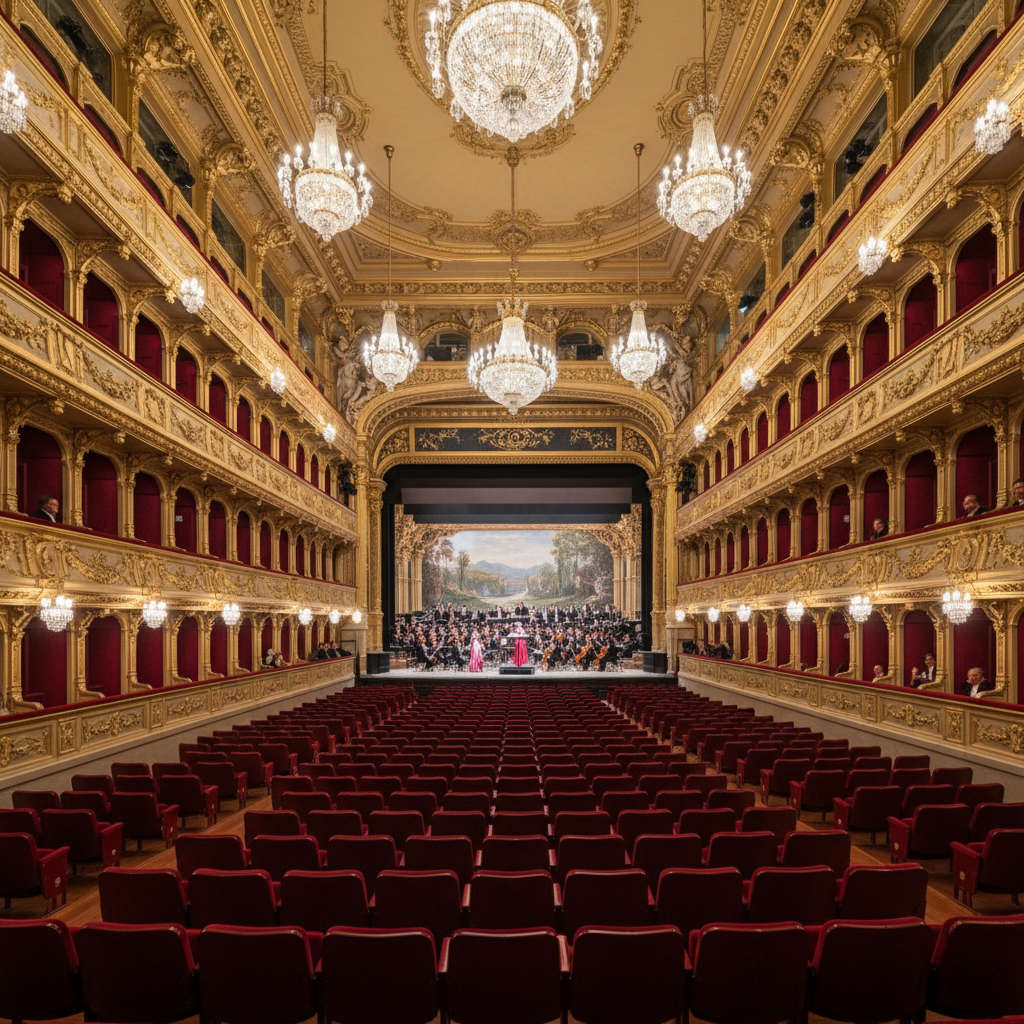
There is a reasonable case that the Wiener Staatsoper — the Vienna State Opera — is the most important music theatre in the world. It mounts more than 350 performances each year of more than 60 different operas and ballets, employs a permanent ensemble of over 100 singers, maintains its own orchestra (the Vienna Philharmonic, which plays each season at the Staatsoper), and has served as the principal stage for an unbroken line of the world's greatest conductors and singers for 155 years. Gustav Mahler was its director from 1897 to 1907. Herbert von Karajan from 1956 to 1964. Claudio Abbado, Seiji Ozawa, and Franz Welser-Möst have all held the podium. The house has been associated with the premieres or definitive early performances of works by Strauss, Bruckner, Mahler, and Berg. Reference: wiener-staatsoper.at
**The Building**
The Staatsoper was built between 1863 and 1869 by architects August Sicard von Sicardsburg and Eduard van der Nüll in a neorenaissance style as part of Emperor Franz Joseph's Ringstrasse development — the grand remodelling of Vienna's inner districts that produced the Kunsthistorisches Museum, the Burgtheater, and the Rathaus. The original building was almost entirely destroyed in an American bombing raid on 12 March 1945; only the loggia, the main staircase, and the Tea Room survived. It was meticulously reconstructed and reopened on 5 November 1955 — the reopening was itself a cultural event of extraordinary symbolic weight, signalling Austria's return to European cultural centrality after the war.
The current auditorium seats 1,709 in stalls and six tiers of boxes and galleries, with standing room (Stehparterre) for an additional 567. The Grand Staircase — white marble, lined with busts of composers and hung with chandeliers — is one of the great theatrical interiors in Europe.
**The 2025/26 Season**
The current season, under Director Bogdan Roščić, presents thirteen new productions alongside a repertoire spanning Mozart, Verdi, Puccini, Wagner, Strauss, and contemporary works. The season opened in December with Beethoven's *Fidelio* and includes landmark productions of *Don Carlos*, *Elektra*, and *La Traviata* in the spring and summer months. For the complete current season schedule: wiener-staatsoper.at/en/season/2025-2026.
**Getting Tickets**
Tickets are sold through the Staatsoper's official website (wiener-staatsoper.at) — for premium seats, booking several months in advance is strongly recommended for popular productions. Tickets range from €10 (standing room, available from one hour before the performance at the box office) to €450 for premium stalls seats at opening nights.
The standing room experience — Stehparterre in German — is one of Vienna's great cultural bargains and a genuine cultural ritual. Regular standees (Stehplatzler) know each other by name, reserve their spots with tied scarves, and constitute a devoted knowledgeable audience that has attended the same house for decades. Arrive at the standee box office (Stehplatzkasse) one hour before the performance begins.
**What to Wear**
The Staatsoper observes a clear but not absolute dress code. For opening nights, galas, and New Year's performances, formal wear is expected: evening dress for men, floor-length gowns for women. For standard performances, smart dress is the norm — suits or jacket and tie for men, elegant dresses or evening separates for women. Jeans and trainers are acceptable in standing room. Vienna takes its opera seriously, and dressing for the occasion is part of the experience.
**The Vienna Philharmonic**
The orchestra's dual identity — as both the orchestra of the Staatsoper and the Vienna Philharmonic (wienerphilharmoniker.at) giving its own subscription concerts at the Musikverein — produces a depth of musical culture in Vienna that no other city can match. The Philharmonic's New Year's Concert, broadcast to 90 countries, and its summer festival at the Salzburg Festival (salzburgerfestspiele.at) are both essential items on any serious music-lover's calendar.



Continue Reading


