Culture
The Uffizi Gallery: Florence's Incomparable Renaissance Treasury
The Uffizi holds the most important collection of Italian Renaissance painting in the world — a gathering of masterworks so concentrated that a single morning's visit can alter your understanding of Western art.
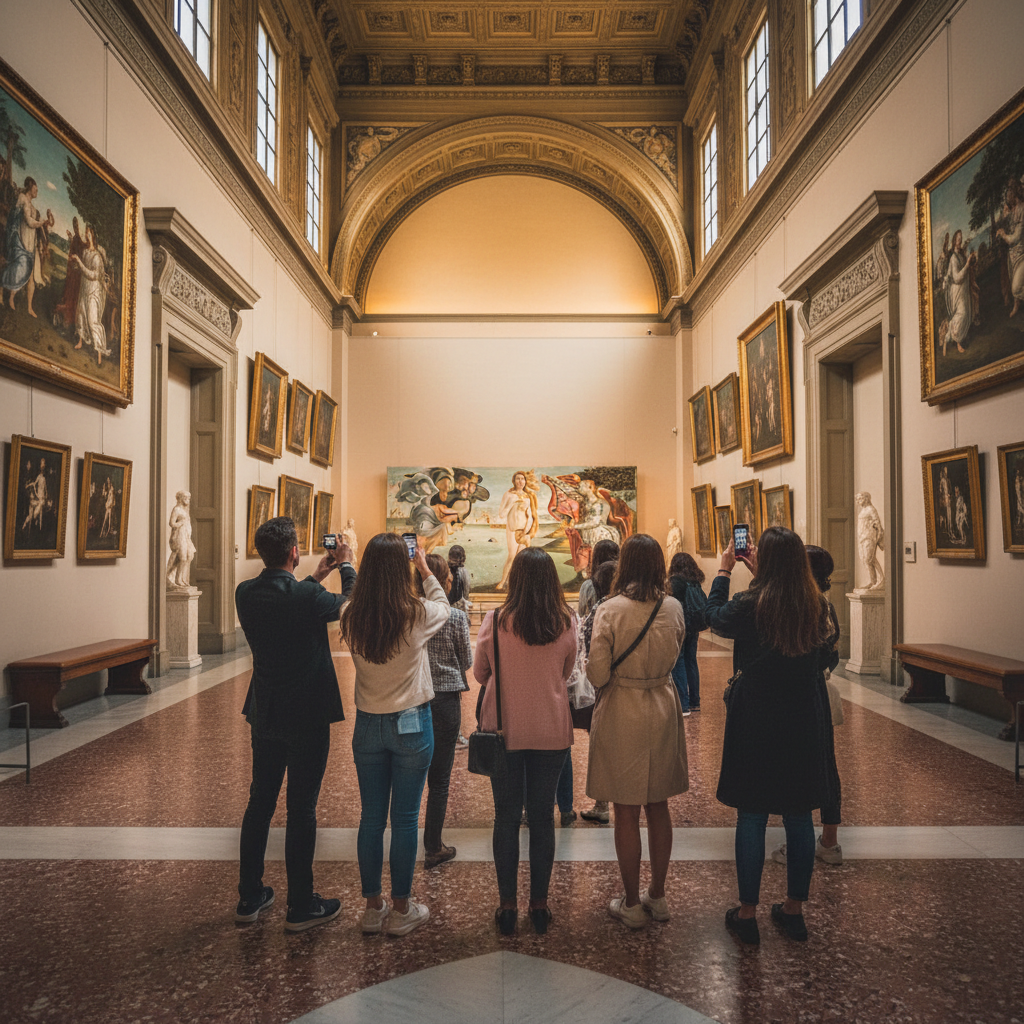
There is no preparation adequate for the experience of standing in the Botticelli rooms of the Uffizi Gallery in Florence and finding yourself in the presence of 'The Birth of Venus' and 'Primavera' in the same room — two of the most significant paintings in the history of Western art, hanging on the same wall, separated by a few feet of Florentine stone. The Uffizi (uffizi.it) is not simply a great art museum. It is, for the Italian Renaissance in particular, the centre of the world.
The gallery occupies the upper floor of the Uffizi building (Uffizi means 'offices' — the building was constructed by Giorgio Vasari for Cosimo I de' Medici in 1560 to house the Florentine administrative offices), which runs along the Arno in the heart of Florence. The Medici family — the most significant private patrons of the arts in European history — assembled the collection over several generations; it passed to the city of Florence in 1737 under the terms of Anna Maria Luisa de' Medici's bequest, one of the most enlightened acts of cultural philanthropy in history.
**The Collections**
The Uffizi's holdings are organised chronologically from the Byzantine and medieval periods through the Italian Renaissance and into the 16th and 17th centuries, with strong international holdings in Northern European painting. The permanent collection encompasses approximately 3,000 paintings, sculptures, and works on paper — of which around 1,700 are on display across 101 rooms.
**What to Seek**
Botticelli: Rooms 10–14 contain the greatest concentration of Sandro Botticelli's work anywhere in the world — 'The Birth of Venus' (c.1484–86), 'Primavera' (c.1477–82), 'Pallas and the Centaur', and 'Madonna of the Magnificat', among others. Allow substantial time here. These paintings reward extended, unhurried contemplation: the longer you look, the more extraordinary they become.
Leonardo da Vinci: The Uffizi holds Leonardo's unfinished 'Adoration of the Magi' (c.1481) and the 'Annunciation' (c.1472), among the earliest surviving works by the artist. The 'Annunciation' in particular — painted when Leonardo was approximately 20 years old — demonstrates an understanding of perspective, atmosphere, and psychological subtlety that was unprecedented.
Michelangelo: The 'Doni Tondo' (c.1507) — Michelangelo's only completed panel painting — is one of the Uffizi's most extraordinary objects: a circular composition of the Holy Family in a frame designed by the artist himself, combining sculptural solidity with colours of almost psychedelic intensity.
Titian, Raphael, Caravaggio: The later rooms contain work of the very highest quality. Raphael's 'Portrait of Leo X' and 'Madonna of the Goldfinch', Titian's 'Venus of Urbino' (one of the most influential nudes in Western art history), and Caravaggio's 'Medusa' and 'Sacrifice of Isaac' reward sustained attention.
**Practical Considerations**
The Uffizi receives approximately 4–5 million visitors annually and is consistently one of the most congested art museums in Europe. Online booking at uffizi.it is essential; timed-entry tickets for specific time slots can be reserved months in advance and are strongly recommended. First thing in the morning (opening time is 8:15am, Tuesday–Sunday) provides the quietest experience.
The Uffizi's expansion project — nearly two decades of renovation and gallery opening — has substantially increased visitor capacity and improved circulation. New rooms dedicated to 16th-century Florentine Mannerism, the Contini Bonacossi Collection, and the redesigned medieval rooms have added significant depth to an already overwhelming programme.
The Corridor of Vasari — the elevated passageway connecting the Uffizi with the Palazzo Pitti across the Ponte Vecchio, built in 1565 for Cosimo I de' Medici — opens periodically for special access visits. Check the Uffizi website for current availability.
Across the Arno, the Palazzo Pitti (uffizi.it/en/pitti-palace) — the Medici's residential palace — houses further collections of extraordinary quality, including the Palatine Gallery with a remarkable concentration of Raphaels and Titians in the original palace rooms. The Boboli Gardens behind the palace are among the finest formal gardens in Italy.
To visit the Uffizi properly is to spend a day in the company of the greatest painters of the Italian Renaissance — and to leave with the conviction that Florence is not merely a beautiful city but the most important site in the history of Western visual art.
Continue Reading