Fashion
Tokyo Street Style: The World's Most Daring Fashion City
From the avant-garde subcultures of Harajuku to the luxury boutiques of Ginza and the dark elegance of Omotesando, Tokyo is the world's most fearless fashion city. Here is where to find the best of it.
Tokyo is the most daring fashion city in the world. No other metropolis combines such depth of subculture, such reverence for craft, and such willingness to experiment with dress. From the elaborate, colourful subcultures of Harajuku to the impeccable tailoring of the Ginza flagship stores, Tokyo's fashion landscape is vast, multilayered, and endlessly surprising. What makes Tokyo unique is that fashion here is not merely commercial — it is a form of cultural expression, a living art, and a social phenomenon that has been studied by sociologists and celebrated by designers from around the world.
Harajuku: The Heart of Tokyo Street Fashion
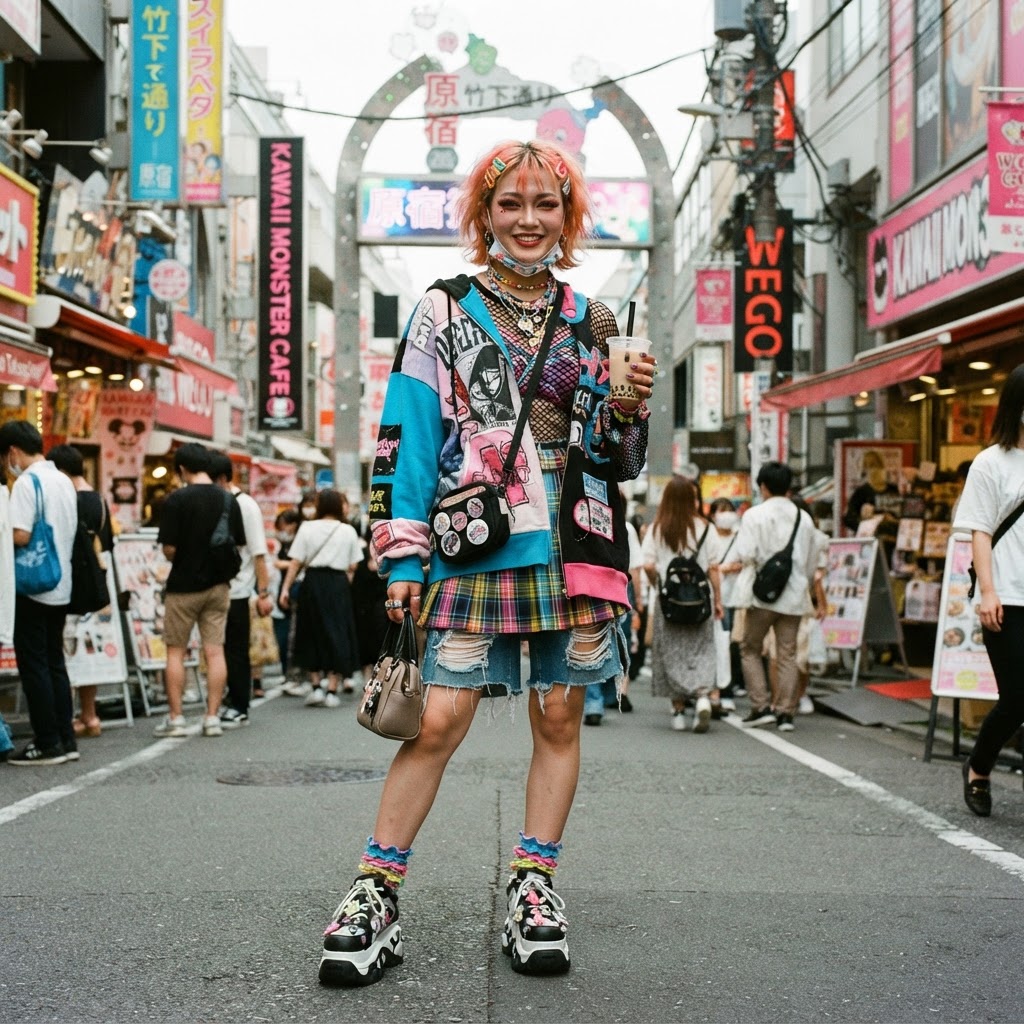
**Harajuku**, on the Yamanote Line, is the spiritual home of Tokyo street fashion. The area around **Takeshita Street** — a narrow, pedestrian-packed shopping street — has been the birthplace of countless Japanese fashion subcultures since the 1970s. These include:
**Lolita** — Inspired by Victorian and Rococo aesthetics, Lolita fashion features voluminous skirts, lace, ribbons, and elaborate headpieces. The look was pioneered in the 1990s and has sub-styles including Gothic Lolita, Sweet Lolita, and Classic Lolita. Brands like **Baby, the Stars Shine Bright** and **Angelic Pretty** are the iconic Lolita labels.
**Decora** — Characterised by excessive decoration — colourful hair clips, stickers, layers of accessories, and bright, almost cartoonish colour combinations.
**Visual Kei** — Influenced by the elaborate costumes and makeup of Japanese rock musicians (particularly the band **X Japan**, founded in 1982), Visual Kei is a dramatic, androgynous style with elaborate hair, heavy makeup, and theatrical clothing.
While the extreme subcultures of the 1990s and 2000s have receded, Harajuku remains a living fashion laboratory, where young people still gather on Sundays to showcase their personal style, particularly on the pedestrian bridge connecting Harajuku Station to Meiji Shrine.
Omotesando: The Champs-Élysées of Tokyo
Just south of Harajuku, **Omotesando** is one of Tokyo's most elegant shopping streets. Lined with Zelkova trees and flagship stores designed by the world's leading architects — including **Tadao Ando**'s Omotesando Hills, **Herzog & de Meuron**'s Prada Aoyama building, and **Toyo Ito**'s Tod's building — Omotesando is where high fashion meets architectural pilgrimage. The street is often called the 'Champs-Élysées of Tokyo'.
Ginza: The Luxury Quarter
**Ginza** is Tokyo's premier luxury shopping district, comparable to Fifth Avenue in New York or Rue Saint-Honoré in Paris. The **Ginza Six** complex (opened 2017) is the largest luxury mall in Ginza, housing flagship stores for **Céline**, **Saint Laurent**, **Fendi**, and **Valentino**, among others. The **Dover Street Market Ginza** (opened 2012, in a building designed by Rei Kawakubo) is one of the most important concept stores in the world, offering an art-gallery-like presentation of avant-garde fashion.
Shibuya and Shinjuku: Youth Culture and Fast Fashion
**Shibuya** is the centre of Tokyo's youth culture, home to **Shibuya 109** — the iconic cylindrical department store that has been the incubator for countless Japanese fashion trends since its opening in 1979. **Shinjuku** offers the **Isetan** department store, widely considered the most influential fashion department store in Japan, particularly for its menswear floor.
Daikanyama and Nakameguro: Refined Cool
**Daikanyama** and adjacent **Nakameguro** offer a more refined, grown-up aesthetic — boutique shopping in a leafy, residential setting. The **Daikanyama T-Site** (a Tsutaya bookstore designed by Klein Dytham Architecture) is a cultural landmark, and the area's independent boutiques offer curated selections of Japanese and international brands.
The Japanese Designers Who Changed Fashion
Tokyo's fashion influence extends far beyond street style. Japanese designers have profoundly reshaped global fashion:
**Rei Kawakubo** (Comme des Garçons, founded 1969) and **Yohji Yamamoto** (founded 1972) showed in Paris beginning in 1981 and revolutionised Western fashion with their deconstructed, asymmetrical, predominantly black aesthetic — what would come to be called 'Japanese fashion' in the West.
**Issey Miyake** (1938–2022) pioneered innovative fabric technology and pleating techniques, creating garments that were both sculptural and practical. His **Pleats Please** line (launched 1993) remains iconic.
**Kenzo Takada** (1939–2020), who founded **Kenzo** in Paris in 1970, was the first Japanese designer to achieve international fame, known for his vibrant, multicultural aesthetic.
Reference Links:
- Go Tokyo (Official Tourism) — Harajuku: gotokyo.org/en/destinations/western-tokyo/harajuku/index.html
- Dover Street Market Ginza: doverstreetmarket.com/en/ginza
- Comme des Garçons: commedesgarcons.com
- Yohji Yamamoto: yohjiyamamoto.co.jp
- Issey Miyake: isseymiyake.com
- Shibuya 109: shibuya109.jp
- Ginza Six: ginza6.tokyo
- Savvy Tokyo — Tokyo's Top Shopping Districts: savvytokyo.com/tokyos-top-five-shopping-districts
Continue Reading