Culture
The Acropolis and Parthenon: The Birthplace of Western Civilization
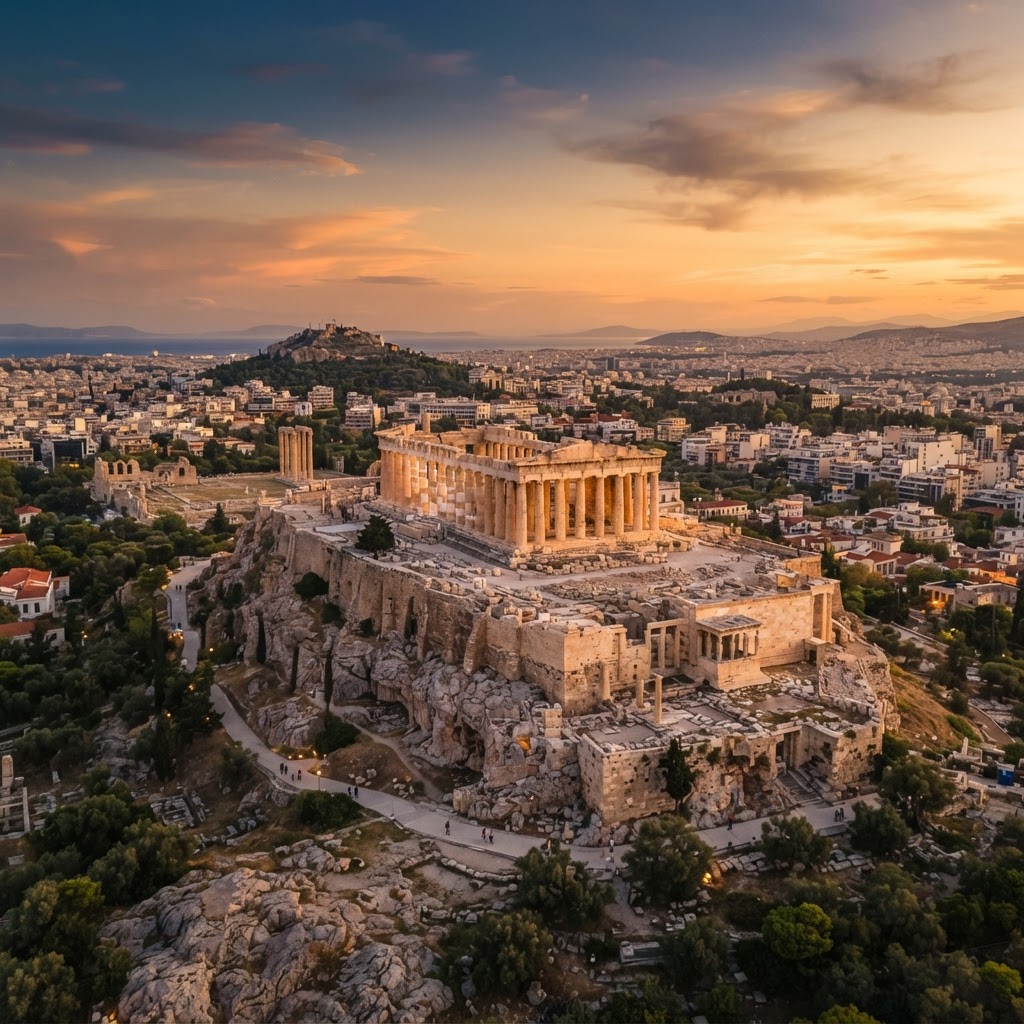
The Acropolis of Athens, a UNESCO World Heritage Site since 1987, is the most influential architectural complex of the ancient world. The Parthenon, built under Pericles between 447 and 432 BC, remains the supreme expression of classical Greek civilization and the blueprint for Western architecture.
The Acropolis of Athens (whc.unesco.org/en/list/404) is the most significant architectural and cultural monument of ancient Greek civilization. Inscribed as a UNESCO World Heritage Site in 1987, the Acropolis — literally 'high city' — is a flat-topped limestone rock rising 156 metres above the city of Athens, crowned by a complex of temples and monuments built during the Golden Age of Athens in the 5th century BC.
The Acropolis has been inhabited since the Neolithic period (c. 4000 BC) and has served as a fortress, a religious sanctuary, and the spiritual heart of Athens for over 5,000 years. Most of the monuments visible today were built during the 5th century BC under the leadership of Pericles (c. 495–429 BC), the Athenian statesman who transformed the city into the cultural center of the ancient world after the Persian Wars.
The Parthenon
The Parthenon, the most iconic building on the Acropolis and one of the most influential structures in the history of architecture, was built between 447 and 432 BC. It was designed by the architects Iktinos and Kallikrates, with the sculptor Phidias overseeing the decorative programme. The temple was dedicated to Athena Parthenos ('the Virgin'), the patron goddess of Athens.
The Parthenon is a Doric peripteral temple measuring 30.88 by 69.51 metres, with 8 columns at the front and rear and 17 along the sides. Its architectural refinements are extraordinary: the columns swell slightly in the middle (entasis) to counteract the optical illusion of concavity, the stylobate curves gently upward at the center, and the columns lean slightly inward. These subtle corrections create an impression of perfect harmony that has influenced Western architecture for 2,500 years.
The Parthenon's sculptural decoration, supervised by Phidias, included 92 metopes depicting mythological battles (Lapiths and Centaurs, Greeks and Amazons, Gods and Giants), the 160-metre Ionic frieze showing the Panathenaic procession, and the colossal chryselephantine (gold and ivory) statue of Athena Parthenos, which stood 11.5 metres tall inside the cella. The statue, completed by 438 BC, was one of the Seven Wonders of the Ancient World in some ancient lists.
The Parthenon served as a Christian church from the 6th century AD (dedicated first to the Virgin Mary, then to the Holy Wisdom), and was converted into a mosque after the Ottoman conquest of 1458. In 1687, during the Venetian siege of Athens, a direct hit from a mortar shell ignited the gunpowder stored inside the Parthenon, causing a catastrophic explosion that destroyed the roof and much of the structure.
The Other Monuments
**The Erechtheion** (421–406 BC) — the most sacred temple on the Acropolis, built on the site where, according to mythology, Athena and Poseidon competed for the patronage of Athens. The temple's south porch is supported by the famous Caryatids — six draped female figures that serve as columns.
**The Propylaea** (437–432 BC) — the monumental gateway to the Acropolis, designed by the architect Mnesikles. Its Doric facade with five entrances established the template for monumental gateways in Western architecture.
**The Temple of Athena Nike** (c. 420 BC) — a small Ionic temple at the southwest corner of the Acropolis, designed by Kallikrates. It celebrates the victory of Athens over the Persians and features the famous relief of Nike (Victory) adjusting her sandal.
The Acropolis Museum
The Acropolis Museum (theacropolismuseum.gr), opened in 2009 and designed by the Swiss-French architect Bernard Tschumi, houses every artifact found on the Acropolis and its slopes. The 14,000-square-metre museum is built over an extensive archaeological site (visible through its glass floor) and displays 4,000 objects chronologically from the Archaic period through the Roman era. The museum's top floor, which mirrors the orientation of the Parthenon, displays the surviving Parthenon frieze — a powerful statement about the missing sculptures, many of which remain in the British Museum.
The Parthenon Marbles Debate
The Parthenon Marbles (also called the Elgin Marbles) — the 75 metres of frieze, 15 metopes, and 17 pedimental figures removed by Thomas Bruce, 7th Earl of Elgin, between 1801 and 1812 — are displayed in the British Museum in London. The Greek government has formally requested their return since 1983, arguing that the Acropolis Museum — purpose-built to display them in direct sight of the Parthenon — is the appropriate home for the sculptures. The debate remains one of the most visible restitution cases in the world of cultural heritage.
Practical Information
The Acropolis is open daily, with timed-entry tickets. The main entrance is on the western side, accessible via the Dionysiou Areopagitou pedestrian street. The Acropolis Museum is located 300 metres southeast of the Acropolis, at Dionysiou Areopagitou 15. Reference: [UNESCO World Heritage Centre](https://whc.unesco.org/en/list/404)
Reference Links:
- UNESCO World Heritage: whc.unesco.org/en/list/404
- Acropolis Museum: theacropolismuseum.gr
- Greek Ministry of Culture: odysseus.culture.gr
- Visit Greece: visitgreece.gr
- Reunification of the Parthenon Sculptures: parthenonsculptures.gr
- World Heritage Travel: worldheritagesites.net/acropolis-in-athens

Continue Reading