Culture
The Salzburg Festival: The World's Most Prestigious Celebration of Music and Theatre
The Salzburg Festival, founded in 1920 by Hugo von Hofmannsthal, Max Reinhardt, and Richard Strauss, is the most prestigious festival of music and theatre in the world. From the Jedermann performance on the Cathedral Square to the great opera productions in the Grosses Festspielhaus, this is the definitive guide to Salzburg.
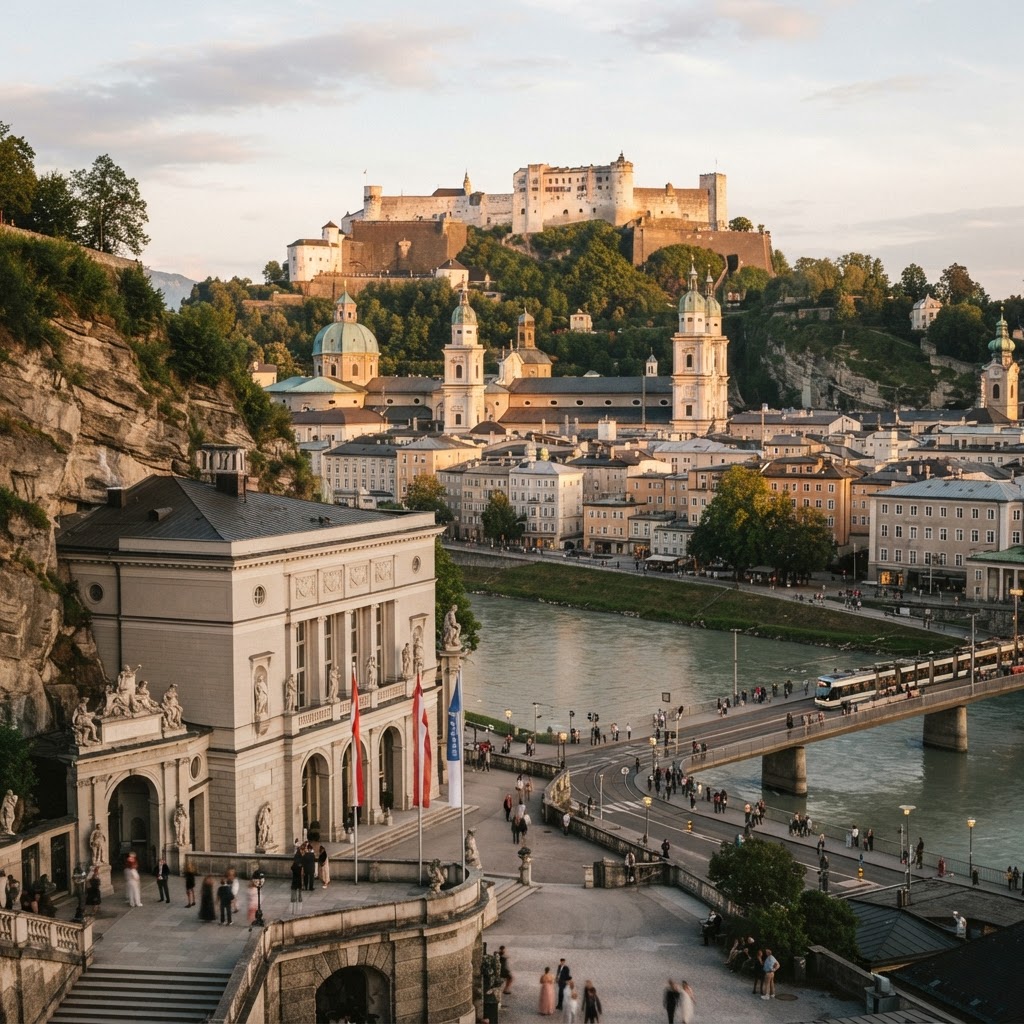
The Salzburg Festival (Salzburger Festspiele, salzburgerfestspiele.at) is the world's most prestigious festival of music and theatre, held annually for five weeks from late July through August in Salzburg, Austria. Founded in 1920 in the aftermath of the First World War by the playwright and librettist Hugo von Hofmannsthal, the theatre director Max Reinhardt, and the composer Richard Strauss, the festival was conceived as a cultural project of reconciliation and renewal — to bring the highest artistic achievements of European culture to a wider public in the baroque setting of Mozart's birthplace.
The festival's founding was rooted in the idea of the Gesamtkunstwerk — the total work of art — and sought to bring together opera, drama, and concert music in a single annual event. From its first season, which opened on 22 August 1920 with a performance of Hofmannsthal's 'Jedermann' (Everyman) in the Domplatz (Cathedral Square), the festival established the traditions that continue to this day.
Jedermann
The performance of 'Jedermann' — Hofmannsthal's adaptation of the medieval English morality play 'Everyman' — on the open-air stage in the Domplatz (Cathedral Square) in front of the Baroque Cathedral of Salzburg has become the signature event of the festival. The play, which tells the story of a wealthy man's reckoning with death, is performed every year (weather permitting) and has become one of the great institutions of German-language theatre. The role of Jedermann has been played by some of the most celebrated actors of the German stage.
The Festival Halls
The festival's principal indoor venues are the three Festspielhäuser (Festival Halls), located in the heart of the old town, carved into the cliff of the Mönchsberg:
**The Grosses Festspielhaus (Large Festival Hall)** — opened in 1960 to mark the festival's 40th anniversary, this is one of the largest opera houses in the world, with a stage of over 1,200 square metres (one of the largest in the world) and an auditorium seating 2,179. The hall was designed by the Austrian architect Clemens Holzmeister, and its façade incorporates the original 17th-century façade of the former royal stables (the Hofmarstall). The Felsenreitschule (Rock Riding School) — a former archiepiscopal riding school carved into the rock of the Mönchsberg in 1693 — is the festival's most dramatic open-air venue, with a stage backed by the rock cliff and seating for 1,540.
The Haus für Mozart (House for Mozart), originally the Kleines Festspielhaus (1959) and renovated in 2006, is the most intimate of the festival's opera houses, seating 1,580.
The Operatic Tradition
The Salzburg Festival has premiered some of the most important operas of the 20th century, including Richard Strauss's 'Die ägyptische Helena' (1928) and 'Arabella' (1933), and has been the stage for legendary productions under the artistic direction of figures including Herbert von Karajan (who served as artistic director 1956–60 and effectively controlled the festival for decades thereafter) and Gerard Mortimer (1990s). The festival is closely associated with the music of Mozart — born in Salzburg in 1756 — and Mozart's operas are performed every year, often with the Vienna Philharmonic in the pit.
Practical Information
The Salzburg Festival runs for approximately five weeks from late July to the end of August. Tickets go on sale in the preceding winter (typically December) and the most sought-after performances sell out within hours. Tickets range from approximately €25 for standing room to over €400 for premium opera seats. Reference: [Salzburg Festival Official](https://www.salzburgerfestspiele.at/en)
The festival is held in venues within walking distance of each other in the historic old town of Salzburg (Altstadt), a UNESCO World Heritage Site. The city is served by Salzburg Airport (SZG), and is approximately 2.5 hours by train from Vienna and 1.5 hours from Munich. Reference: [Salzburg Tourism](https://www.salzburg.info)
Reference Links:
- Salzburg Festival: salzburgerfestspiele.at/en
- Salzburg Tourism: salzburg.info
- UNESCO — Historic Centre of Salzburg: whc.unesco.org/en/list/784
- Mozart's Birthplace: mozarteum.at
- Vienna Philharmonic: wienerphilharmoniker.at
- Austrian National Tourist Office: austria.info
Continue Reading