Culture
The Prado Museum: How to Experience Madrid's Incomparable Masterpiece
Velázquez, Goya, Bosch, and Titian under one roof — the Prado is one of the greatest art museums on earth, and this is how to experience it properly.
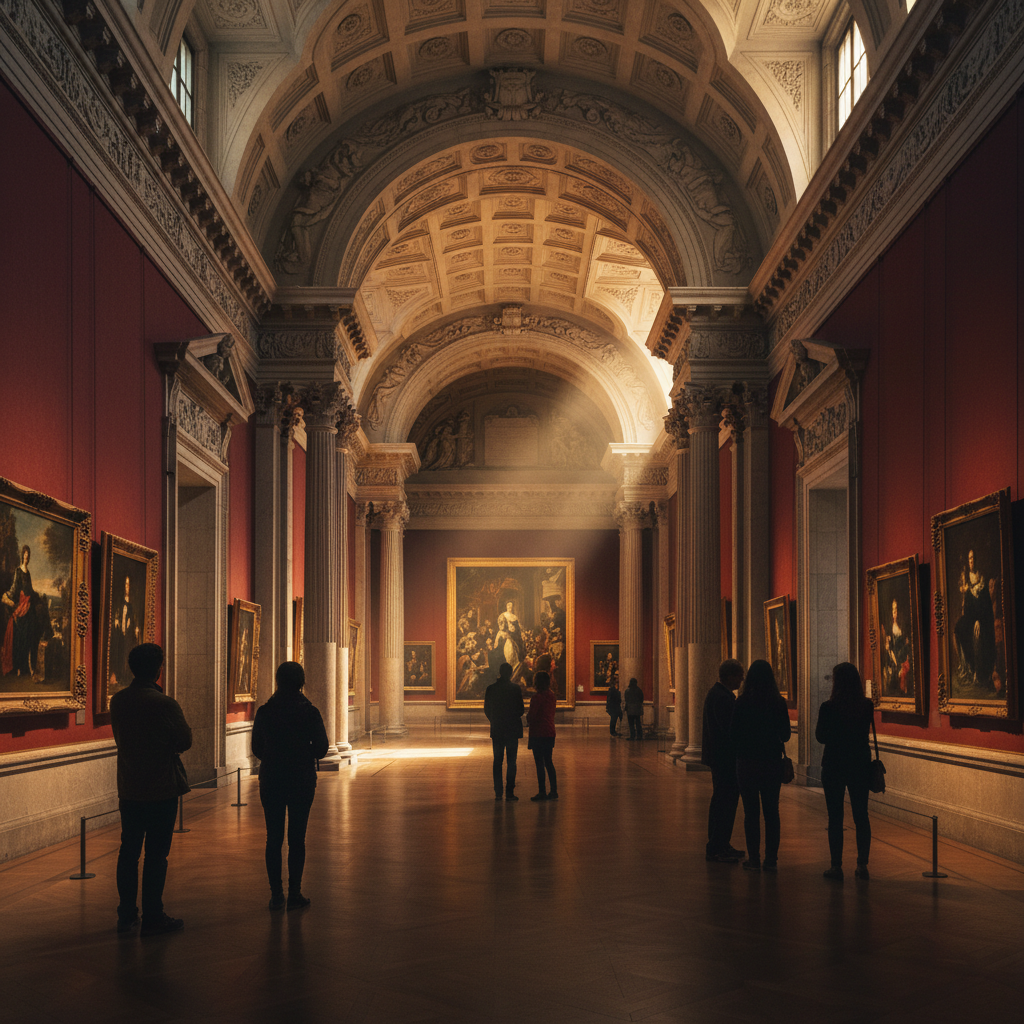
The Museo Nacional del Prado is not merely Spain's greatest museum — it is one of the four or five greatest art museums in the world, a building that contains, within a single afternoon's walk, the most comprehensive collection of Spanish painting ever assembled alongside extraordinary holdings of Flemish, Italian, and German work. Unlike the Louvre, which can feel overwhelming in its scale, the Prado is navigable. Its greatest works are accessible. And the quality of what it contains is, room by room, almost without parallel.
**History and Architecture**
The building was designed by Juan de Villanueva in 1785 for King Charles III, originally conceived as a natural sciences cabinet for the Royal Botanical Gardens complex. After the Napoleonic Wars, Ferdinand VII converted it into the Royal Museum of Paintings and Sculptures, which opened to the public on 19 November 1819. Today the Prado holds over 36,000 works in its collection, of which approximately 1,700 are on permanent display in its galleries.
The main building — the Villanueva Building — is a masterpiece of Spanish neoclassicism: a long, restrained stone facade with three monumental porticoes, now supplemented by Rafael Moneo's 2007 Jerónimos extension, which added 16,000 square metres of additional gallery space. Tickets and visitor information at museodelprado.es.
**The Masterworks to Seek**
Las Meninas (Room 12): Diego Velázquez's 1656 painting of the Infanta Margarita and her attendants — with the painter himself visible in the composition — is the most discussed painting in the Western canon. Foucault devoted the opening chapter of *The Order of Things* to it. Stand to the left, then to the right, and observe how the perspective shifts. It rewards twenty minutes of sustained attention.
Goya's Black Paintings (Rooms 65–67): Francisco de Goya painted his 'Black Paintings' directly onto the walls of his own house, the Quinta del Sordo, between 1819 and 1823 — during a period of illness, deafness, and profound disillusionment with the politics of his time. The most celebrated, *Saturn Devouring His Son*, is one of the most psychologically disturbing images in Western art. These works were never intended for public display; their rawness and darkness are unlike anything else in European painting.
Hieronymus Bosch, *The Garden of Earthly Delights* (Room 56A): The triptych altarpiece, dating from approximately 1490–1510, depicting Eden, earthly pleasure, and hell in extraordinary hallucinatory detail — painted with a precision and imagination so advanced for its time that art historians have never fully explained it. Philip II of Spain was its first documented owner; it has been in Spain ever since. Allow thirty minutes with this work alone.
Titian's *Charles V at Mühlberg* (Room 27): The greatest equestrian portrait in Western painting, produced in 1548 at the height of both Titian's powers and the Spanish Empire's dominion.
**The Rooms Everyone Misses**
The Flemish painting collection — particularly Rogier van der Weyden's *The Descent from the Cross* (Room 58), one of the supreme masterpieces of Northern European painting — receives far less attention than the Spanish rooms and can sometimes be visited in near-solitude.
The Goya portraits of Bourbon royalty (Rooms 32–34), painted with devastating psychological acuity, reveal the decline of the Spanish monarchy with a candour that makes modern photojournalism seem restrained.
**Practical Advice**
Book timed entry tickets in advance at museodelprado.es — standard admission is €15, with free entry in the final two hours before closing (6–8pm Monday to Saturday, 5–7pm Sundays). The Paseo del Prado entrance is the most atmospheric approach. Allow a minimum of three hours. The Café Prado in the Jerónimos building offers good Spanish food and coffee.
The Prado is ten minutes' walk from the Thyssen-Bornemisza (museothyssen.org) and the Reina Sofía (museoreinasofia.es, home to Picasso's *Guernica*), forming what Madrid rightly calls the 'Golden Triangle of Art' — the finest concentration of great art museums in a single urban block anywhere in the world.



Continue Reading


