Culture
The Metropolitan Museum of Art: How to Experience New York's Cultural Crown
Two million objects, 5,000 years of civilisation, and one of the world's great buildings — the Met rewards those who know where to look.
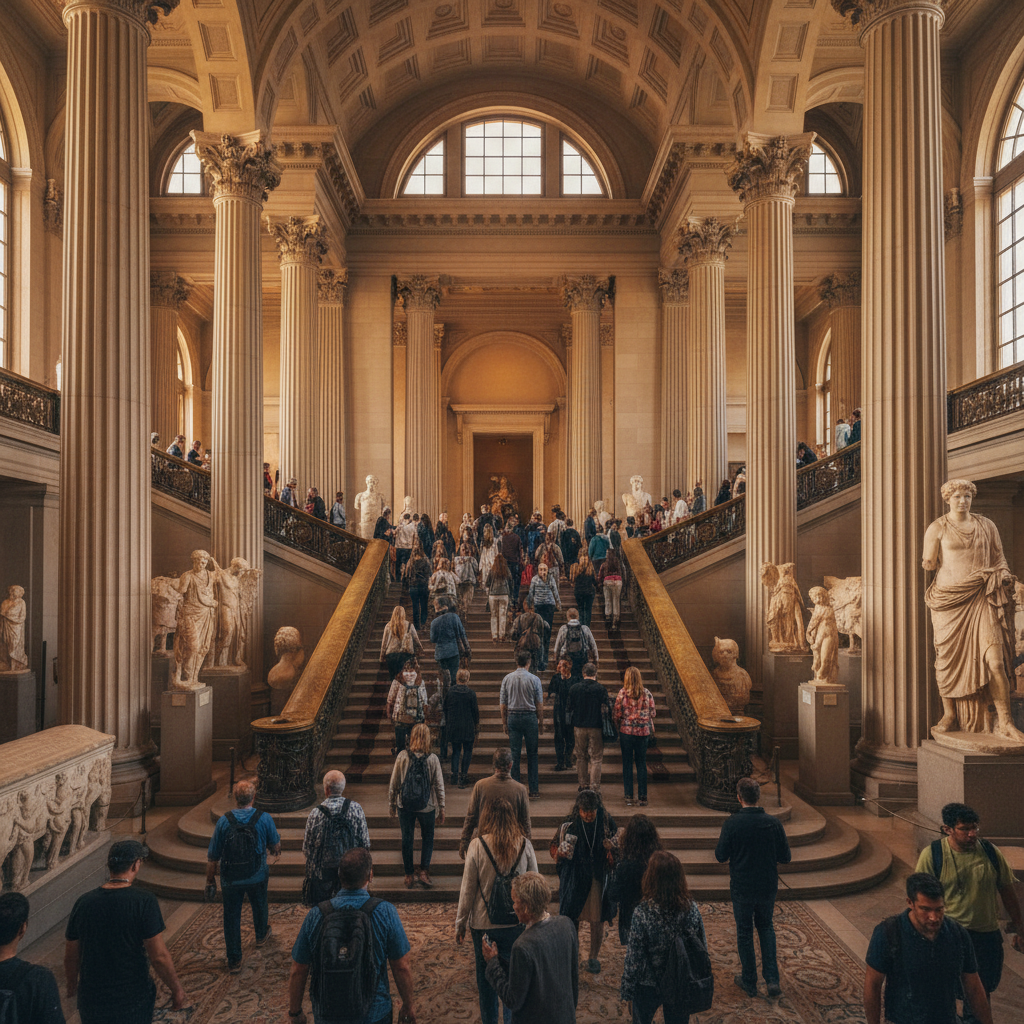
The Metropolitan Museum of Art is the largest art museum in the Western Hemisphere and one of the five or six most significant repositories of human cultural achievement anywhere on earth. Founded in 1870 by a group of American businessmen, civic leaders, and artists who wished to create an institution that would 'bring art and art education to the American people,' the Met today holds a permanent collection of over two million objects spanning 5,000 years of history across every culture and continent. It occupies over two million square feet on the eastern edge of Central Park in Manhattan.
The challenge the Met poses to its visitor is not scarcity but abundance: too much to see, too much to absorb, too much to do justice to in any single visit. Strategy is essential.
**How to Approach It**
The Met's collections are organised into seventeen departments. For a first or second visit, choose three or four departments and commit to them fully rather than attempting a sweep of everything. The following represent the collections of greatest depth and distinction.
European Paintings (Galleries 600–644, Second Floor): The Met's European painting collection — comprising 2,500 works by Old Masters from the 12th to the 19th century — is arguably the finest outside Europe. Vermeer's *Young Woman with a Water Pitcher* and *Study of a Young Woman* hang here, two of his thirty-seven surviving works. Rembrandt's self-portraits, a room of El Grecos, Caravaggio's *The Denial of Saint Peter*, and Velázquez's *Juan de Pareja* — painted as a test piece in 1650 and considered one of the greatest portraits in existence — all reward sustained attention. Full visitor information at metmuseum.org.
Ancient Egypt (Galleries 100–138, First Floor): The Met's Egyptian collection of 26,000 objects is the largest outside Egypt itself. Its crown jewel is the Temple of Dendur — a complete ancient Egyptian temple, transported stone by stone from its original Nile Valley site in 1978 and rebuilt in the Sackler Wing, surrounded by a shallow reflecting pool in a glass-enclosed atrium. It is one of the most extraordinary objects in any museum in the world.
Arms and Armour (Gallery 371, First Floor): The Equestrian Court contains the most spectacular display of medieval and Renaissance armour anywhere in the Americas — five mounted knights in full armour, surrounded by 14,000 pieces of arms and armour from every culture. Consistently uncrowded. Reference: metmuseum.org/departments/arms-and-armor
The American Wing (Galleries 700–774): The Frank Lloyd Wright Room — the entire living room from the Francis W. Little House, dismantled in 1972 and reassembled at the Met — is one of the most important interiors in American design history.
**The Roof Garden**
From late spring through autumn, the Iris and B. Gerald Cantor Roof Garden atop the Met's Fifth Avenue wing hosts contemporary sculpture commissions with views over Central Park. It is one of New York's genuinely extraordinary public spaces, and it is free with museum admission. The Roof Garden Café serves cocktails and coffee; arrive for golden hour.
**Special Exhibitions**
The Met mounts some of the world's most significant special exhibitions — including the annual Costume Institute exhibition, which opens each May and traditionally represents the finest intersection of fashion and art history anywhere. For the current exhibition schedule, visit metmuseum.org/exhibitions.
**Practical Advice**
Admission is by suggested donation for New York State residents; for out-of-state visitors the standard adult admission is $30. The Met is closed Tuesdays. Arrive at 10am when doors open for the greatest tranquillity in the European Paintings galleries. The museum's main entrance is at 1000 Fifth Avenue at 82nd Street; take the 4/5/6 subway to 86th Street. Allow a minimum of four hours. The American Wing Café and the Great Hall Balcony Bar are both excellent for mid-visit rest.



Continue Reading


