Wellness
Magnesium: The Mineral That Changes Everything
Magnesium is involved in over 300 enzymatic reactions in the human body — and up to 50% of the Western population is deficient. A guide to why it matters and how to address it.
Magnesium participates in more than 300 enzymatic reactions, including protein synthesis, muscle and nerve function, blood glucose regulation, and blood pressure regulation. It is required for the synthesis of DNA, RNA, and the antioxidant glutathione. It is the gatekeeper of the NMDA receptor, which governs learning and memory. Without adequate magnesium, the nervous system becomes hyperexcitable — manifesting as anxiety, muscle cramps, poor sleep, and cognitive fog. The National Institutes of Health (nih.gov/magnesium) cites population surveys showing that approximately 48% of Americans consume less than the required daily amount.
The reason for widespread deficiency is partly dietary (modern agricultural soils are progressively magnesium-depleted; the Royal Society of Chemistry, rsc.org, published research showing that UK vegetables contain 35–75% less mineral content than in 1940), and partly the modern lifestyle's magnesium drains: alcohol, stress, caffeine, and high sugar intake all increase urinary excretion of magnesium.
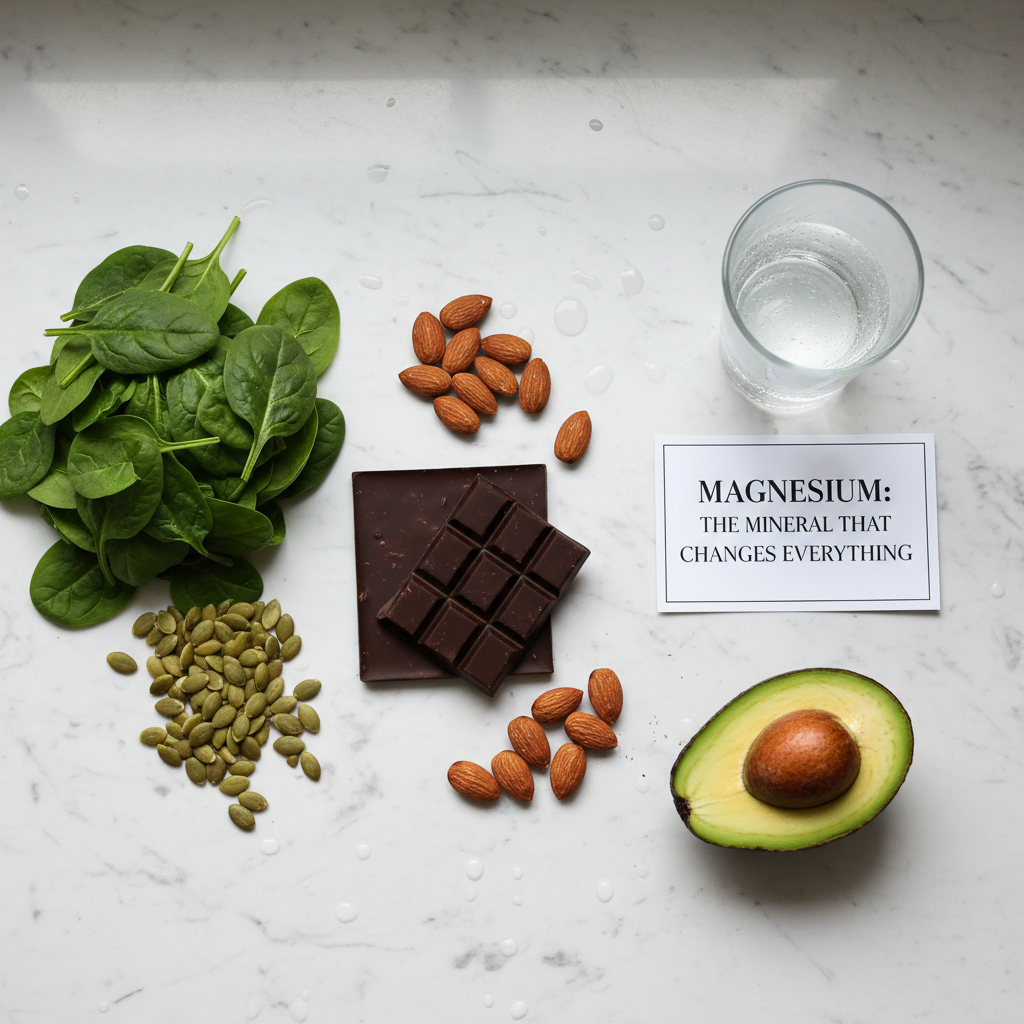
**Dietary sources**: The richest food sources of magnesium are dark leafy greens (spinach provides 39mg per 3 ½ oz), pumpkin seeds (156mg per 1 oz), dark chocolate above 70% (64mg per 1 oz), almonds (80mg per 1 oz), and avocado (58mg per medium avocado). A diet centred on these foods can supply adequate magnesium for most people.
**Supplementation**: When diet is insufficient, magnesium glycinate is the most bioavailable and best-tolerated form — Dr. Rhonda Patrick (foundmyfitness.com) consistently recommends it for sleep quality and anxiety reduction. Magnesium threonate (Magtein, magtein.com) has specific evidence for crossing the blood-brain barrier and improving cognitive function. Avoid magnesium oxide, the cheapest form, which has very poor bioavailability.
**Topical magnesium**: Magnesium absorbed through the skin — via magnesium oil (Ancient Minerals, ancient-minerals.com) or Epsom salt baths — is an effective complementary approach, particularly for muscle recovery and sleep. A 20-minute Epsom salt bath before bed combines the magnesium benefit with the sleep-inducing effect of warm water followed by rapid cooling.



Continue Reading