Wellness
The Gut-Brain Connection: Eating for Mental Clarity
The gut is increasingly understood as the body's second brain — and the evidence that what you eat directly shapes how you think and feel is now impossible to ignore.
The enteric nervous system — the complex neural network embedded in the walls of the gastrointestinal tract — contains approximately 500 million neurons, more than the spinal cord. This 'second brain' communicates bidirectionally with the brain via the vagus nerve, producing and responding to the same neurotransmitters — including 95% of the body's serotonin, which is synthesised in the gut, not the brain. The implications of this, which the emerging field of nutritional psychiatry (the subject of Professor Felice Jacka's work at Deakin University, foodandmoodcentre.com.au) is only beginning to document, are profound.
A 2017 landmark study published in the journal BMC Medicine demonstrated that dietary intervention alone — specifically, a Mediterranean-style whole-food diet — was as effective as psychotherapy in reducing symptoms of clinical depression. This was not a marginal finding; it was a randomised controlled trial published in one of the world's leading medical journals.
**The microbiome**: The gut microbiome — the ecosystem of approximately 38 trillion microorganisms inhabiting the digestive tract — is now understood to be a major determinant of mood, cognitive function, immune response, and metabolic health. Dr. Tim Spector, Professor of Genetic Epidemiology at King's College London and co-founder of ZOE (joinzoe.com), has produced extensive research showing that microbiome diversity is the key metric: the more diverse your gut bacteria, the more resilient your physical and mental health.
**Feeding the microbiome**: The most evidence-backed dietary approach for microbiome diversity is a high-fibre, polyphenol-rich diet centred on:
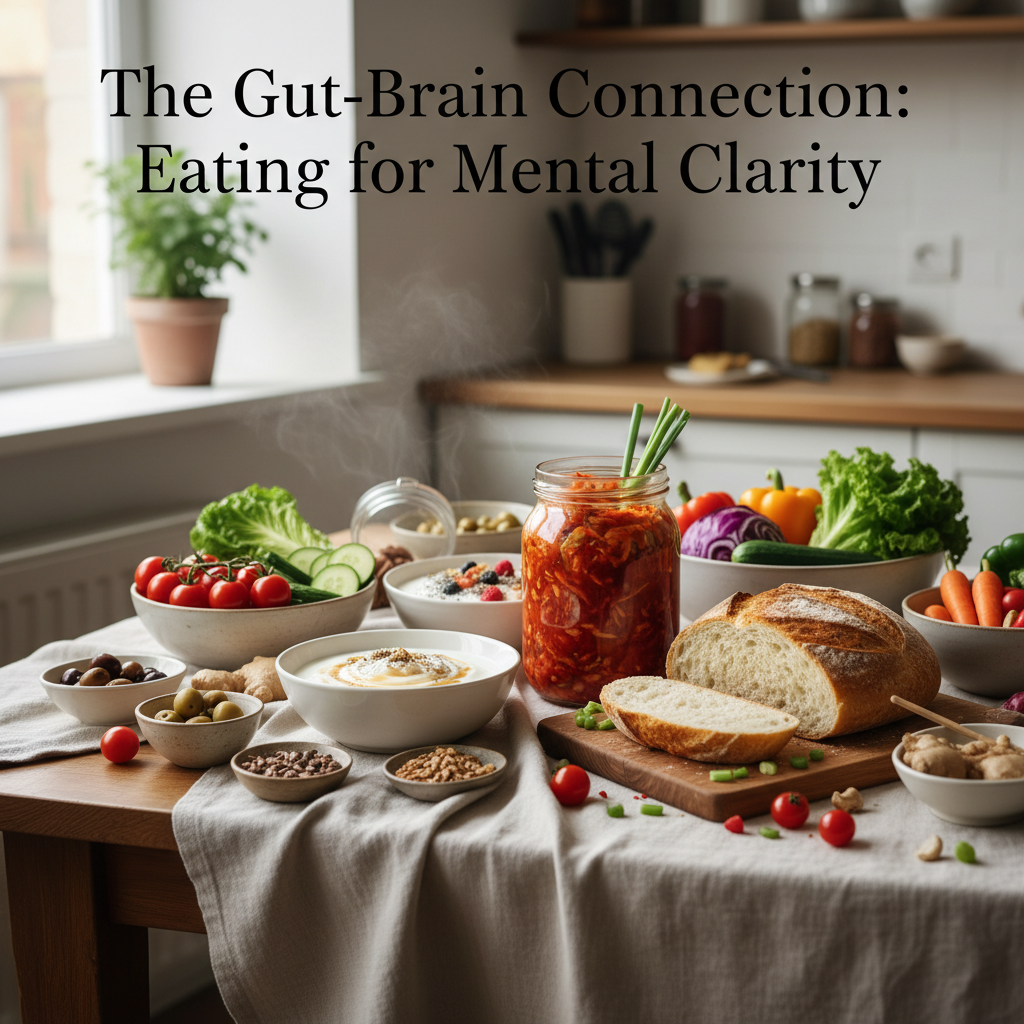
- **Fermented foods**: Kimchi, kefir, live-culture yogurt, sauerkraut, kombucha, and miso. A 2021 Stanford study (med.stanford.edu) found that just 10 weeks of increased fermented food intake produced significant increases in microbiome diversity and reductions in inflammatory markers.
- **Prebiotic fibre**: Garlic, onion, leeks, asparagus, Jerusalem artichokes, bananas, and oats feed beneficial bacteria preferentially.
- **Polyphenol-rich foods**: Dark berries, extra virgin olive oil, dark chocolate, green tea, and red wine (in moderation) provide polyphenols that function as prebiotics.
- **Diversity**: Aim for 30 different plant varieties per week — a target championed by Dr. Spector and supported by large population studies as the threshold associated with markedly better microbiome outcomes.



Continue Reading