Wellness
Forest Bathing: Shinrin-yoku and the Medicine of the Trees
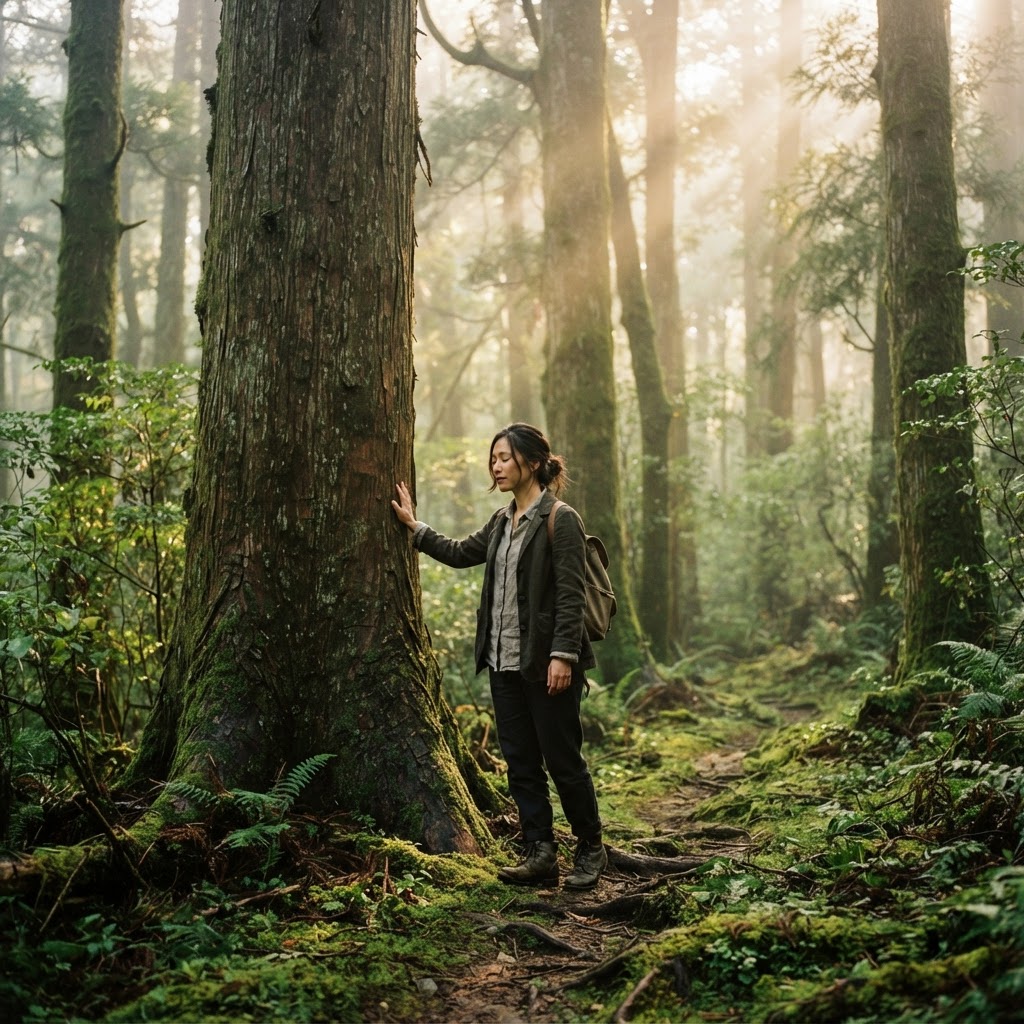
Shinrin-yoku, or forest bathing, is the Japanese practice of immersing oneself in the forest atmosphere. The research of Dr. Qing Li at Nippon Medical School has shown that phytoncides emitted by trees reduce stress, lower blood pressure, and boost immune function.
Shinrin-yoku — which translates as 'forest bathing' — is the Japanese practice of immersing oneself in the atmosphere of the forest. It was coined in 1982 by Tomohide Akiyama, then Director of the Japan Forestry Agency, who recognised that the simple act of spending time among trees had measurable health benefits. The practice was formally integrated into Japan's national health programme in the 1980s, and has since become the subject of one of the most distinctive bodies of wellness research in the world.
The leading figure in shinrin-yoku research is Dr. Qing Li, a physician and immunologist at the Nippon Medical School in Tokyo. Dr. Li's 2018 book 'Forest Bathing: How Trees Can Help You Find Health and Happiness' (Viking) is the definitive English-language text on the subject. His research team has conducted numerous studies demonstrating that forest immersion reduces stress, lowers blood pressure, strengthens the immune system, and improves mood.
The Science
The key mechanism behind the health benefits of forest bathing involves **phytoncides** — the volatile organic compounds (VOCs) emitted by trees and plants as natural protection against insects, animals, and decay. When humans breathe in phytoncides in a forest environment, these compounds have measurable physiological effects.
In Dr. Li's landmark studies, subjects who spent three days and two nights in a forest environment showed a significant increase in the activity and number of Natural Killer (NK) cells — the white blood cells that play a vital role in the body's innate immune response, particularly against viral infections and tumours. The increase in NK cell activity persisted for more than 30 days after the forest trip, a finding that suggests forest bathing may have a sustained immune-boosting effect.
The Research Evidence
A 2022 comprehensive review by Dr. Li, published in PMC (PubMed Central), synthesised decades of research on the effects of forest environments on human health. The review found that forest bathing:
- Reduces cortisol (the primary stress hormone) levels and sympathetic nerve activity.
- Lowers blood pressure and heart rate.
- Increases parasympathetic nerve activity (the 'rest and digest' system).
- Reduces symptoms of anxiety, depression, and anger.
- Improves sleep quality and cognitive function.
The effects on stress are among the most well-documented: a single forest walk of two hours has been shown to reduce cortisol levels and improve mood, and the effects are cumulative with repeated exposure.
The Practice
Forest bathing is not hiking, exercise, or nature photography. The practice involves moving slowly and deliberately through a forest environment, engaging all five senses: seeing the colours and patterns of the forest, hearing the sounds of birds and wind, smelling the phytoncides and earth, feeling the textures of bark and moss, and (in guided sessions) tasting forest tea. A typical shinrin-yoku session lasts two to four hours.
Reference Links:
- Dr. Qing Li Official Website: drqingli.com
- Nippon Medical School: nms.ac.jp
- Forest Bathing (book, 2018): penguinrandomhouse.com
- PMC — Effects of Forest Environment on Health (Li et al., 2022): pmc.ncbi.nlm.nih.gov/articles/PMC9665958/
- Association of Nature and Forest Therapy (ANFT): natureandforesttherapy.org
- Japan Forestry Agency: rinya.maff.go.jp
- International Society of Nature and Forest Medicine (INFOM): infom.org
- Evidence-Based Complementary and Alternative Medicine (forest bathing studies): hindawi.com



Continue Reading