Culture
Flamenco in Seville: The Art Form That Defines Andalusia
Flamenco is not entertainment. It is an expression of duende — a quality of spirit, of life and death, of profound emotion — that can only be fully understood in the place where it was born.
Flamenco is one of the world's great art forms — a synthesis of song (cante), dance (baile), and guitar (toque) that emerged in the Andalusian region of southern Spain over several centuries of extraordinary cultural collision. It was declared an Intangible Cultural Heritage of Humanity by UNESCO in 2010. And while flamenco is performed in Madrid, Barcelona, and major cities around the world, there is only one place to understand it properly: Seville.
**The Origins**
Flamenco's roots are deep, multiple, and still partly contested. The most authoritative scholarship traces its emergence to the Romani (Gitano) communities of Andalusia, whose musical traditions fused with Moorish, Jewish, and Castilian Spanish influences over centuries of coexistence in a region of extraordinary cultural complexity. The Triana neighbourhood of Seville — across the Guadalquivir River from the city centre — is considered the spiritual birthplace of flamenco as a formal art, and remains one of its most important living centres.
**What Flamenco Is**
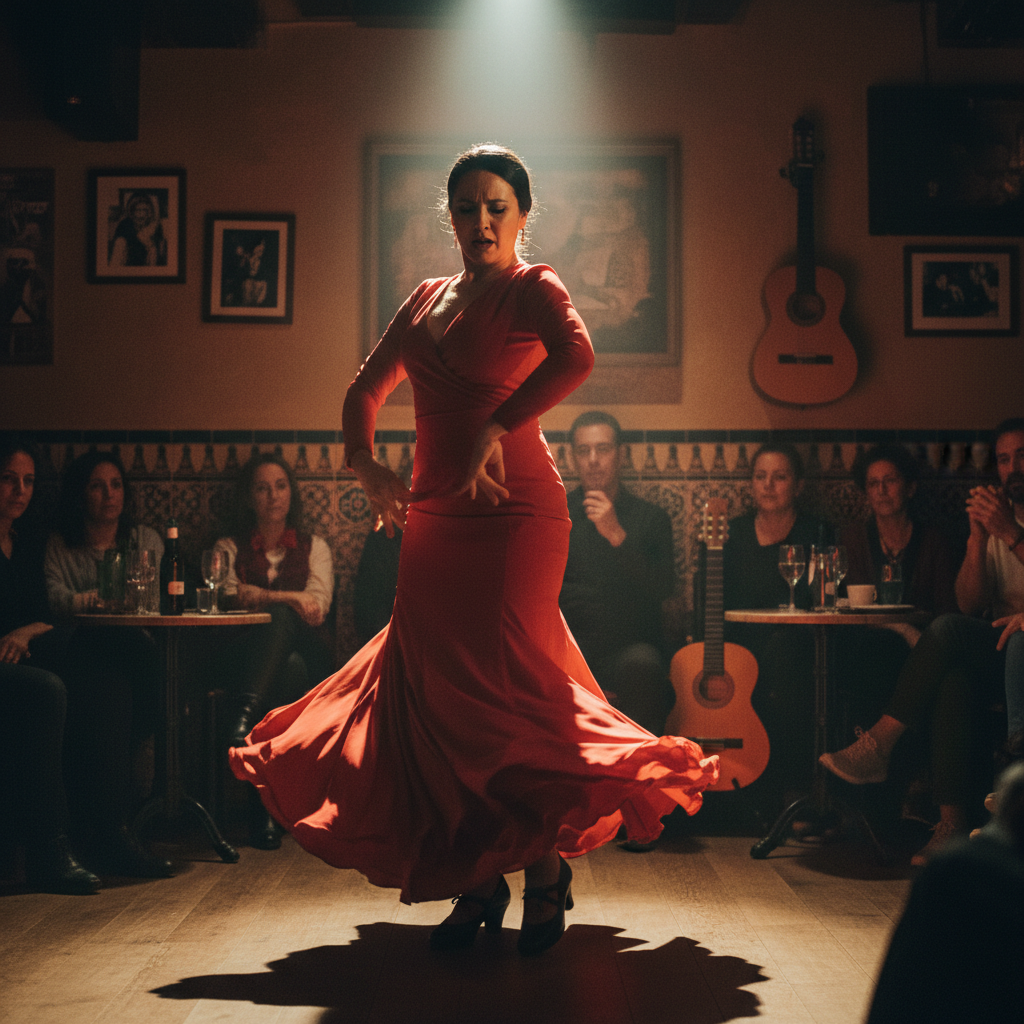
Flamenco is built around the concept of duende — an untranslatable quality that Federico García Lorca described as a 'mysterious force that everyone feels and no philosopher has explained.' It is the presence of darkness, of mortality, of profound emotional truth in performance. When a bailaora stamps her feet so hard the stage vibrates through the soles of your shoes, when a cantaor's voice breaks on a note of unbearable tenderness — that is duende. It cannot be faked, and when you encounter it, you know.
The art form is organised around a system of musical forms called palos — each with its own rhythm, key, and emotional character. The soleá is considered the most profound; the bulería is the most complex rhythmically; the seguiriya is the most intense and sorrowful. A serious flamenco artist masters dozens of palos over a lifetime.
**Where to Experience It in Seville**
Museo del Baile Flamenco (museodelbaileflamenco.com) — on Calle Manuel Rojas Marcos in the old city — is the world's only museum dedicated entirely to flamenco. Designed by Cristina Hoyos, one of the greatest bailaoras of the 20th century, it offers live performances in an intimate patio setting, nightly. The museum component provides essential context for understanding the art's history and technique. This is the ideal starting point for the uninitiated.
La Carbonería (lacarboneriadesevilla.es) — in the Barrio Santa Cruz — is a legendary flamenco bar where impromptu performances occur most evenings with no cover charge. It is informal, atmospheric, and authentic. Arrive by 10pm.
Tableao Flamenco Las Setas (tablaoflamencolassetas.com) presents some of the finest professional performances in the city, with serious artistic direction and rotating artists of genuine calibre.
Casa de la Memoria (casadelamemoria.es) — a smaller, more intimate venue in the Santa Cruz district — focuses on traditional flamenco forms and presents 90-minute shows nightly. Capacity is limited; book ahead.
**Triana**
The Triana neighbourhood warrants an afternoon of exploration. The Triana Market (mercadodetriana.com) houses a small but excellent local museum documenting the barrio's flamenco heritage. The streets around the market contain ceramics studios (Triana's other great cultural tradition) and tapas bars that predate tourism. This is where Seville lives, away from the crowds — and where flamenco's connection to daily life remains visible.
**A Note on Authenticity**
Not all flamenco in Seville is created equal. Tourist-oriented shows can be technically proficient but emotionally hollow. The best advice: follow the local audience. If a venue is primarily filled with Spanish visitors rather than tour groups, you are more likely to encounter the real thing.
Continue Reading