Culture
The Edinburgh Festival Fringe: The World's Greatest Arts Festival
Every August, Edinburgh transforms into the most extraordinary concentration of live performance on earth. Three weeks, 3,500 shows, and the freedom to discover something that changes your life.
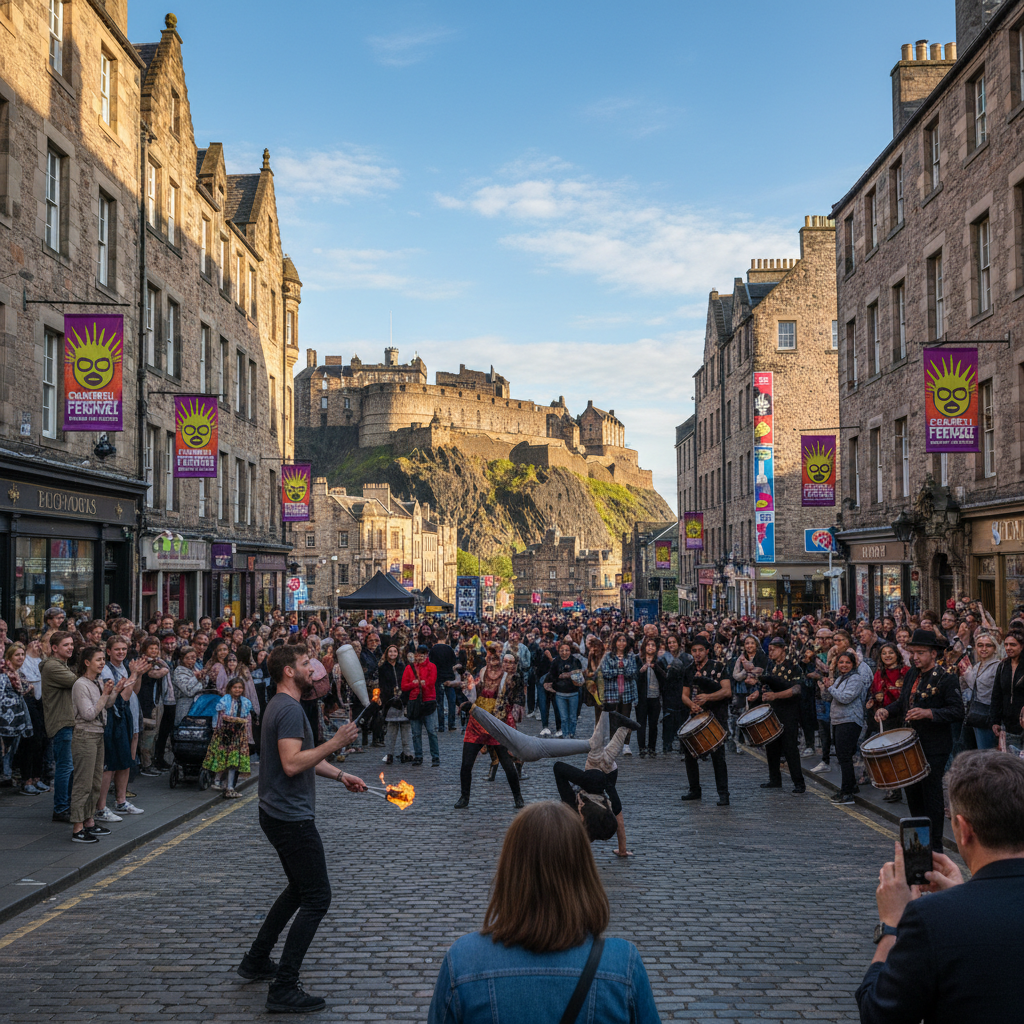
Every August, the city of Edinburgh does something that should be impossible: it becomes the centre of the performing arts world. The Edinburgh Festival Fringe — the world's largest arts festival — transforms every available venue in the city, from formal theatres and converted churches to pub back rooms and the open cobblestones of the Royal Mile, into stages for an extraordinary three-week explosion of comedy, theatre, dance, circus, opera, spoken word, and performance in forms that defy categorisation.
The numbers are staggering: in a typical year, over 3,500 shows across more than 300 venues, with close to 50,000 individual performances. Yet the numbers miss the essential thing — which is that this is the freest, most democratic, most exhilarating cultural event in the world.
**The History**
The Fringe began in 1947 when eight uninvited theatre companies turned up alongside the newly established Edinburgh International Festival and performed anyway — on the fringes. The spirit has never changed: the Fringe has no selection committee, no curator, no gatekeepers. Any performer can register a show. The audience decides what succeeds.
This principle has launched more careers in comedy, theatre, and performance than any other event on the planet. The Fringe alumni include Rowan Atkinson, Emma Thompson, the Monty Python team, Tom Hiddleston, and virtually every major British comedian of the past four decades.
**How to Navigate It**
The official programme (edfringe.com) is published in June. The major venue chains — Pleasance, Assembly, Summerhall, Gilded Balloon, Underbelly — program the most established names and highest-profile shows. But the greatest discoveries happen in smaller venues, in shows with no reviews and unknown performers.
A practical approach: book two or three anchor shows in advance (the most sought-after sell out), then leave the rest of your schedule open for spontaneous decisions. The Royal Mile during the day is a free performance showcase — the best street performers in the world compete for attention.
The Scotsman newspaper (scotsman.com) and The List (list.co.uk) provide the most reliable daily reviewing coverage. A five-star review in The Scotsman can sell out a show within hours.
**Beyond the Fringe**
The Edinburgh International Festival (eif.co.uk) — the original, curated festival running concurrently — presents world-class opera, orchestral concerts, and theatre in the city's major venues. The Royal Scottish National Orchestra, visiting opera companies of international standing, and productions from the world's leading theatre directors fill the Usher Hall, Festival Theatre, and Edinburgh Playhouse throughout August.
The Edinburgh Art Festival (edinburghartfestival.com) runs concurrently, animating the city's galleries and public spaces with the visual arts.
**Where to Stay**
Book accommodation at least six months in advance — Edinburgh in August is among the most competitive hotel markets in Europe. The Balmoral Hotel (roccofortehotels.com/hotels-and-resorts/the-balmoral-hotel) at the east end of Princes Street is the grandest address in the city, with views of the castle and exceptional access to all festival venues. The Scotsman Hotel (scotsmanhotel.co.uk), in the former offices of The Scotsman newspaper, is another atmospheric choice.
The Fringe is not a spectacle you observe. It is a city-wide conversation about what performance can be — one that rewards engagement, curiosity, and the willingness to take a chance on a show in a pub basement at midnight.
Continue Reading