Home
The Dining Room: Creating a Space That Invites People to Linger
The dining room is where memory is made. Here is how to design one that keeps people at the table long after the meal is finished.
The dining room is where the best conversations happen. It is, when properly designed, the room in your home most hostile to the idea of leaving — a space calibrated to make departing feel like a loss.
This quality does not happen by accident. It is the product of deliberate design decisions: the right light, the right scale, the right materials, the right atmosphere. Understanding what creates the compulsion to linger is the beginning of understanding how to design a dining room that people remember.
**The table: the room's only non-negotiable**
Everything in a dining room is in service of the table. The table is not furniture; it is the reason the room exists. Choose it first, and choose it to last a lifetime.
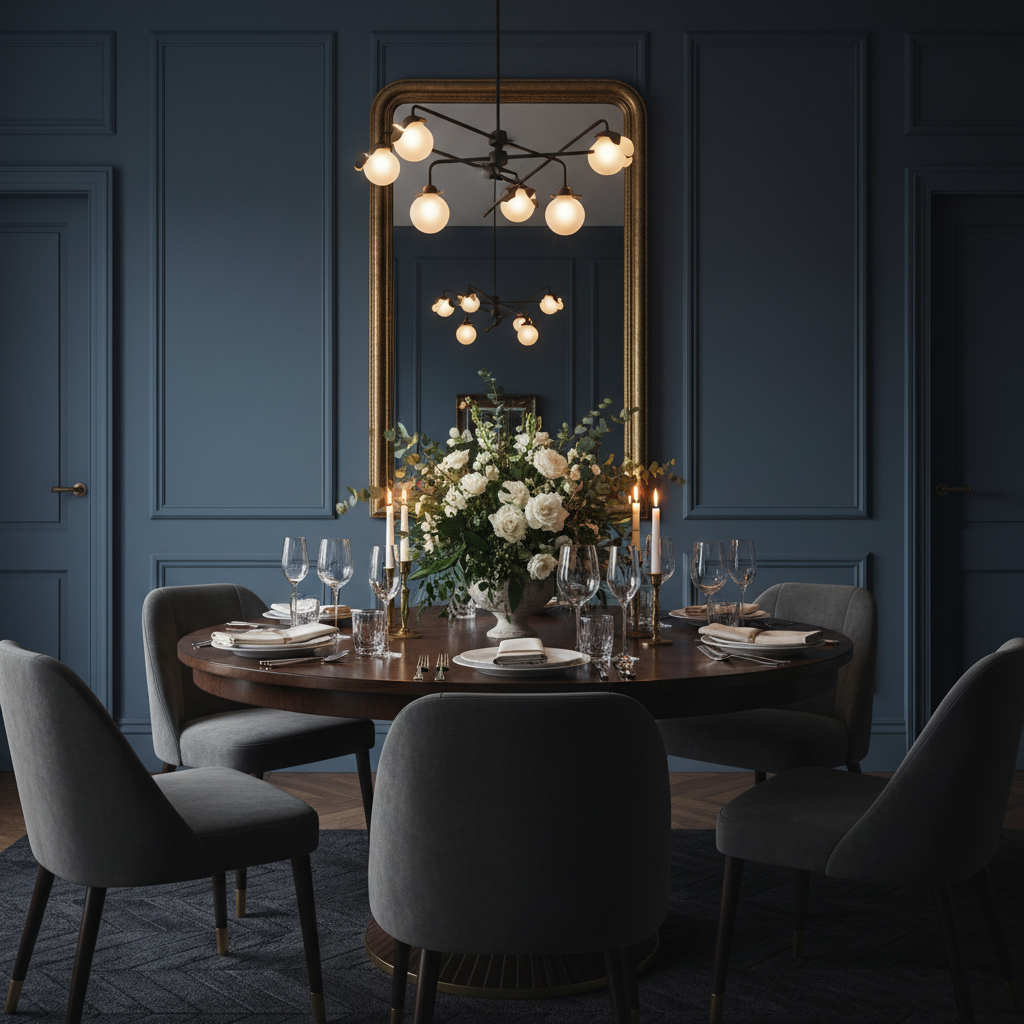
A round table is the most democratic form: it eliminates hierarchy, ensures everyone can see everyone else, and creates the kind of intimate, enveloping conversation that rectangular tables can inhibit. For six to eight people, a 120-centimetre diameter is the minimum; 130 to 59 in is ideal.
For larger gatherings, a substantial oval or rectangular table in dark-stained oak, walnut, or a stone top on a simple frame is the classic choice. Matthew Hilton's Storm table for Case Furniture (casefurniture.co.uk) and Benchmark's bespoke dining tables (benchmarkfurniture.com) represent exceptional British craftsmanship at its most considered.
For American buyers, Room & Board (roomandboard.com) and Restoration Hardware (rh.com) offer solid wood options at different price points, while luxury custom work from companies like George Sherlock (georgesherlock.com) is worth every penny for a statement piece.
**Chairs: comfort above everything else**
Uncomfortable chairs are the single most effective mechanism for ending a dinner party early. If guests shift, fidget, or stand up to stretch after an hour, the design has failed regardless of how beautiful the chairs look.
Upholstered dining chairs — fully or on the seat alone — dramatically extend the amount of time people spend at a table. A leather or velvet seat pad, well-padded, makes a two-hour dinner feel like a natural continuation of the evening rather than an endurance test.
The height of the seat back also matters. High-backed chairs create a sense of enclosure that is actively pleasurable for extended dining. Low-backed chairs read as more casual but can feel unsupported over a long meal.
**Lighting: the most important decision**
More dining rooms are ruined by lighting than by any other single decision. The most common mistake is lighting the room rather than lighting the table.
The ideal dining room has one strong, low-hung pendant or chandelier over the table — hung at 75 to 33 ½ in above the table surface — supplemented by wall sconces, candlelight, or concealed perimeter lighting that handles the ambient illumination of the room.
The pendant should be on a dimmer. The ability to lower the light as the evening progresses — from the brighter clarity of the first course to the intimate glow of dessert and digestifs — is one of the most powerful tools in a host's arsenal.
Architectural Digest's lighting guide consistently recommends Visual Comfort (visualcomfort.com) and Apparatus Studio (apparatusstudio.com) for dining pendants of genuine quality and design distinction.
**Colour, surfaces, and acoustic warmth**
A dining room should feel like it closes in slightly around you — not uncomfortably, but enough to create a sense of containment and intimacy. This is best achieved through dark or warm-toned walls, upholstered seating, a rug beneath the table, and heavy curtains or drapes at the windows.
Hard surfaces — stone floors, bare walls, uncurtained glass — create echo and a kind of acoustic harshness that works against intimacy. The most memorable dining rooms are acoustically soft: conversation is heard clearly but without the clatter and reverberation of a restaurant.
Farrow & Ball's Preference Red, Down Pipe, or Hague Blue (farrow-ball.com) are among the most enduringly successful dining room wall colours — rich enough to create atmosphere without overwhelming the room.
**The art of the laid table**
A properly laid table signals to guests that they are expected, welcomed, and that care has been taken on their behalf. This doesn't require elaborate arrangements — it requires considered ones.
Fresh flowers or botanical arrangements at the right height (low enough not to obstruct sightlines across the table), real cloth napkins rather than paper, wine glasses appropriate to what you're serving, and at least one candle per four guests. These are the minimum requirements of a table set with intention.
For further guidance on the art of table setting, Williams-Sonoma (williams-sonoma.com) offers comprehensive resources, while the book 'At Home with Carolyne Roehm' (available on Amazon) remains one of the definitive references for domestic entertaining.
**The room that invites return**
A dining room that works is one that people remember long after the evening ends — not because of what was served, but because of how it felt to be there. Warm light, comfortable chairs, beautiful materials, the right scale: these are the conditions under which conversation deepens, laughter arrives easily, and leaving feels like an act of small defeat.
Designing for that feeling is the whole point.



Continue Reading