Culture
Cannes Film Festival: Cinema's Most Glamorous Week
Every May, the French Riviera hosts the world's most prestigious film festival — a convergence of cinema, glamour, and cultural power that has shaped the art of film for eight decades.
Every May, the small Côte d'Azur city of Cannes — population 75,000, stretching along a harbour between two hills on the Mediterranean coast — becomes the centre of the film world. The Cannes Film Festival (festival-cannes.com), founded in 1946, is the most prestigious cinema event on earth: the place where careers are made and broken, where the boundaries between art cinema and commercial cinema are most productively contested, and where the red carpet of the Palais des Festivals provides the most glamorous public spectacle in European cultural life.
**The History**
The festival was conceived in 1939 as a democratic alternative to the Venice Film Festival, which had become, under Mussolini's influence, a vehicle for Fascist cultural propaganda. The 1939 edition was cancelled upon the outbreak of war; the first proper festival took place in September 1946. From the beginning, its mission was to celebrate cinema from all nations free from political interference — a mission it has maintained, with occasional stumbles, for eight decades.
The Palme d'Or — the festival's highest prize, awarded by an international jury to the best film in competition — is the most coveted prize in international cinema, regarded by many serious film people as more significant than the Academy Award because it evaluates films as artistic works rather than commercial products. Recipients include Orson Welles, Federico Fellini, Francis Ford Coppola (twice), David Lynch, the Dardenne brothers (twice), and Michael Haneke (twice).
**The Structure**
The official selection is divided into several sections. The Competition section — the main event — comprises approximately 20 films competing for the Palme d'Or and other jury prizes. Un Certain Regard showcases distinctive, challenging work from emerging and established international directors. The Directors' Fortnight (quinzaine.fr) and the International Critics' Week (semainedelacritique.com), sidebar sections with independent programming, have historically introduced some of the festival's most significant discoveries.
The Marché du Film (marchedufilm.com) — running concurrently — is the world's largest film market, where thousands of buyers, sellers, and producers conduct the commercial business of international cinema. It is invisible to the public but is the mechanism through which most of the world's independent films are financed and distributed.
**The Experience**
For industry professionals, a Cannes badge (available through the Marché or festival accreditation) provides access to screenings, industry events, and the extraordinary daily life of the Croisette — the boulevard along the seafront where the Palais des Festivals, the grand hotels, and the temporary pavilions of studios and national film funds create a week-long immersive experience unlike anything else in the cultural calendar.
For the general public, Cannes is partly accessible: free screenings are held on the beach at the Cinéma de la Plage most evenings; the short films and Cinéfondation competition is open to the public; and the atmosphere of the Croisette — the red carpet arrivals, the paparazzi, the extraordinary display of human peacockery — is an entirely free spectacle.
**Where to Stay**
The Hôtel du Cap-Eden-Roc (oetkercollection.com/hotels/hotel-du-cap-eden-roc) at Cap d'Antibes — 15 minutes from Cannes — is the legendary address of the festival, where studios rent out entire floors and the pool terrace hosts the most private and desirable parties. The InterContinental Carlton Cannes (ihg.com) on the Croisette is the festival's symbolic hotel, its terrace a theatre of celebrity and ambition throughout the fortnight.
**The Culture of the Red Carpet**
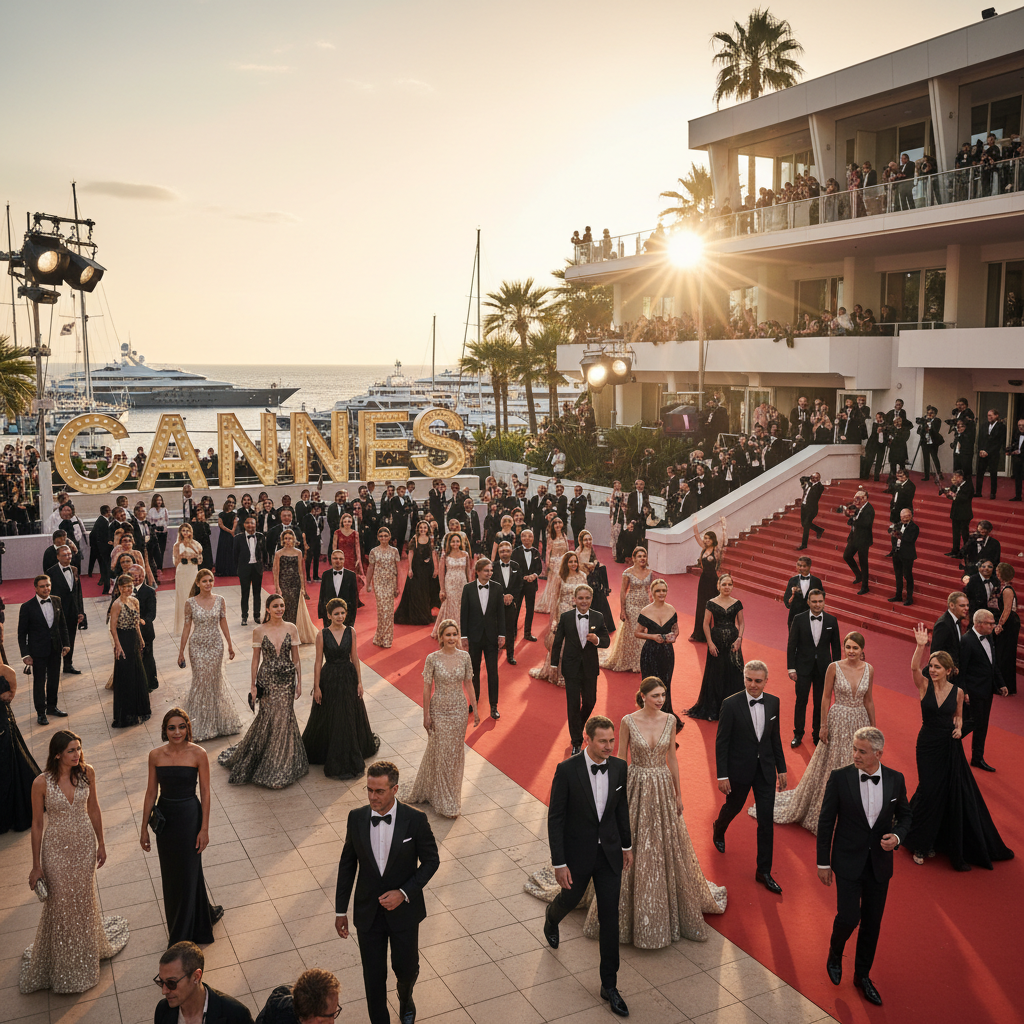
The Cannes red carpet — the 24 stone steps of the Palais des Festivals — is the most photographed staircase in the world during festival fortnight. The dress code for official screenings is strictly observed: black tie for men, formal evening dress for women. The spectacle of global cinema arriving, posing, and ascending those steps under the Mediterranean evening sky — this is Cannes at its most distilled and most magnificent.
For those who love cinema as both art and cultural spectacle, Cannes is the essential annual pilgrimage.

Continue Reading