Wellness
The Blue Zones: Lessons in Longevity from the World's Healthiest People
The Blue Zones — the five regions identified by Dan Buettner and National Geographic as home to the world's longest-lived people — reveal that longevity is less about genetics than about environment, community, and daily practice. Here is the evidence behind the Power 9 principles.
The Blue Zones are the five regions in the world identified by the National Geographic explorer and author Dan Buettner as having the highest concentrations of centenarians — people who live to 100 and beyond — and the lowest rates of chronic disease. The concept emerged from Buettner's work with National Geographic and the National Institute on Aging, and his 2005 National Geographic cover story 'The Secrets of a Long Life' and subsequent book 'The Blue Zones' (National Geographic, 2008) have become foundational texts in the field of longevity research.
The five original Blue Zones are:
**Okinawa, Japan** — the island with the world's longest-lived women, where the traditional diet is rich in sweet potatoes, green vegetables, and soy, and where the cultural practice of 'hara hachi bu' — eating until 80% full — is observed.
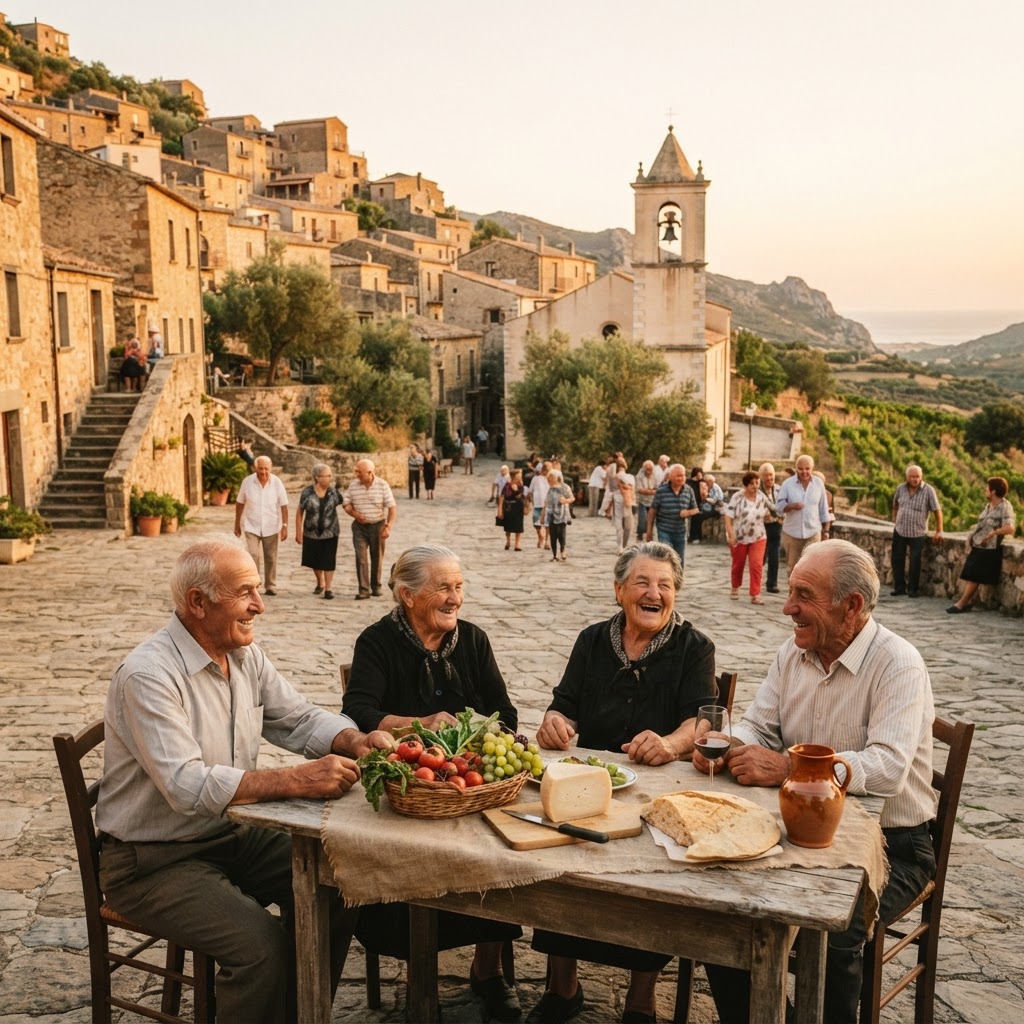
**Sardinia, Italy** — specifically the mountainous Ogliastra region, where men reach 100 at an extraordinary rate, attributed to a traditional diet of whole-grain bread, pecorino cheese, tomatoes, and cannonau wine, daily physical labour, and strong family bonds.
**Nicoya Peninsula, Costa Rica** — where the traditional diet of beans, corn, squash, and tropical fruits, combined with physical labour and strong social networks (plan de vida — a sense of purpose), produces remarkable longevity.
**Ikaria, Greece** — the Aegean island known as 'the island where people forget to die,' with a Mediterranean diet, herbal teas, daily naps, and strong community. The Ikaria Study published in 2011 in Cardiology Research and Practice found that Ikarians have significantly lower rates of cardiovascular disease and dementia.
**Loma Linda, California** — the community of Seventh-day Adventists, whose plant-based diet, observance of the Sabbath as a day of rest, and abstention from alcohol and tobacco contribute to life expectancies approximately a decade longer than the American average.
The Power 9
Buettner and his team identified nine common lifestyle characteristics across all five Blue Zones, which they term the 'Power 9':
1. **Move naturally** — physical activity is woven into daily life through walking, gardening, and manual labour, not gym sessions.
2. **Purpose** — having a clear sense of why you wake up in the morning (the Okinawan 'ikigai,' the Costa Rican 'plan de vida').
3. **Downshift** — regular routines that shed stress: prayer, naps, happy hour.
4. **80% rule** — eating until 80% full, avoiding overeating.
5. **Plant slant** — diets centred on beans, vegetables, and whole grains, with meat consumed rarely (typically fewer than five times per month).
6. **Wine at 5** — moderate, regular alcohol consumption (1–2 glasses per day) in a social context.
7. **Belong** — participation in a faith-based community.
8. **Loved ones first** — keeping ageing parents and grandparents nearby, committing to a life partner, and investing in children.
9. **Right tribe** — maintaining strong social networks that support healthy behaviours.
The Evidence
A 2016 review published in the American Journal of Lifestyle Medicine examined the evidence behind the Blue Zones principles and found substantial support for each, drawing on the Okinawa Centenarian Study (ongoing since 1976, the world's longest-running centenarian study), the Sardinia Blue Zone research, and broader epidemiological research on Mediterranean and plant-based diets.
Reference Links:
- Blue Zones Official: bluezones.com
- Dan Buettner: danbuettner.com
- Blue Zones Research: bluezones.com/exploration/
- National Geographic — The Secrets of a Long Life: nationalgeographic.com
- National Institute on Aging: nia.nih.gov
- Okinawa Centenarian Study: okicent.org
- Ikaria Study (Cardiology Research and Practice, 2011): ncbi.nlm.nih.gov/pmc/articles/PMC3076806/
- American Journal of Lifestyle Medicine Review: ajl.sagepub.com
- Adventist Health Studies: adventisthealthstudy.org


Continue Reading