Culture
The BBC Proms: London's Henry Wood Promenade Concerts and the Last Night at the Royal Albert Hall Since 1895
Founded on August 10, 1895, by impresario Robert Newman with conductor Henry Wood, the BBC Proms is the world's largest classical music festival — a democratic, affordable season whose Last Night at the Royal Albert Hall is a British cultural ritual.
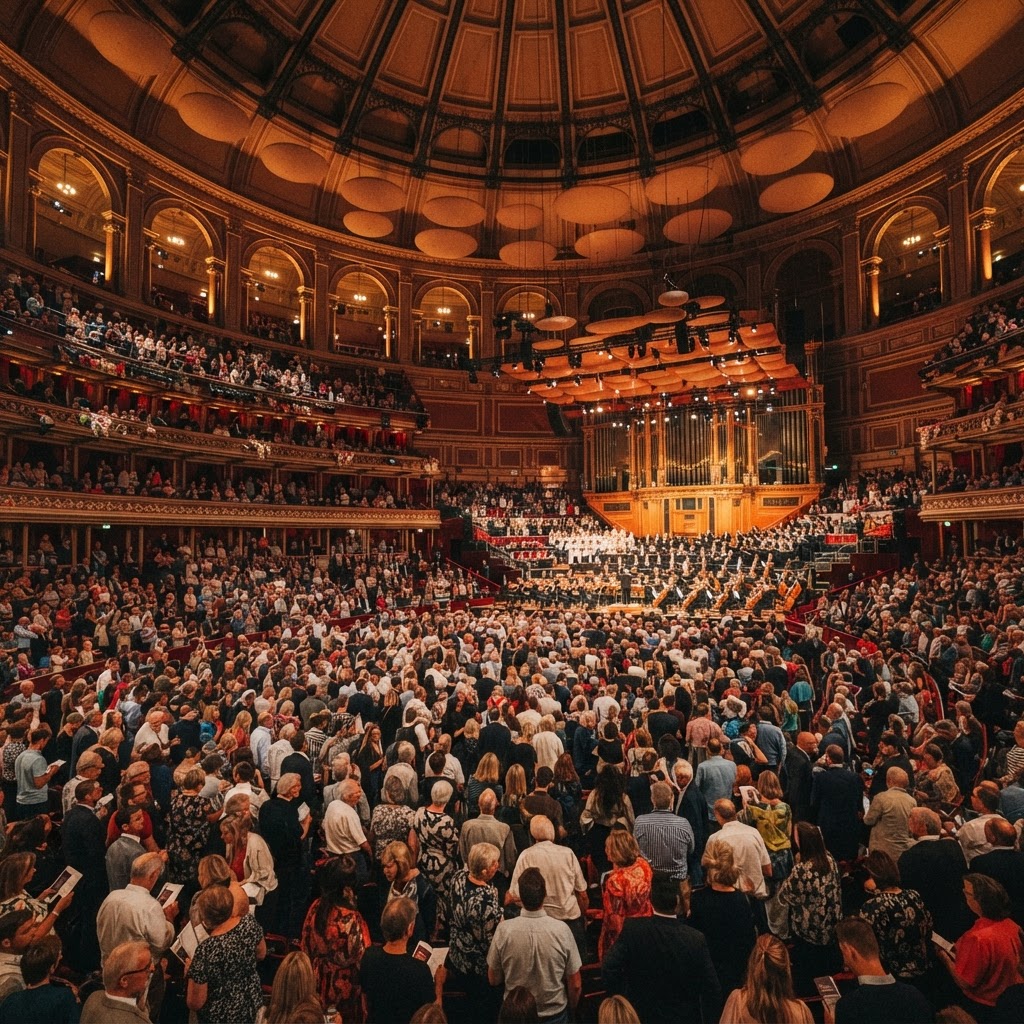
If you want to understand how a nation democratized classical music, stand in the Arena of the Royal Albert Hall. There, for a few pounds, you can hear the world's great orchestras in the BBC Proms — the eight-week summer season of concerts that is the largest and most democratic classical music festival in the world.
**Origins**
The Proms were inaugurated on August 10, 1895, at the Queen's Hall in Langham Place, London, by the impresario Robert Newman, who wished, as he told the young conductor Henry Wood, to "run nightly concerts and train the public by easy stages... until I have created a public for classical and modern music." As Wikipedia records, Newman hired the 26-year-old Wood as sole conductor, with financial backing from the physician George Cathcart, and the series — formally "Mr Robert Newman's Promenade Concerts" — offered low ticket prices and an informal atmosphere in which eating, drinking, and smoking were permitted to the standing "promenaders." The first concert opened with Wagner's "Rienzi" overture. Wood's name became inseparable from the series; after his death, a bronze bust of him — recovered from the bombed ruins of the Queen's Hall in 1941 — is still placed before the organ at every Proms season. In 1927, after Newman's death, the BBC took over the concerts, and they have been known as the BBC Proms ever since.
**The Last Night of the Proms**
The season closes with the Last Night of the Proms, usually the second Saturday of September — a concert unlike any other in the classical calendar. Its second half is a jubilant, patriotic ritual: Elgar's "Pomp and Circumstance March No. 1" (with "Land of Hope and Glory"), Henry Wood's "Fantasia on British Sea Songs," Arne's "Rule, Britannia!," Parry's "Jerusalem," and the national anthem. Since 1941, the Proms have been held at the Royal Albert Hall, where the BBC Symphony Orchestra — formed in 1930 — is the resident ensemble.
**Why It Matters**
The Proms proved that classical music could be a popular, nightly, affordable art form. For 130 years, they have trained the British public in serious music while keeping the doors open and the prices low — a model of cultural democracy that has no equal in the world.
**References**
- Wikipedia: BBC Proms — https://en.wikipedia.org/wiki/BBC_Proms
- BBC Proms (official) — https://www.bbc.co.uk/proms



Continue Reading


