Home
The Art of the Scented Home: Fragrance as Architecture
Scent is the most emotionally powerful of the senses and the most underused tool in interior design. How to create a home that smells as beautiful as it looks.
Marcel Proust's famous madeleine moment — a taste of a small cake flooding his memory with the entirety of his childhood — illustrates what neuroscience has since confirmed: smell is processed differently from all other senses, routing directly to the limbic system, the brain's emotional and memory centre. A scent encountered in a beautiful, calm space can, years later, immediately conjure that space and everything felt within it.
Designing a scented home is, therefore, an exercise in emotional architecture. The goal is not merely pleasant-smelling rooms but scents that actively create mood: calm, warmth, clarity, luxury.
**The Entrance**: The first scent experienced upon entering a home sets the emotional register for everything that follows. Diptyque's Baies (diptyqueparis.com) — black currant and Bulgarian rose — has been a consistent benchmark for the refined domestic entrance for decades. Cire Trudon (trudon.com), the oldest candlemaker in the world (founded 1643), offers extraordinary historical formulations.
**The Living Room**: Something warmer and more complex — amber, sandalwood, leather. Maison Margiela's Replica 'By the Fireplace' is a perennial favourite. Jo Malone London's (https://www.jomalone.co.uk/) 'Wood Sage & Sea Salt' works beautifully in light-filled contemporary spaces.
**The Bedroom**: Clean, cool, and restful. Lavender and chamomile remain the research-supported choices for sleep-promoting scent — This Works 'Deep Sleep Pillow Spray' (thisworks.com) is backed by clinical trials showing measurably improved sleep quality.
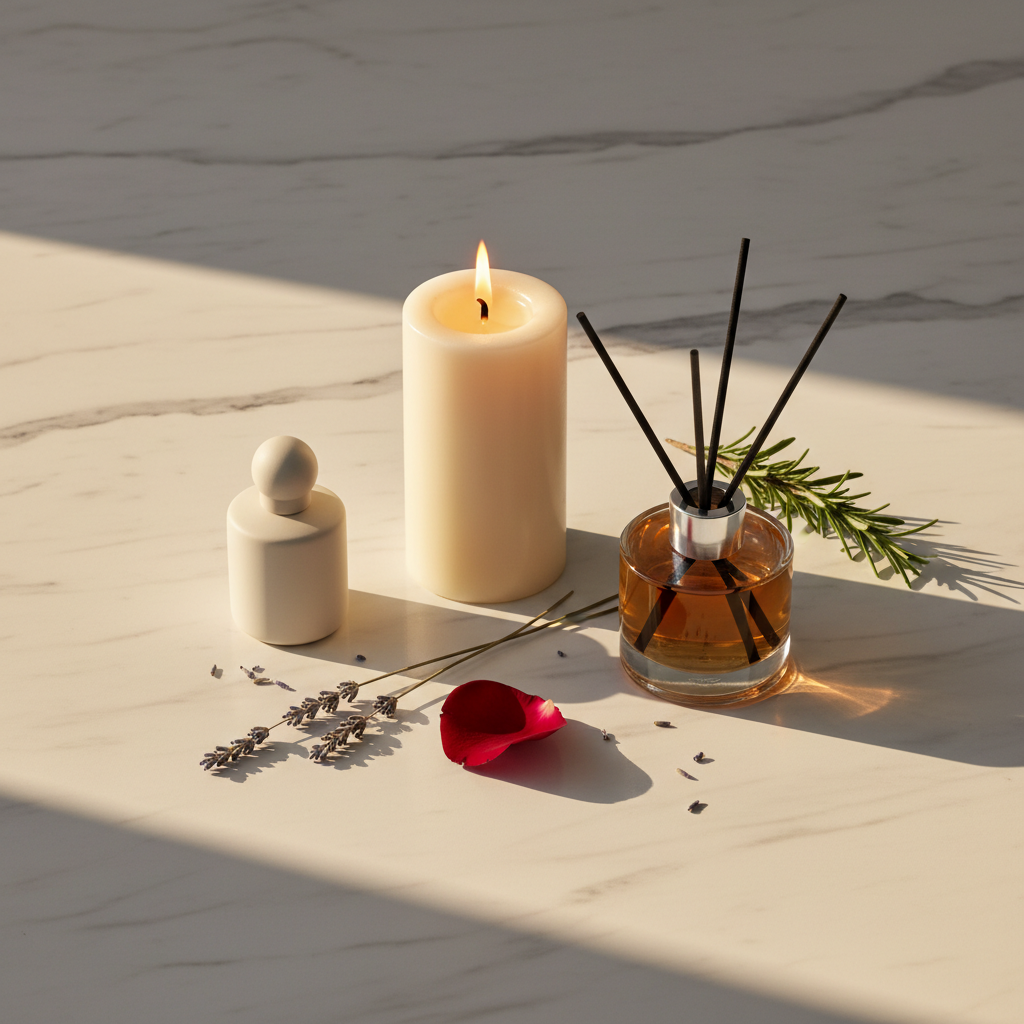
**Diffuser vs. Candle**: Reed diffusers provide consistent, low-level ambient scent. Candles provide dramatic, event-quality scent that signals a special occasion. The finest homes use both strategically.



Continue Reading