Crab Cakes Eggs Benedict (Eggs Chesapeake): The Maryland Brunch Showstopper
March 19, 2026
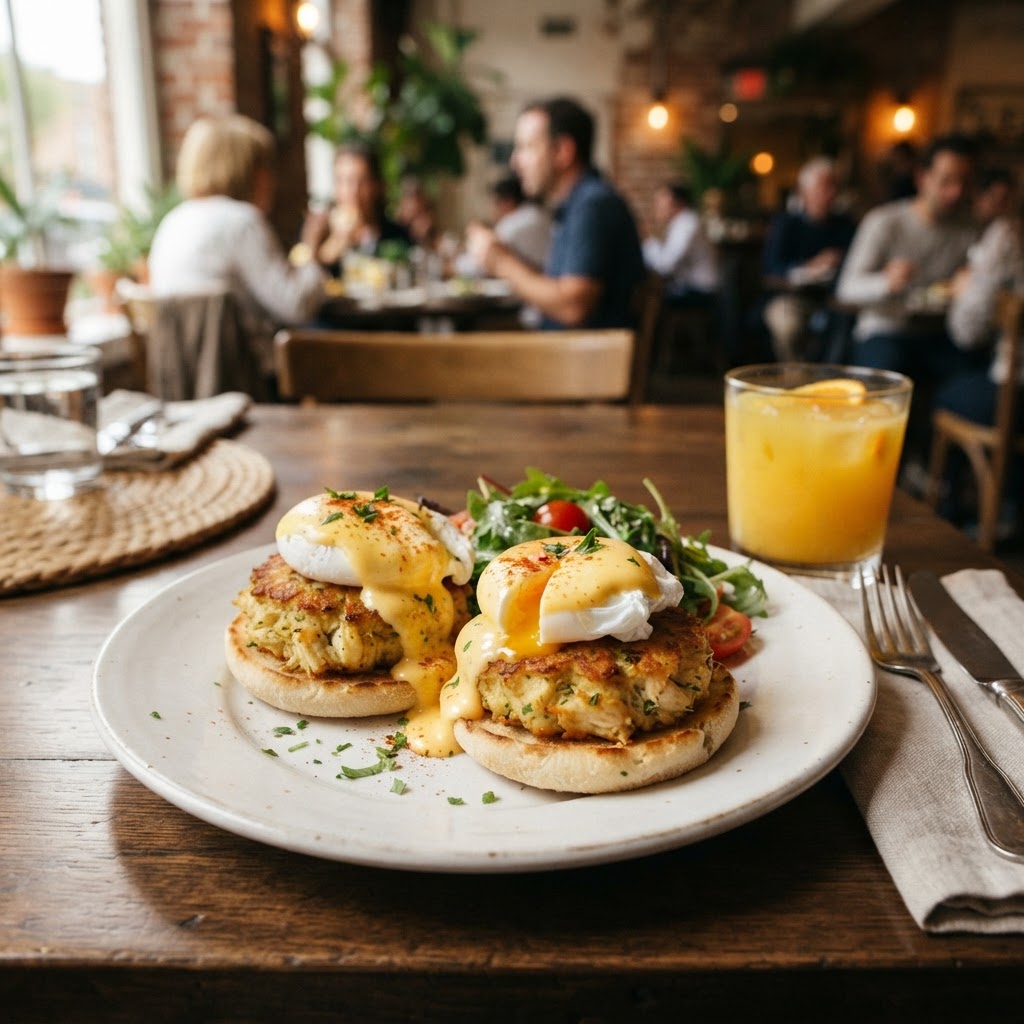
Crab cakes eggs benedict — also known as Eggs Chesapeake — is one of the most luxurious brunch dishes in American cuisine. A variation of the classic eggs benedict, it replaces the Canadian bacon with a golden, pan-seared Maryland crab cake, then tops it with a perfectly poached egg and a generous drizzle of hollandaise sauce. It's a Chesapeake Bay classic that combines two of Maryland's greatest culinary traditions: crab cakes and eggs benedict.
To understand crab cakes eggs benedict, you first need to understand eggs benedict itself. The origins of eggs benedict are famously disputed, but the most widely accepted story credits Delmonico's restaurant in New York City. According to this account, a wealthy Wall Street broker named LeGrand Benedict — a regular customer at Delmonico's — grew tired of the usual menu offerings in the 1860s and asked the chef, Charles Ranhofer, to create something new. Ranhofer came up with a dish of toasted English muffin halves topped with Canadian bacon, poached eggs, and hollandaise sauce. Ranhofer published the recipe in his 1894 cookbook, "The Epicurean," and eggs benedict was born. A competing story credits the Waldorf-Astoria Hotel, where a guest named Samuel Benedict allegedly ordered the dish as a hangover cure in 1894. Regardless of which story is true, eggs benedict has been a fixture of American brunch since the late 19th century.
The crab cake variation — Eggs Chesapeake — is a more recent invention, born in the Chesapeake Bay region of Maryland. The dish substitutes a Maryland blue crab cake for the Canadian bacon, and it's a natural marriage: Maryland is famous for its blue crab, and crab cakes have been a staple of Maryland cuisine since the 19th century. The earliest printed recipes for crab cakes date to the 1930s, though the dish was certainly being made in Maryland homes and restaurants long before that. The combination of crab cakes, poached eggs, and hollandaise creates one of the most indulgent brunch dishes imaginable — the sweet, delicate crab meat, the rich, runny egg yolk, and the buttery, lemony hollandaise sauce are a perfect trio.
The key to a great crab cake eggs benedict is, of course, the crab cake. A proper Maryland crab cake is mostly crab meat — the best versions use jumbo lump crab meat, with just enough binder (mayonnaise, egg, and a little cracker crumbs or breadcrumbs) to hold it together. The crab cake should be pan-seared until golden and crispy on the outside, with the sweet crab meat still moist and tender on the inside. It should not be fried to a crisp or overloaded with filler.
Our Mimosavated version uses Maryland-style crab cakes (with minimal filler, to let the crab shine), poached eggs, and a classic hollandaise, served on toasted English muffins and paired with a bright mimosa.
Ingredients (serves 4):
The Crab Cakes: - 15 ⅞ oz jumbo lump crab meat (Maryland blue crab if possible), picked over for shells - 2 ⅛ oz mayonnaise - 1 large egg, beaten - 1 teaspoon Dijon mustard - 1 teaspoon Worcestershire sauce - A few dashes of hot sauce (such as Old Bay or Tabasco) - 1 oz Ritz cracker crumbs (or Panko breadcrumbs) - 1 tablespoon fresh parsley, chopped - 1 teaspoon Old Bay seasoning (plus extra for sprinkling) - 1 tablespoon vegetable oil (for pan-searing)
The Poached Eggs: - 8 large eggs (very fresh) - 2 tablespoons white vinegar
The Hollandaise Sauce: - 3 large egg yolks - 1 tablespoon lemon juice (fresh) - A pinch of cayenne pepper - 8 ⅞ oz unsalted butter, melted and kept warm - Salt to taste
The English Muffins: - 4 English muffins, split and toasted - 2 tablespoons unsalted butter (for the muffins) - Fresh parsley, chopped (for garnish) - Old Bay seasoning (for garnish) - Lemon wedges
Making the Crab Cakes: In a large bowl, gently combine the crab meat, mayonnaise, beaten egg, Dijon mustard, Worcestershire sauce, hot sauce, cracker crumbs, parsley, and Old Bay seasoning. Mix very gently — you want to keep the lumps of crab meat intact as much as possible. Form into 8 crab cakes (about 2 ⅛ oz each), shaping them into patties about ¾ in (¾ inch) thick. Place on a plate, cover, and refrigerate for at least 30 minutes — this helps them hold together during cooking.
Heat the oil in a large skillet over medium-high heat. Sear the crab cakes for 3–4 minutes per side, until deep golden brown and crispy. Handle them gently — they're delicate. Transfer to a plate and keep warm in a 194°F (200°F) oven.
Poaching the Eggs: Fill a deep skillet or saucepan with about 3 inches of water. Add the vinegar and bring to a gentle simmer — not a rolling boil. Crack each egg into a small cup or ramekin. Create a gentle whirlpool in the water with a spoon, then slide the egg into the center of the whirlpool. Cook for 3–4 minutes, until the whites are set but the yolks are still runny. Remove with a slotted spoon and drain on a paper towel. Repeat with the remaining eggs.
Making the Hollandaise Sauce: In a heatproof bowl set over a saucepan of simmering water (double boiler), whisk the egg yolks and lemon juice until thickened and pale yellow — about 2 minutes. Don't let the bowl touch the water. Remove from heat. Gradually whisk in the melted butter in a slow, steady stream, whisking constantly, until the sauce is thick and glossy. Season with salt and cayenne. Keep warm over the warm (not simmering) water.
Assembling: Place two toasted English muffin halves on each plate. Top each with a crab cake, then a poached egg. Spoon the hollandaise sauce generously over the top. Garnish with chopped parsley, a sprinkle of Old Bay, and lemon wedges.
Serving: Serve immediately, while the hollandaise is warm and the eggs are runny. Cut into the dish so the yolk runs into the crab cake and the hollandaise — that's the moment of perfection.
The Mimosa Pairing Logic: Crab cakes eggs benedict is rich, luxurious, and full of delicate flavors. The ideal mimosa pairing is a classic Prosecco mimosa — orange juice and Prosecco. The bright, acidic citrus cuts through the richness of the hollandaise and the crab cake, while the Prosecco's effervescence cleanses the palate and complements the delicate sweetness of the crab. A blood orange mimosa is also excellent — the slightly bitter, deeply flavored blood orange is a natural companion for the Chesapeake flavors. Avoid heavy or sweet mimosas — the dish is rich and delicate, and you need something bright and acidic to balance it.
Reference Links: - Eggs Benedict on Wikipedia (Delmonico's, LeGrand Benedict, 1860s): Wikipedia - Eggs Chesapeake (crab eggs Benedict) on Wikipedia: Wikipedia - History of the Eggs Benedict (multiple origin stories): Tower Deli - The History of Crab Cakes (Maryland blue crab, 1930s): Legal Sea Foods - Maryland Crab Cakes history and tradition: Visit Maryland
Make-Ahead: The crab cakes can be formed up to 24 hours ahead and refrigerated — cook just before serving. The hollandaise can be made up to 1 hour ahead and kept warm over a double boiler — do not let it get too hot or the eggs will scramble. The poached eggs can be made ahead and reheated: poach them slightly under (2–3 minutes), then chill in ice water, and reheat in hot (not boiling) water for 1 minute just before serving. Assemble at the last minute — the dish is at its best when everything is hot and the hollandaise is freshly made. Leftover crab cakes can be refrigerated for up to 2 days and reheated in a 347°F/350°F oven for 8 minutes. Do not freeze assembled benedicts.
Pro Tips: Use jumbo lump crab meat — it's the most expensive, but it's the heart of the dish. Backfin or claw meat will work but won't have the same large, beautiful lumps. Don't overmix the crab cake mixture — overmixing breaks up the lumps and makes the cakes mushy. Mix gently and briefly, just until combined. Use minimal filler — a proper Maryland crab cake is mostly crab, with just enough binder to hold it together. Too much breadcrumbs or cracker crumbs make it a "breading cake," not a crab cake. Refrigerate the crab cakes before cooking — this firms them up and helps them hold their shape in the pan. Use Ritz cracker crumbs if possible — they're the traditional Maryland binder and add a buttery flavor. Use very fresh eggs for poaching — fresh eggs hold their shape better and the whites don't spread. Create a whirlpool before adding the egg — this wraps the white around the yolk for a neat, compact poached egg. The hollandaise must be made over gentle heat — too hot and the yolks scramble; too cool and the butter won't incorporate. Whisk constantly when adding the butter. Assemble and serve immediately — the hollandaise is at its best freshly made, and the eggs are at their best when the yolks are still runny.
Rate this recipe
Be the first to rate this recipe
to submit your rating.
Recent Posts
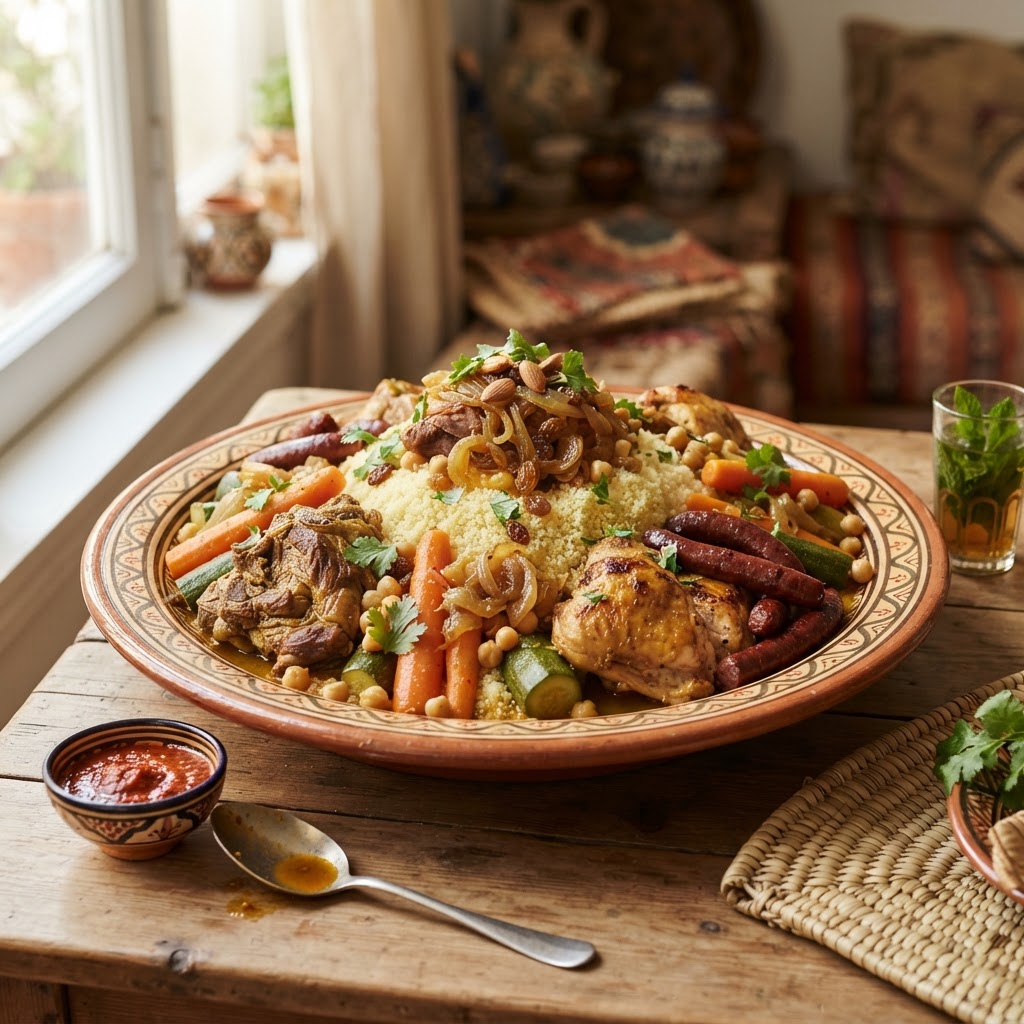
Couscous Royale: North Africa's Grand Platter of Lamb, Chicken, and Merguez
October 14, 2026

Seattle Cream Cheese Dog Bites: Hadley Long's 1989 Pioneer Square Invention
October 14, 2026
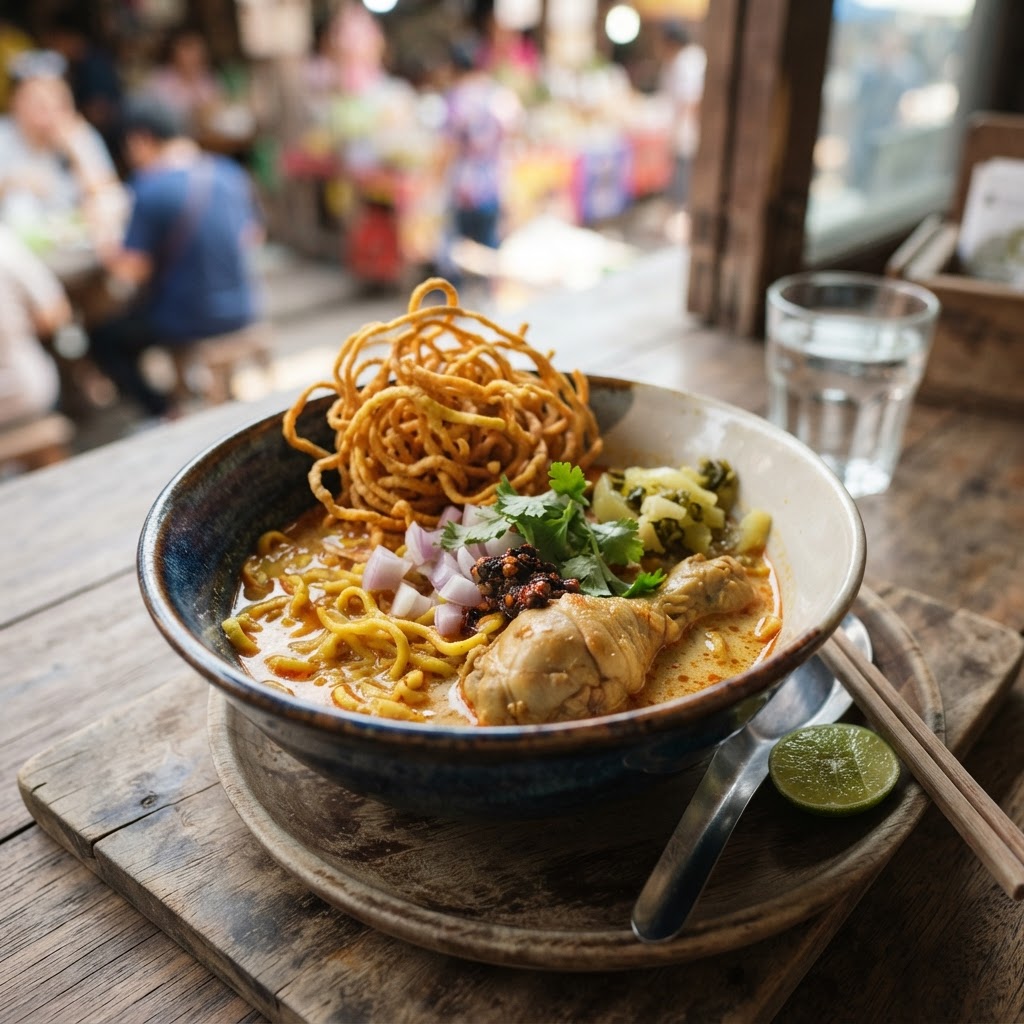
Khao Soi: Chiang Mai's Northern Thai Coconut Curry Noodles
October 13, 2026
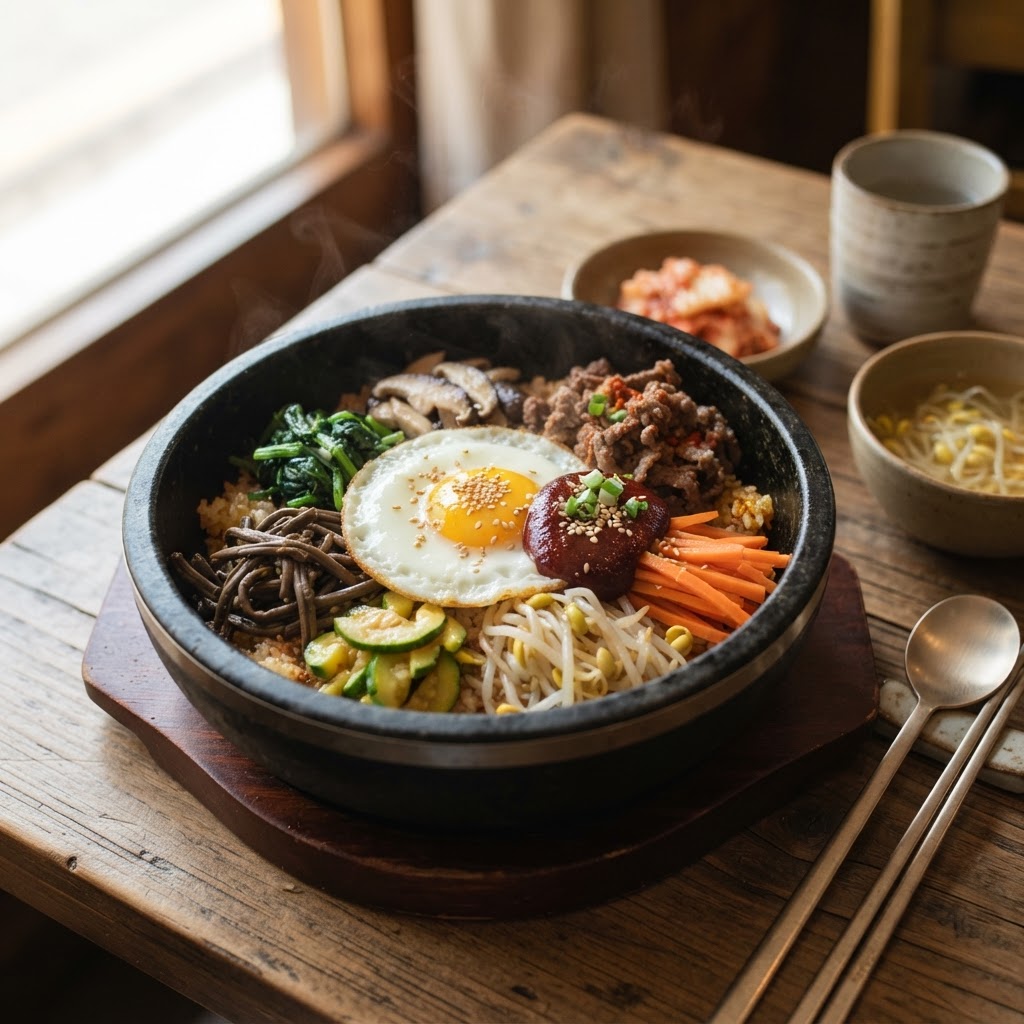
Korean Bibimbap: Jeonju's Joseon Dynasty Mixed Rice
October 11, 2026
Spaghetti alla Carbonara: Rome's World War II Pasta of Eggs, Guanciale, and Pecorino
October 9, 2026